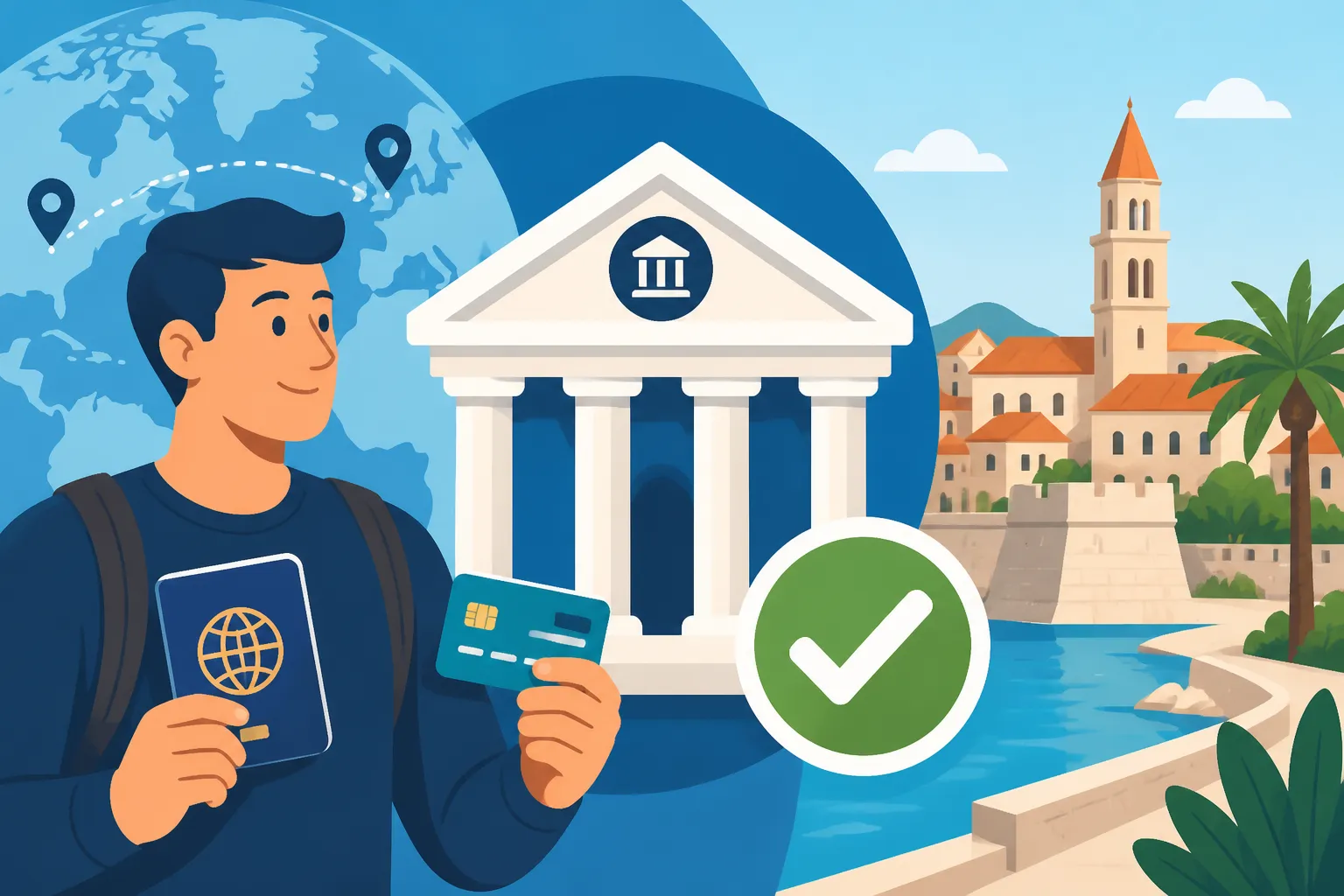
Can Non-Residents Open a Bank Account in Croatia?
Trying to navigate the Croatian banking system as a non-resident can feel like you’re constantly hitting brick walls. You’ve just arrived, maybe you're here on a long vacation, looking at property, or perhaps you're a digital nomad still waiting for your residence permit, and you quickly realize that managing your finances locally isn't as straightforward as back home. This guide will meticulously explain the complex realities, your actual options, and the specific steps required for non-residents to open a bank account in Croatia, managing your expectations every step of the way.
The Short Answer: It's Complicated (But Not Impossible!)
Let's cut right to the chase: opening a traditional, full-service bank account in Croatia as a true "non-resident" – meaning someone without any form of registered temporary or permanent residence and, crucially, usually without a Croatian OIB – is exceedingly difficult, bordering on impossible in most standard scenarios. Banks here are, understandably, quite strict due to international regulations around anti-money laundering (AML) and know-your-customer (KYC) protocols. They need to understand who you are, why you need an account, and where your funds are coming from. Without a clear connection to Croatia, like a residence permit or a job, your request is likely to be met with polite but firm refusals.
However, the definition of "non-resident" can be a bit fluid, and there are nuances depending on your citizenship, your purpose for being in Croatia, and how much groundwork you've already laid. While a tourist visiting for a week will almost certainly not be able to open an account, someone who has applied for a residence permit and obtained an OIB, even if the permit isn't fully processed, might have a better shot. It’s all about demonstrating a legitimate and ongoing link to Croatia that satisfies the bank's internal compliance rules.
Understanding "Non-Resident" in the Croatian Banking Context
When you approach a Croatian bank, your "non-resident" status isn't just about whether you have a physical address here. It delves deeper into your legal and fiscal ties to the country. For banking purposes, "non-resident" can mean a few things, each with different implications for your ability to open an account.
Are you a tourist on a short visit, hoping to avoid ATM fees? Are you an EU citizen who spends a lot of time here but hasn't formally registered your residence? Or are you a non-EU citizen who has just arrived, perhaps on a long-stay visa, and is in the process of applying for a temporary residence permit, like a digital nomad? Each of these scenarios presents a different challenge and different possibilities. The key differentiator for most Croatian banks is the OIB, or Osobni identifikacijski broj, which is your personal identification number. Without this, even establishing a basic connection is tough. Even if you haven't yet registered your address at the MUP (Ministry of Interior), simply having an OIB shows the bank you have taken steps to formalize your presence in Croatia. Understanding this distinction is crucial to setting realistic expectations and preparing adequately for your bank visit.
Why Banks Hesitate with Non-Residents
The hesitation you encounter at Croatian banks when you're a non-resident isn't personal, even if it feels that way after your third rejection. It stems from a combination of stringent regulatory requirements and practical operational considerations.
Firstly, banks are bound by strict Anti-Money Laundering (AML) and Know Your Customer (KYC) regulations, both Croatian and international. These rules require them to thoroughly verify the identity of account holders and understand the source of their funds. For someone without established ties to Croatia, this verification process becomes significantly more complex. Imagine trying to verify a foreign address or a foreign tax identification number when the systems aren't integrated. This leads to a higher perceived risk for the bank. Secondly, there are implications around tax residency. If you open an account, where are you considered a tax resident? This is a question that banks have to consider, and it’s one that you should consider too. For many expats, particularly those with complex financial situations, Understanding Tax Residency Rules for Expats in Croatia is vital, and a professional like Taxes for Expats can provide invaluable guidance. Banks want to avoid any ambiguity that could lead to future compliance issues or even being inadvertently involved in tax evasion. Finally, there are the more mundane, practical difficulties. Communication can be a barrier, especially outside major cities. Foreign documents might not be easily understood or verified, and the bank staff might simply lack the training or experience to process non-standard applications. All these factors contribute to the reluctance banks often show.
Options for Non-Residents Seeking a Croatian Bank Account
While it might seem daunting, there are indeed different avenues to explore depending on your specific situation as a non-resident. It's not a one-size-fits-all problem, and understanding where you fit in can help you navigate the process more effectively.
Scenario 1: EU/EEA Citizens Without Registered Residence
If you're an EU/EEA citizen, you're in a somewhat stronger position due to European Union laws that aim to facilitate free movement and economic activity. Under EU regulations, all citizens of the EU/EEA have a right to a "basic payment account" in any member state. This means that even if you haven't formally registered your residence in Croatia, a bank should, in principle, allow you to open a basic account.
However, "should" is the operative word here. The reality on the ground can be a bit different. While banks are legally obliged to offer this, they will still require specific documentation. You'll definitely need your valid passport or national ID card. They will also request an OIB, even if it's purely for identification purposes and not linked to a Croatian tax residency yet. Proof of address, even if it’s from your home country (like a utility bill or a bank statement from your existing foreign account), will also be necessary. The basic payment account usually comes with limited features – think basic deposits, withdrawals, and online payments, but perhaps without overdraft facilities or complex investment options. You might still encounter staff who are unfamiliar with this EU provision or who are simply reluctant to process such an account, especially in smaller branches. Patience and persistence, possibly armed with knowledge of the EU directive, are your best friends here.
Scenario 2: Non-EU/EEA Citizens (Tourists, Pre-Residency)
This is undoubtedly the most challenging scenario. If you are a non-EU/EEA citizen without any form of Croatian residence permit, registered address, or a significant, tangible link to Croatia (like a signed employment contract or proof of property ownership), opening a full-fledged bank account is highly unlikely. Most banks will simply not entertain your request. The risk and administrative burden from their perspective are too high.
For a tourist, even a long-term one, the answer is almost universally no. You are expected to manage your finances through your home country's bank accounts, relying on international debit/credit cards and perhaps cash withdrawals. If you are in the pre-residency phase – meaning you've applied for a temporary residence permit (e.g., for work, study, or family reunification) but haven't received the physical card yet – your chances improve slightly if you already have your OIB. With an OIB and official documentation proving your application is in progress, some banks might consider your case, but it's not guaranteed. You might need to return once your residence permit is officially issued and your address is registered with the MUP. In such cases, having clear documentation of your purpose and future status in Croatia is critical.
The Digital Nomad & Other Temporary Residents' Path
The digital nomad permit has opened new doors for many foreigners wanting to live and work from Croatia, but the banking aspect still has its hurdles. If you've successfully obtained your digital nomad permit, you're in a much better position than a mere tourist. You have a legal basis for your stay, and crucially, you will have an OIB and a registered address.
With your digital nomad permit (boravišna iskaznica), OIB, and proof of your registered address, banks are generally much more receptive. You'll also need proof of your income, usually in the form of bank statements or contracts from your foreign clients. While you might still be classified internally as a non-resident by some banking systems for tax purposes if your tax residency remains abroad, you can open a bank account. The process will be similar to that of any other expat with a temporary residence permit. Your key is to present all your official documents clearly and demonstrate your legitimate and sustained presence in Croatia. This scenario highlights that even without traditional employment in Croatia, a formal residence status drastically changes your banking prospects. Understanding How Do I Apply for a Croatian Digital Nomad Permit? is a crucial first step, as the permit itself paves the way for banking.
Step-by-Step: What You'll Need (and the Reality Check)
Alright, so you've understood the nuances of "non-resident" and figured out which scenario you fall into. Now, let's talk about the practicalities of what you'll actually need and what kind of expectations you should maintain. This isn't just a checklist; it's a realistic look at the administrative hurdles.
Essential Documents and Information
Even for the most straightforward resident, opening a bank account in Croatia requires a specific set of documents. For a non-resident or someone just establishing temporary residency, this list becomes even more critical and might involve extra steps to satisfy bank requirements.
- OIB (Osobni Identifikacijski Broj): This is your personal identification number in Croatia and is, almost universally, the single most important document you will need. Even if you're an EU citizen applying for a basic payment account without formal residence, banks will insist on an OIB. You can obtain one from the tax administration (Porezna Uprava) relatively easily, even as a non-resident, by simply presenting your passport and stating your reason (e.g., "opening a bank account"). This step is non-negotiable. Don't even bother going to a bank without your OIB in hand. If you're wondering How to Get an OIB (Personal Identification Number) in Croatia, it’s often one of your very first bureaucratic steps.
- Valid Passport or National ID Card: This might seem obvious, but ensure your document is current and not expired. For non-EU citizens, a passport is the standard.
- Proof of Address: This is where it gets tricky for non-residents.
- For temporary residents (e.g., digital nomads, work/study permits): Your official residence registration from the MUP (Potvrda o prebivalištu or Uvjerenje o boravištu), or even your physical residence permit card (boravišna iskaznica) which usually contains your address, will suffice.
- For EU/EEA citizens without registered residence: You'll need an official document showing your address in your home country, such as a recent utility bill (electricity, water, gas, internet) or a bank statement from your existing foreign bank, addressed to you.
- For non-EU/EEA individuals looking to purchase property (rare case): A pre-contract or legal documents related to a property purchase might sometimes be accepted, but this is highly specific and not a general rule.
- Proof of Funds/Income: Banks want to ensure you have a legitimate source of income. This could be recent bank statements from your foreign account showing regular income, an employment contract (if working for a Croatian company), or even official letters from employers if you work remotely. If you're a digital nomad, this is crucial.
- Purpose of Account: Banks will ask why you need the account. Be clear and concise. Is it for daily expenses while living in Croatia? To receive a salary? To pay local bills? Having a clear and legitimate reason is important.
- Tax Residency Certificate: While not always explicitly requested for opening a basic account, some banks, especially larger ones, might ask for a certificate of tax residency from your home country to clarify your tax status, especially if you plan to keep significant funds or receive income. This helps them comply with international reporting standards. Again, professional advice from an entity like Taxes for Expats can be helpful in understanding your obligations.
It's a lot, I know. But each document serves a purpose in building a picture of your legitimate intent and financial standing in Croatia.
Navigating the Bank Bureaucracy (and Rejections)
Once you have your documents in order, the next step is the actual bank visit. This can be an exercise in patience and, at times, frustration.
Firstly, choose your bank wisely. While all major banks should theoretically adhere to the same rules, some are known to be more expat-friendly than others. Larger banks like Zagrebačka banka (often shortened to ZABA), Privredna banka Zagreb (PBZ), Erste & Steiermärkische Bank (Erste), and OTP banka are generally good starting points. They often have dedicated staff who are more accustomed to dealing with foreign clients and may even have English-speaking employees. Researching How to Choose the Best Bank for Expats in Croatia can save you a lot of time and hassle.
When you go, be prepared for a long appointment. Bring all your original documents, plus several copies of each. Dress smartly, be polite, and maintain a calm demeanor, even if you feel like you're going in circles. The staff might ask you questions that seem repetitive or intrusive, but remember they are following internal protocols.
What to do if rejected:
It's possible you'll be rejected, especially if your situation is truly borderline (e.g., non-EU citizen without a fully processed residence permit). Don't take it personally.
- Ask for the specific reason: Try to understand why they are rejecting you. Is it a missing document? A policy against non-residents without a specific type of permit? This feedback is invaluable.
- Try another branch: Sometimes, it’s not the bank itself, but the specific branch or even the individual bank teller you're dealing with. A different branch, especially a larger one in a major city center, might have more experience or flexibility.
- Try another bank: If one bank says no, don't give up on all of them. Each bank has slightly different internal policies and risk appetites.
- Consider bringing a Croatian speaker: If you're not fluent, having a Croatian friend or a hired translator with you can significantly ease the process, ensuring no misunderstandings.
- Re-evaluate your status: Is there anything else you can do to formalize your link to Croatia? Getting an OIB is the bare minimum. Registering your temporary residence at the MUP, even if not required for an EU citizen, can make banking much smoother.
Remember, persistence pays off, but also know when to consider alternatives if a traditional bank account remains out of reach.
Alternatives to a Traditional Croatian Bank Account
Given the challenges for non-residents, it's wise to have backup plans. Thankfully, the modern financial world offers several excellent alternatives that can bridge the gap, whether you're a tourist, waiting for your residency, or simply prefer more flexible solutions.
International FinTech Solutions
The rise of financial technology (FinTech) companies has revolutionized how many expats manage their money internationally, and they are particularly useful for those who can't easily open a traditional local bank account in Croatia.
- Wise (formerly TransferWise): This is probably the most popular and expat-friendly option. Wise offers multi-currency accounts that allow you to hold, send, and receive money in over 50 currencies, including EUR. You get local bank details for several countries (e.g., Eurozone, UK, US, Canada), which means you can receive payments as if you had a local account in those regions. This is incredibly useful for digital nomads or freelancers receiving income from abroad. They also offer a debit Mastercard, which you can use for payments and ATM withdrawals in Croatia at very competitive exchange rates, often much better than traditional banks. The fees for international transfers are transparent and typically lower than traditional banks, which is a huge bonus when How to Transfer Money Internationally from a Croatian Account becomes a regular occurrence. While it’s not a Croatian bank account in the traditional sense, for many non-residents, it functions as a highly effective substitute for daily transactions.
- Revolut and N26: These are other popular FinTech options. Revolut offers similar multi-currency accounts and debit cards, with various tiers of service. N26 is a fully licensed German bank operating purely online, also offering multi-currency accounts and debit cards. Both are excellent for managing euros and international spending.
Limitations of FinTech Solutions:
While incredibly convenient, these solutions do have limitations. They are not Croatian banks, so they might not be accepted for all bureaucratic purposes where a local bank account is explicitly required (e.g., certain government payments, or some landlords might insist on a traditional Croatian IBAN for rent). However, for daily spending, online purchases, and international transfers, they are indispensable tools for non-residents in Croatia.
Using Foreign Bank Accounts and Payment Processors
Before the advent of FinTech, and still a viable option, was simply relying on your existing bank account from your home country. You can continue to use your international debit and credit cards to pay for goods and services in Croatia. Most establishments readily accept major cards like Visa and Mastercard.
The Downsides:
- International Transfer Fees and Exchange Rates: Every time you spend in HRK (before Croatia joined the Eurozone) or EUR, your bank might charge foreign transaction fees, and the exchange rate they use might not be the most favorable. If you frequently need to transfer money to Croatia for longer stays or larger purchases, these costs can quickly add up.
- ATM Withdrawal Fees: While your card might work in Croatian ATMs, both your home bank and the Croatian ATM operator might charge fees.
- Local Payment Issues: Some smaller businesses, markets, or individual landlords might only accept cash or prefer payments to a local Croatian bank account. This can be inconvenient if you’re trying to rent long-term or pay a local service provider.
- Proof of Funds for Bureaucracy: For residence permit applications, Croatian authorities often prefer to see proof of funds in a Croatian bank account or at least statements that are clearly understandable and verifiable in Croatian. Relying solely on foreign accounts can complicate this.
Ultimately, while FinTech solutions and foreign bank accounts are excellent for managing day-to-day finances and international transfers, they might not fully replace the need for a traditional Croatian bank account once you establish formal residency or if specific local transactions demand it.
| Scenario | OIB Needed? | Likelihood of Opening a Full Account | Key Documents (beyond Passport) | Recommended Alternative |
|---|---|---|---|---|
| EU Citizen (no residence) | Yes | Medium (Basic Payment Account) | Proof of address (home country), Purpose of account | Wise, Revolut |
| Non-EU Tourist | No | Very Low | None (no established link to Croatia) | Wise, Revolut, Home Bank Cards |
| Digital Nomad (permit) | Yes | High | Residence Permit, Registered Address, Proof of Income (foreign), Purpose of account | N/A (should get a local account) |
| Pre-Residency (Non-EU) | Yes | Low (improves with proof of application) | Official residence application proof, Proof of address (home country), Purpose of account | Wise, Revolut, Home Bank Cards |
| Property Owner (Non-EU) | Yes | Medium | Property ownership documents, Proof of funds, Purpose of account (e.g., for property expenses) | Wise (for managing property funds) |
Understanding these options and their associated difficulties means you can plan your financial strategy in Croatia much more effectively, even before you've fully settled in.
Disclaimer
The information provided in this guide is for general informational purposes only and does not constitute financial, legal, or professional advice. While we strive to keep the information up-to-date and accurate, banking regulations and requirements in Croatia can change. It is always recommended to consult with the specific bank you intend to use and, if necessary, seek advice from a qualified financial advisor or legal professional regarding your individual circumstances.