How Do I Apply for a Resident Parking Zone Permit in Split?
Oh, the joy of driving in Croatia, especially in a city like Split! You get here, you're enchanted by the Diocletian's Palace, the Riva, the sparkling Adriatic… and then you try to park. Suddenly, that Mediterranean dream turns into a frantic search, meter feeding, or worse, a ticket. This guide is going to walk you through the often-confusing process of securing a resident parking zone permit in Split, saving you countless headaches and kuna (now euros!).
Understanding Resident Parking in Split
Let's be real, parking in Split can be a nightmare. The narrow streets, the bustling tourist crowds, the ever-present threat of a parking ticket – it's enough to make even the most seasoned driver pull their hair out. But for those of us who actually live here, there’s a silver lining: the resident parking zone permit. This little plastic card is your golden ticket to slightly less stressful parking within designated areas.
What is a Resident Parking Zone Permit (Povlaštena Parkirna Karta)?
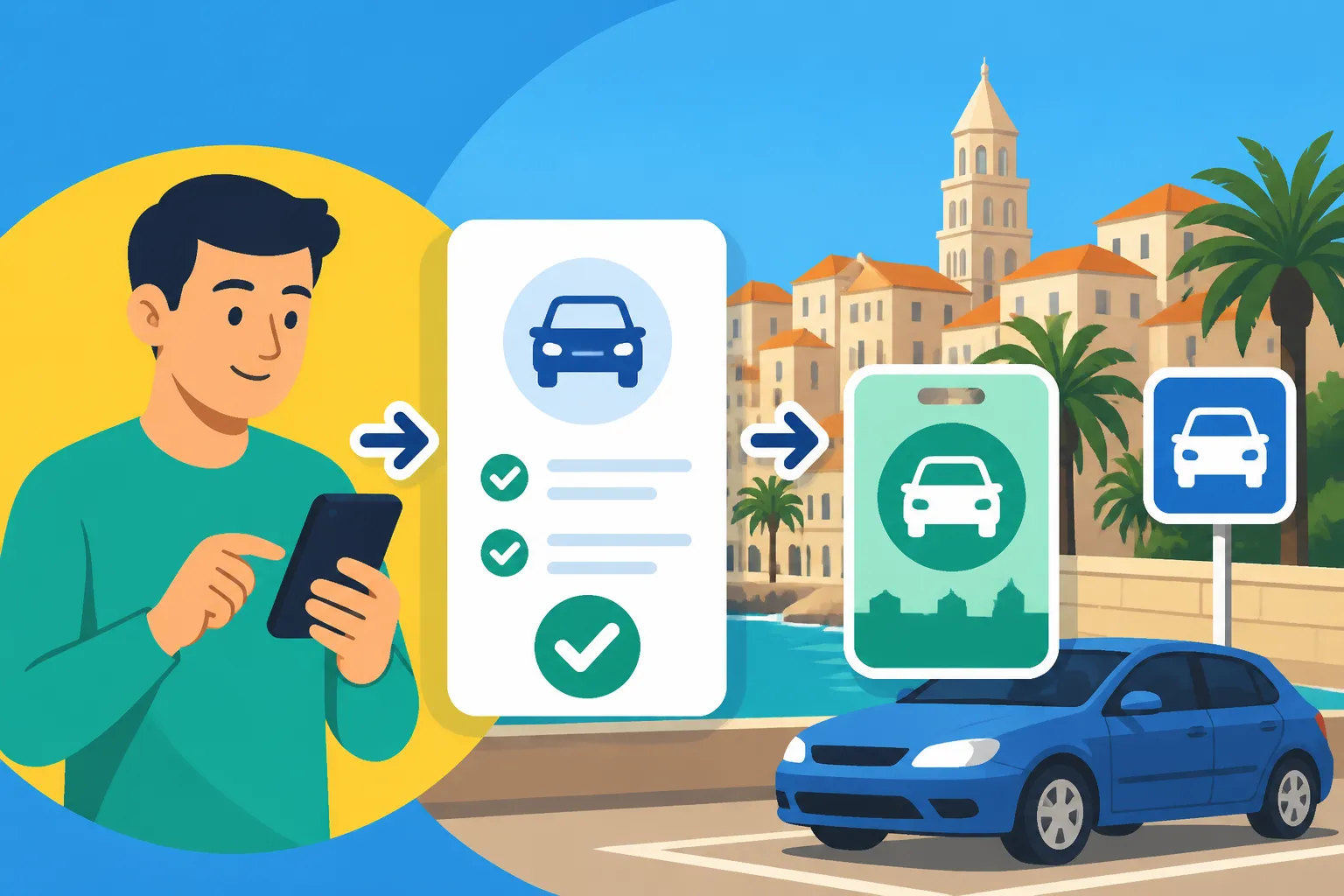
In Split, just like in many Croatian cities, the local municipality, through companies like Split Parking d.o.o., manages public parking. They've divided the city center and surrounding residential areas into various parking zones, often marked by different colors or numbers. For us actual residents who have officially registered our homes within these zones, there's a special permit. This "Povlaštena Parkirna Karta" (privileged parking card) allows you to park your vehicle in your designated resident zone without constantly paying hourly or daily fees, and often in spots reserved specifically for residents.
It’s not a free-for-all, mind you. It means you get to pay a significantly reduced monthly or annual fee to park within the specific zone where your registered address is located. Think of it as your hard-earned local discount on a service everyone else is paying a premium for. It acknowledges that you contribute to the local community and need a reasonable place to leave your car when you’re not out exploring this beautiful country.
Identifying Your Parking Zone
Before you even think about applying, you must know your specific parking zone. Split is divided into several zones, each with its own set of rules and, crucially, a specific permit that applies only to it. You can't live in Zone 1 and expect to park freely in Zone 2 with your Zone 1 permit. It just doesn't work that way.
How do you find out your zone?
- Street Signs: The most common way. As you drive into different areas of Split, you'll see large blue signs with a white "P" (for parking) and often the zone number or letter clearly marked, usually with a small map or text specifying the zone boundaries.
- Split Parking Website: This is your best friend. The official Split Parking d.o.o. website usually has detailed maps of all parking zones. Navigating it can sometimes feel like a treasure hunt, especially if your Croatian isn't fluent, but persistence pays off. Look for sections like "Parking zones" or "Resident permits."
- Local Knowledge: Ask your neighbors, your landlord, or even pop into a local kiosk or newsstand. Croatians are often incredibly helpful once you break the ice, especially when it comes to navigating local quirks like parking.
Understanding your zone is paramount. Imagine finally getting your permit, proudly displaying it, only to realize you’re in the wrong zone and still get a ticket! That’s a special kind of expat frustration we all try to avoid. So, double-check, triple-check, and then check again.
Why You Absolutely Need One as a Resident
If you live in Split and own a car, a resident parking permit isn't just a convenience; it's practically a necessity. Without it, you're facing a constant battle against the clock and your wallet.
First off, the cost. Imagine paying hourly parking rates every single day just to have your car near your apartment. In central Split, these rates can quickly add up to hundreds of euros a month, far exceeding the cost of a resident permit. Secondly, the availability of spaces. During peak tourist season, finding an empty non-resident spot in the city center can feel like winning the lottery. You'll circle blocks, burn gas, and arrive at your destination stressed and probably late. With a resident permit, while it doesn't guarantee a spot right outside your door, it does give you access to a dedicated pool of spaces, often clearly marked with "Stanari" (Residents) signs, which are off-limits to regular visitors.
And then there are the fines. Oh, the fines! Parking without a valid ticket or permit, or in the wrong zone, is a quick way to get a bright yellow sticker on your windshield. These fines are no joke and can quickly escalate if not paid promptly. Plus, the sheer mental load of constantly worrying about parking, checking your watch, and dreading that little slip of paper under your wiper is exhausting. As an expat who's been through the wringer with Croatian bureaucracy, I can tell you that anything that simplifies your daily life, especially something as fundamental as parking, is worth pursuing. You'll thank yourself every time you effortlessly (or at least, less painfully) find a spot in your neighborhood.
Eligibility and Documentation – The Paperwork Maze
Alright, now that you're convinced you need this permit, let's talk about the fun part: bureaucracy and paperwork. Croatia loves its documents, and getting a resident parking permit is no exception. It’s a process that demands patience and meticulous organization.
Who is Eligible?
The primary eligibility criterion for a resident parking permit in Split is straightforward: you must have officially registered your residence within the specific parking zone for which you are applying. This isn't about where you feel you live; it's about where the MUP (Ministarstvo Unutarnjih Poslova – Ministry of Interior) says you live.
Here’s a breakdown of the typical eligibility requirements:
- Registered Permanent Residence (Prebivalište) or Temporary Residence (Boravište): Your official address must be within the boundaries of the parking zone. This is typically proven by a certificate from the MUP. If you’re an EU citizen, you might have a different type of registration, but the principle is the same – your address needs to be officially recognized. You can learn more about this in our guide on Registering Your Residence in Croatia: The Complete MUP Guide.
- Vehicle Ownership: You must be the registered owner of the vehicle for which you are applying for the permit. If the car is leased, you'll need the lease agreement. If it’s a company car, additional company documentation might be required.
- Valid Vehicle Registration: Your vehicle must be properly registered with Croatian license plates and have a valid prometna dozvola (vehicle registration card). If you're still driving on foreign plates, you'll need to sort out your vehicle registration in Croatia first. We have a helpful guide on How to Register a Vehicle and Get Croatian Plates.
- One Permit Per Vehicle/Resident: Generally, only one permit is issued per vehicle, tied to the resident's address. If multiple people live at the same address and each owns a car, each person can apply for their own permit, provided they meet all individual criteria.
Being prepared with clear evidence for each of these points will save you a lot of back-and-forth trips to the Split Parking office.
Essential Documents You'll Need
Gathering these documents is probably the most challenging part of the whole process. Don't underestimate it. Start early, and expect a few unexpected twists and turns. Here’s the exhaustive list:
- Proof of Residence (Uvjerenje o Prebivalištu / Boravištu): This is a certificate from the MUP confirming your registered address in Split. It must clearly state the full address and that it's within the specific parking zone. You usually get this when you first register your address with the MUP, but if it's old or you need a new one, you'll have to visit them.
- Vehicle Registration Card (Prometna Dozvola): The original and a copy of your vehicle's Croatian registration card. This proves the car is legally registered in Croatia and lists you as the owner.
- Proof of Vehicle Ownership or Usage:
- If you own the car: Your prometna dozvola usually suffices.
- If the car is leased: A valid lease agreement in your name.
- If it's a company car: A certificate from your employer stating that you are the primary user of the vehicle, along with the company's registration details.
- OIB (Osobni Identifikacijski Broj): Your Croatian personal identification number. This is absolutely essential for almost all official transactions in Croatia, including this one. If you don't have one yet, you'll need to obtain it first. Our guide on How to Get Your OIB and Why It Matters for Healthcare Access provides a full walkthrough.
- Identity Document: Your passport or Croatian ID card (Osobna Iskaznica). The original and a copy. This is to verify your identity.
- Rental Agreement (Ugovor o Najmu) or Property Ownership Certificate (Vlasnički List):
- If you rent: A copy of your valid rental agreement (Ugovor o najmu) which must be registered with the tax administration (Porezna Uprava). If it's not registered, it's not considered a valid legal document for this purpose. If you're not sure about this, check out How to Register a Rental Lease with the Croatian Tax Administration.
- If you own property: An original or certified copy of your property ownership certificate (Vlasnički List). This document confirms you are the legal owner of the property at your registered address. For details on how to get this, refer to Understanding Property Ownership Certificates Vlasnički List in Croatia.
- Power of Attorney (Punomoć): If someone is applying on your behalf, they will need a notarized power of attorney document.
It feels like a lot, doesn't it? Like trying to gather dragon's teeth just to get a spot. But trust me, having everything in order before you even step foot in the Split Parking office will save you immense frustration.
Navigating the Bureaucracy of Document Collection
The phrase "paperwork maze" is no exaggeration when it comes to Croatia. Getting all these documents can be a multi-day, multi-location endeavor. You might find yourself bouncing between different government offices, often with limited English-speaking staff.
- MUP (Ministry of Interior): This is where you'll get your proof of residence. Make sure to book an appointment if possible, or prepare for a wait. The staff are usually efficient but don't expect them to hold your hand through the process. Having your OIB and valid ID ready is crucial.
- Porezna Uprava (Tax Administration): If you're renting, ensure your landlord has registered your rental agreement. This is important not just for parking, but for your legal residency status. Some landlords are hesitant, but it's a legal requirement and protects both you and them.
- Land Registry (Zemljišne Knjige): If you own property, getting your Vlasnički List might involve a trip here or requesting it online through the e-Građani system if you're set up for that.
It can feel overwhelming, especially if you're new to the country. This is where a good mobile plan from providers like Airalo (for eSIMs when you first arrive) or a reliable local network becomes invaluable. You'll need data to look up addresses, check opening hours, and translate documents on the fly. And remember that initial setup, like getting settled and ensuring your utilities are in order, as discussed in The Expat Guide to Setting Up Utilities in Croatia, can feel like a whole other mountain to climb. But these foundational steps are crucial for everything that follows, including parking permits.
For those just starting their journey in Croatia, remember that companies like Sirelo can assist with the logistics of moving your belongings, but the administrative hurdle of getting settled is a uniquely personal one. Take deep breaths, be patient, and don't be afraid to ask for help from local friends or even a reputable local agency if you feel completely lost.
The Application Process – Step-by-Step
You've gathered all your documents, probably have a folder overflowing with official-looking papers, and you're ready. Now for the actual application. This part is usually more straightforward than the document collection, but still requires attention to detail.
Where to Apply
In Split, applications for resident parking permits are handled by Split Parking d.o.o. They have a central office where you’ll need to go in person.
You'll typically find their main office at:
Split Parking d.o.o.
Ruđera Boškovića 28, 21000, Split
It’s generally a good idea to check their website or call ahead for their exact working hours, as these can change, especially around public holidays. Usually, they're open during standard business hours, but some days might have shorter hours. Arrive early, particularly if you’re going during peak times (like Monday mornings or just before closing) to avoid long queues.
Filling Out the Application Form
Once you get to the Split Parking office, you'll be directed to a counter where you can pick up the application form. Don’t expect a perfectly translated English version, though sometimes they might have a simplified guide. The form itself is relatively standard.
Here’s what it will generally ask for:
- Your Personal Details: Full name, surname, OIB, date of birth, and contact information (phone, email).
- Your Registered Address: The exact address in Split that you’ve registered with the MUP, including the street, house number, and postcode.
- Vehicle Details: Make, model, license plate number, and vehicle identification number (VIN). This information is all on your prometna dozvola.
- Parking Zone: You'll specify the parking zone you're applying for.
Tips for Filling It Out:
- Legible Handwriting: If you’re filling it by hand, write clearly. Croatian forms often have small boxes, so practice your neatest cursive.
- Accuracy: Double-check every single detail against your official documents. Any discrepancy could lead to delays.
- Ask for Help: Don’t be shy about asking the staff for clarification if you don’t understand a section. Even if their English is limited, they usually appreciate the effort and will try to help. A quick Google Translate query on your phone can bridge a lot of gaps here – something you'll be thankful for if you've sorted out your internet with How to Set Up Internet at Home in Croatia or an eSIM from Airalo.
The Waiting Game and Collection
After submitting your meticulously prepared application and documents, you enter the dreaded "waiting game." Processing times can vary depending on the time of year and how busy the office is. Generally, it can take anywhere from a few days to a couple of weeks.
- Notification: You might be notified by phone or email when your permit is ready for collection. Sometimes, it’s simply a case of them telling you to come back after a certain date.
- Collection: When you go to collect, bring your ID and potentially the receipt you received when you submitted your application. You’ll usually pay the fee at this point (or you might have paid it when you applied). Once you have the permit, ensure all the details on it – your license plate, your zone – are correct.
- Displaying Your Permit: The permit usually comes as a sticker or a small card that you display prominently on your windshield. Make sure it's clearly visible from the outside. Failure to display it correctly, even if you have a valid permit, can still result in a fine. Trust me, the parking attendants here don't mess around!
Here’s a summary table for clarity on what you’ll need:
| Document Category | Specific Document Required | Purpose | Where to Get It (Examples) |
|---|---|---|---|
| Identity & Residency | Passport/Croatian ID Card | Proof of Identity | Your Person |
| OIB (Osobni Identifikacijski Broj) | Croatian Personal ID Number | Porezna Uprava | |
| Uvjerenje o Prebivalištu / Boravištu (MUP Certificate) | Official Proof of Registered Address in Zone | MUP (Ministry of Interior) | |
| Vehicle Information | Prometna Dozvola (Vehicle Registration Card) | Proof of Vehicle Registration & Ownership | Issued upon vehicle registration |
| Property Information | Ugovor o Najmu (Registered Rental Agreement) | Proof of Tenancy in Zone | Your Landlord / Porezna Uprava |
| Vlasnički List (Property Ownership Certificate) | Proof of Property Ownership in Zone | Land Registry (Zemljišne Knjige) | |
| Other (If Applicable) | Punomoć (Notarized Power of Attorney) | Allows someone else to apply on your behalf | Public Notary (Javni Bilježnik) |
| Employer's Certificate (for company car) | Confirms primary user of company vehicle | Your Employer |
Costs, Renewal, and Important Considerations
You’ve conquered the bureaucracy, you’ve got your permit – congratulations! But the journey isn’t quite over. There are ongoing costs, renewal processes, and crucial rules to keep in mind.
How Much Does it Cost?
The cost of a resident parking permit in Split is significantly lower than daily or hourly rates, making it a truly worthwhile investment for residents. The exact prices can change, so always check the latest information on the Split Parking d.o.o. website or inquire at their office.
As of my latest information, monthly and annual rates for resident permits in Split's various zones are quite reasonable, often in the range of €5 to €15 per month, or a discounted annual fee if paid upfront. For example, some central zones might be at the higher end, while slightly more peripheral zones could be less. This is a stark contrast to the hourly rates that can be €1-2 per hour for non-residents.
Paying annually often provides a small discount, and it’s one less thing to think about each month. When you consider the average Cost of Living in Split for Expats, this permit offers genuine value.
Renewing Your Permit
Resident parking permits are not perpetual; they have an expiration date, typically one year from issuance if you opt for the annual payment. You'll need to renew it before it expires to avoid any lapses in coverage, which means you could find yourself back to square one with fines.
The renewal process is generally simpler than the initial application, as most of your details (OIB, vehicle registration) will likely remain the same. However, you will still need to:
- Re-submit Proof of Residence: Obtain an updated Uvjerenje o Prebivalištu / Boravištu from the MUP if your existing one is older than a few months. This confirms you still live in the zone.
- Present Valid ID and Vehicle Documents: Your passport/ID and prometna dozvola.
- Pay the Renewal Fee: The current monthly or annual fee.
It's a good practice to set a reminder a month or two before your permit expires. This gives you ample time to gather any updated documents without rushing or risking a period without a valid permit.
Common Pitfalls and Expert Tips
Living in Croatia, you quickly learn to anticipate the little things that can trip you up. Here are some expert tips to navigate resident parking in Split:
- Always Display Your Permit Clearly: I cannot stress this enough. Even if you paid, if the attendant can't see the permit, you risk a fine. Place it visibly on your dashboard or windshield.
- Understand Your Zone Limits: Just because you have a permit for Zone 1 doesn't mean you can park anywhere in Zone 1. Some spots within a zone might still be reserved for specific purposes (e.g., loading/unloading, disabled parking), or have different time restrictions. Always read the signs.
- Changes of Address/Vehicle: If you move to a new address (even within Split), or get a new car, you must update your permit. This usually involves applying for a new permit altogether, as the old one is tied to your previous address/vehicle. This is why keeping your MUP registration current, as detailed in Registering Your Residence in Croatia: The Complete MUP Guide, is so important.
- Beware of "Peak Season" Scrutiny: During the summer months, parking enforcement can be particularly rigorous. Don't take chances.
- e-Građani: If you're comfortable with Croatian and have activated your e-Građani account, you might be able to access some information or even initiate certain processes online. It’s worth exploring once you're more settled into the digital side of Croatian administration.
- Speak to a Local: Seriously, if you're ever unsure about a particular parking spot or rule, ask someone. Croatians might seem reserved at first, but they're often incredibly helpful, especially if you try a few words in Croatian.
Beyond the Permit: Alternative Parking Strategies
While the resident permit is fantastic, it doesn't solve every parking problem. Sometimes, even with a permit, finding a space in your zone can be tough, especially in very dense areas or during busy periods.
Consider these alternatives:
- Garages/Private Parking: There are several public parking garages in Split (e.g., Sukoišan, Koteks, and even some newer underground garages). These are paid options but offer guaranteed space and security, particularly useful if you're returning late or want to keep your car extra safe. Some apartment buildings also offer private parking spaces that can be rented.
- Motorcycle/Scooter: For navigating Split's narrow streets and finding parking, a scooter or motorcycle can be a game-changer. Just remember to park legally!
- Public Transport: Split has a decent bus network. For shorter distances or if you're heading into the absolutely packed city center, consider leaving your car further out and using public transport. The ZET public transport system in Zagreb is well-known, and Split has its own local system that is equally useful.
- Walking/Cycling: Split is a very walkable city, especially the old town. For many daily errands, walking or cycling is often the most pleasant and stress-free option.
Navigating the parking landscape in Split can be daunting for any expat, but with the right knowledge and a bit of perseverance, securing your resident parking permit will be one less administrative headache in your Croatian adventure. You’ve got this!
Disclaimer
The information provided in this guide is for general informational purposes only and does not constitute legal, financial, or professional advice. While we strive to keep the information up-to-date and accurate, regulations and procedures in Croatia can change frequently. Always consult official sources, such as Split Parking d.o.o., the Croatian Ministry of Interior (MUP), or a local legal professional for the most current and specific advice pertaining to your individual situation.