How Much Does a Two-Bedroom Apartment Cost in Split?
Ah, the quest for a two-bedroom apartment in Split! It’s a question that plagues so many of us expats when we first land here, full of hope and a little bit of dread about navigating the local rental market. You’re not just looking for a place to sleep; you’re looking for a home, a slice of Croatian life that fits your budget and lifestyle. This guide is here to cut through the confusion, offering a realistic look at what you can expect to pay for a two-bedroom apartment in Split, highlighting the critical factors that influence pricing, and arming you with practical advice for your search.
Unpacking Two-Bedroom Apartment Costs in Split
Let's get straight to the numbers, because that's likely why you're here. Split, being a highly desirable coastal city, particularly for tourism, has a dynamic and sometimes frustrating rental market. The cost of a two-bedroom apartment can swing wildly based on a number of factors, but I'll give you a solid, realistic range for what most expats consider "livable" and "available" for long-term rental.
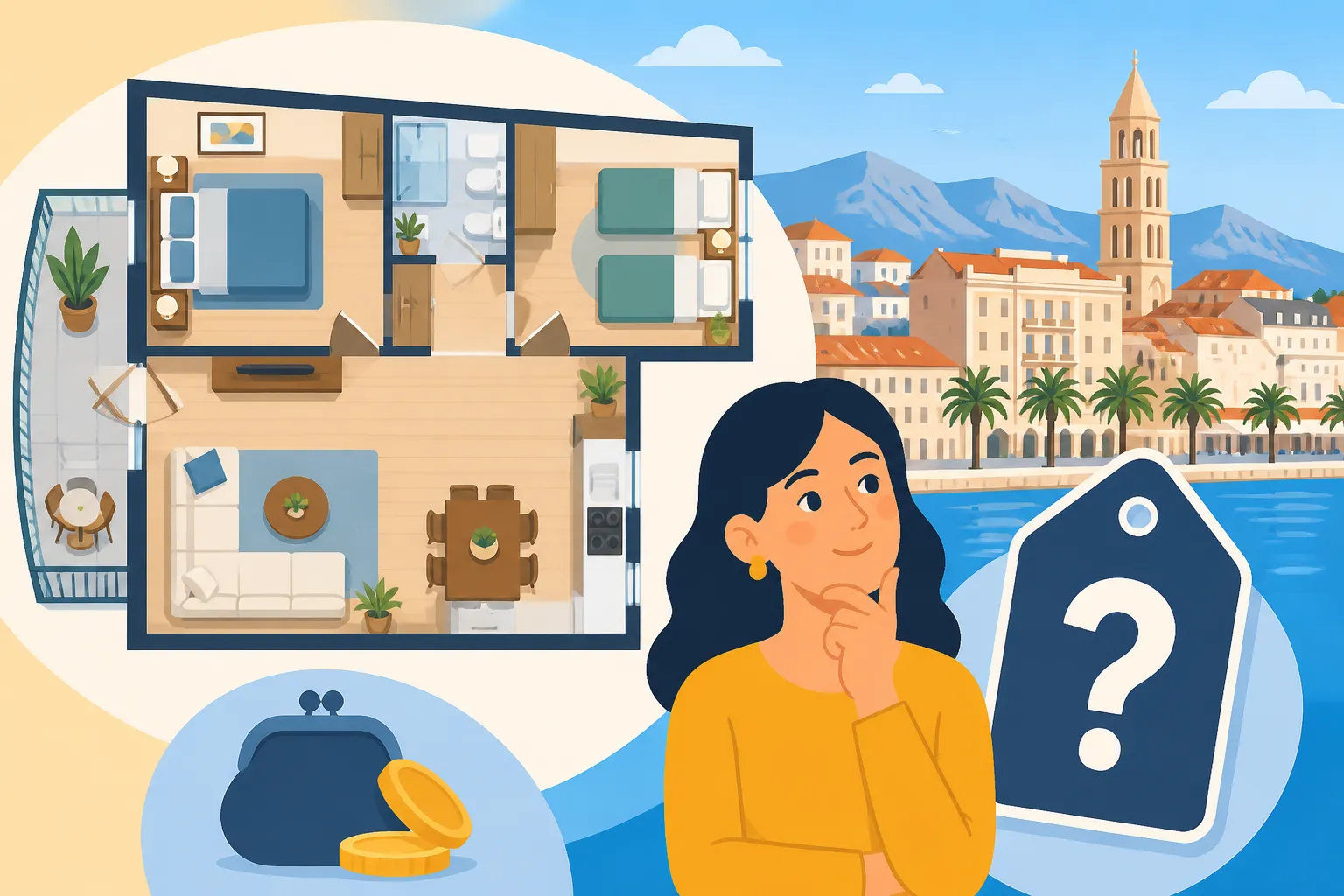
For a decent two-bedroom apartment in Split, especially if you're looking for something that's reasonably furnished, well-maintained, and not completely in the outskirts, you're generally looking at a monthly rent somewhere between €700 and €1,500. Now, I know that's a broad range, but Split is a city of contrasts. You might find a hidden gem for slightly less, and certainly, you can pay a lot more for luxury or prime beachfront real estate. Let's dig into what influences these figures.
Consider Mate, a recent arrival from Canada, who was thrilled to find a two-bedroom apartment near Gripe for €850 a month. It was an older building, but the apartment had been recently renovated, offered a decent amount of space, and was just a 15-minute walk from the city center. On the other hand, there’s Sarah, who needed something much closer to the Riva and was willing to pay €1,300 for a fully modern, impeccably decorated two-bedroom with a sea view. Her apartment even came with a dedicated parking spot, a rare and valuable commodity in Split. These are two very different experiences, both realistic.
It’s crucial to understand that the "average" can be misleading. A tiny, basic two-bedroom apartment far from the center might dip towards the lower end, while anything renovated, closer to the sea, or with modern amenities will push you towards the middle or upper end of this spectrum. Keep in mind that summer prices for short-term rentals can skyrocket, so if you're looking for a long-term lease, always clarify that upfront. Landlords often prefer long-term tenants to ensure steady income outside the tourist season, which can sometimes give you a bit more negotiating power.
Key Factors Influencing Rental Prices in Split
Understanding why prices vary is just as important as knowing the range. The Split rental market isn't a monolith; it's a complex beast with many moving parts. Being aware of these factors will help you manage your expectations and prioritize what's most important to you in your apartment hunt.
Location, Location, Location: Neighborhood Dynamics
Just like anywhere else, where an apartment is located within Split plays the biggest role in its price.
- City Center and Old Town (Diocletian's Palace area, Riva, Varoš): This is prime real estate, but often geared towards tourists. Finding a long-term two-bedroom apartment here can be challenging and expensive, easily pushing into the €1,200 – €2,000+ range. You’ll be in the heart of the action, but also dealing with crowds, noise, and often older buildings with less modern amenities. Think charming, but potentially cramped and without easy parking.
- Near Bačvice or Firule: If you dream of being near Split's famous beaches, these neighborhoods offer a fantastic lifestyle. They are still very central, vibrant, and highly sought after. Expect prices to be on the higher side, generally €1,000 – €1,600 for a good two-bedroom, especially if it's recently renovated or offers sea views.
- Manuš, Gripe, Spinut, Meje: These areas are a bit more residential, but still very close to the center and popular with families and expats. They offer a good balance of accessibility and slightly more reasonable prices. You'll find a wide range here, typically from €800 to €1,300, depending on the apartment's condition. Meje, nestled under Marjan hill, is often considered more upscale due to its greenery and proximity to nature.
- Further Out (Trstenik, Mertojak, Žnjan, Visoka): These neighborhoods are a bit further from the immediate city buzz but often feature newer buildings, more modern amenities, and easier parking. They tend to be more affordable, with two-bedroom apartments ranging from €700 to €1,100. Public transport is generally good, and you're often closer to larger shopping centers.
- Solin or Kaštela (Satellite Towns): If you're willing to commute, looking slightly outside Split in towns like Solin or Kaštela can significantly reduce your costs, potentially finding a two-bedroom for €500-€800. However, this means daily travel into Split, which might not be ideal for everyone.
Condition and Furnishing of the Apartment
The state of the apartment and what it comes with are huge price differentiators.
- Furnished vs. Unfurnished: Most long-term rentals in Croatia come fully furnished, which is a huge plus for expats. However, the quality of furnishing varies wildly. A modern, tastefully furnished apartment will command a higher price than one filled with older, well-worn furniture from grandma’s attic. Unfurnished options are rare but can be cheaper if you have your own furniture or plan to buy new. If you're bringing a lot of your own belongings, a service like Sirelo can be invaluable for international moving logistics.
- Renovation Status: A freshly renovated apartment with new appliances, modern bathroom, and updated flooring will always be more expensive. You're paying for comfort, aesthetics, and often better energy efficiency. Older apartments that haven't seen an update in decades will naturally be cheaper but might come with higher utility bills or maintenance issues.
- Amenities: Does it have air conditioning? A washing machine? A dishwasher? Modern heating? These might seem like basics in many countries, but in Croatia, their presence and quality can impact the price. A balcony or a small garden space is also a highly desired feature, especially with Split's beautiful climate.
- Parking: In Split, parking is a perennial headache. If an apartment comes with a dedicated parking spot (garaža or parkirno mjesto), expect to pay a premium. This can add €50-€150 to your monthly rent, but for many, it's a worthwhile investment to avoid endless circling for a spot.
Rental Term and Timing
The length of your lease and the time of year you search can surprisingly impact the price.
- Long-term vs. Short-term: Landlords usually prefer long-term tenants (typically a minimum of one year) over short-term rentals, especially those who aren't looking to stay just for the high tourist season. This preference can sometimes give you a slight edge in negotiation or access to apartments not advertised to the general tourist market. Be very clear about your intentions from the start.
- Tourist Season Impact: The high season (roughly June to September) sees a massive surge in demand for accommodation, leading to inflated prices, even for long-term rentals. Many landlords will switch to tourist rentals during these months as it's far more lucrative. If you can, search and secure your apartment outside of these peak months – ideally between October and April – you'll have more options and potentially better prices. I've seen expats scramble in May, only to find their options severely limited or prohibitively expensive.
Navigating the Split Rental Market: Practical Tips for Expats
Finding an apartment in Split can be an adventure, to say the least. It’s a process that requires patience, persistence, and a good understanding of local customs. Here are some actionable tips to help you in your quest for a two-bedroom pad.
Where to Look for Apartments
Don’t put all your eggs in one basket. Cast a wide net!
- Online Portals: Njuškalo.hr is the most popular online marketplace in Croatia, and you'll find a vast number of apartment listings there. Filter by "najam" (rent), "stan" (apartment), and "dvije sobe" (two rooms/bedrooms). Other sites like Indomio.hr and Realitica.com also have listings, though often cross-posted. Facebook groups like "Expats in Split" or "Split Rentals" are fantastic resources, often featuring direct-from-owner listings, which can sometimes bypass agency fees.
- Real Estate Agencies: While they come with a fee (typically one month's rent + VAT, paid by the tenant), agencies like Biliškov Nekretnine, Europartner, or Palace Nekretnine can save you a lot of legwork and provide a layer of security. They have access to listings not always visible to the public and can help with contracts. Ensure they are reputable and that all fees are clearly stated upfront.
- Word of Mouth: Seriously, don't underestimate the power of networking in Croatia. Tell everyone you meet you're looking for an apartment. Expats, local friends, even baristas – you never know who might have a friend of a friend with an available place.
Preparing for Your Search and Viewing
Be ready to act quickly and wisely when you find something promising.
- Have Your Documents Ready: Landlords and agencies will want to see proof of identity and potentially proof of income. Make sure you have your passport and your OIB (Croatian personal identification number) readily available. If you're still waiting for your OIB, start the process as soon as possible, as it's essential for almost everything here. Check out our guide on How to Get an OIB (Personal Identification Number) in Croatia for a step-by-step breakdown.
- Be Decisive: Good apartments, especially two-bedrooms at a fair price, don't stay on the market long in Split. If you find something you like, be prepared to make a decision quickly. Delays can mean losing out to someone else.
- Ask Plenty of Questions: Don't be shy. Inquire about utility costs (who pays for what), internet providers, heating methods, and any hidden fees. Ask about the landlord's policy on pets, smoking, or guests. If possible, speak to current or former tenants, though this isn't always feasible. It’s also wise to understand your rights as a tenant, which you can learn more about in Understanding Tenant and Landlord Rights in Croatia.
- Inspect Thoroughly: Before signing anything, check everything. Test the water pressure, flush the toilets, turn on all lights, check appliances, and look for signs of dampness or pests. Take photos or videos for your records. This might seem obvious, but it's easy to get caught up in the excitement.
Essential Paperwork and Financials
Understanding the legal and financial aspects is key to a smooth rental experience.
- The Rental Contract (Ugovor o najmu): Always insist on a written contract. This protects both you and the landlord. It should clearly state the rent amount, duration of the lease, notice period, security deposit terms, and who is responsible for utilities. Ensure it's in Croatian and, if possible, get a translation you understand. The landlord is legally obliged to register your rental lease with the Croatian Tax Administration. This registration helps formalize your tenancy and is often required for your own residence permit applications. Learn more about this in How to Register a Rental Lease with the Croatian Tax Administration.
- Security Deposit (Kaucija): This is standard practice, usually one or two months' rent. Ensure the terms for its return are clearly stipulated in the contract.
- Utilities (Režije): Clarify from day one who pays for what. Typically, the tenant pays for all consumption-based utilities (electricity, water, gas, internet, trash collection). Sometimes, the building's shared maintenance fee (pričuva) might be included in the rent, or it might be an additional cost. Getting internet and mobile service set up is crucial for modern life, so also check out How to Choose a Mobile and Internet Provider in Croatia. For seamless connectivity upon arrival, especially for communicating with potential landlords, consider getting an eSIM from a provider like Airalo for instant data.
- Payment Methods: Most landlords prefer direct bank transfers. Make sure you have a Croatian bank account set up for this. If you haven't opened one yet, our guide on The Expat Guide to Opening a Bank Account in Croatia can walk you through it.
The Cost of Living Beyond Rent: A Broader Picture
While rent is often the biggest chunk of your monthly expenses, it's just one part of the puzzle. Understanding the overall cost of living in Split will give you a clearer picture of your financial situation.
Monthly Expenses Beyond Rent (Estimates for 1-2 people)
| Category | Low-End Estimate (€) | Mid-Range Estimate (€) | High-End Estimate (€) |
|---|---|---|---|
| Utilities (Electricity, Water, Heating, Gas, Trash) | 100 | 180 | 250+ |
| Internet & Mobile | 30 | 45 | 60+ |
| Groceries | 250 | 400 | 600+ |
| Public Transport | 20 | 40 | 60+ |
| Dining Out / Entertainment | 100 | 300 | 700+ |
| Miscellaneous (Personal Care, etc.) | 50 | 100 | 200+ |
| Total (excluding rent) | 550 | 1165 | 1870+ |
- Utilities: Your utility bills for a two-bedroom apartment will largely depend on consumption, seasonality (heating/cooling needs), and the energy efficiency of the building. In winter, heating can significantly increase your costs, especially if you rely on electricity. In summer, air conditioning can do the same. Getting your electricity, water, and gas set up involves dealing with companies like HEP for electricity, so check out How to Set Up Electricity (HEP) in Your Croatian Home.
- Groceries: While local produce at the pazar (market) can be very affordable and fresh, imported goods or specialty items can be expensive. Learning to cook with seasonal, local ingredients is key to keeping grocery bills down.
- Transport: Split has a decent public bus system (Promet Split). A monthly pass is quite affordable. If you have a car, factor in fuel costs, maintenance, and the ever-present parking fees.
- Eating Out/Entertainment: Split has a vibrant food scene, from cheap fast food to high-end restaurants. It's easy to spend a lot, but also possible to enjoy a good meal without breaking the bank if you know where to go.
The Broader Picture: Cost of Living in Split
When combining rent and other expenses, you can see how the cost of living in Split can vary dramatically. For a single person or a couple in a two-bedroom apartment, a comfortable but not extravagant lifestyle might cost anywhere from €1,300 to €2,500+ per month, excluding major travel or luxury spending. This is just a general estimate, of course. For a more detailed look into your overall budget, you might want to read our comprehensive guide on The Complete Guide to Cost of Living in Croatia for Expats (2026).
Moving to a new country like Croatia is a huge undertaking, and understanding the financial landscape is paramount. From finding your ideal two-bedroom apartment in Split to setting up all your utilities and getting connected, it’s a journey with its ups and downs. But with careful planning, realistic expectations, and the right resources, you’ll be enjoying the Dalmatian lifestyle in your new home in no time.
Disclaimer
Please remember that all information provided in this guide is for general informational purposes only and may not be applicable to your specific situation. Rental prices, regulations, and living costs in Croatia can change rapidly. It is always advisable to consult with local real estate professionals, legal experts, or relevant government authorities (like the MUP for residence matters) for the most accurate and up-to-date advice regarding your individual circumstances.