The Complete Guide to Croatian Work and Residence Permits (2027)
Navigating the labyrinthine world of Croatian immigration can feel like an Olympic sport, especially when you're trying to figure out how to live and work legally in this beautiful country. The paperwork, the multiple trips to various government offices, and the constant fear of missing a crucial document can be incredibly overwhelming. This comprehensive guide is here to cut through the confusion and walk you, step-by-step, through securing your Croatian work and residence permits, ensuring you understand exactly what's needed for a smoother transition.
Demystifying Croatian Residence and Work Permits
One of the biggest hurdles expats face when moving to Croatia is understanding the difference between a residence permit and a work permit, and then figuring out which one they actually need. It’s not just you; it's genuinely confusing! Croatia has streamlined much of this into a "single permit" system, but the nuances are still there. Let's break down the basic concepts so you're not left scratching your head.
Residence Permit: Your Right to Live Here
Think of a residence permit, or boravišna dozvola in Croatian, as your official ticket to simply exist in Croatia for an extended period beyond the standard tourist stay. If you're planning to be here for more than 90 days within any 180-day period, you'll need one. This permit confirms your legal status as a temporary resident (privremeni boravak). It doesn't, however, automatically grant you the right to work.
For example, if you're coming to Croatia to study, as a digital nomad, or to reunite with family, your primary need is a residence permit. You'll apply for this at the Ministry of Interior (MUP) and it will state the purpose of your stay. Without it, you're essentially overstaying your welcome, which can lead to hefty fines and even deportation, something nobody wants to experience when trying to build a new life abroad.
Work Permit: Your Right to Earn Income
A work permit, or radna dozvola, is exactly what it sounds like: official permission to be employed or self-employed in Croatia. For many years, these were separate documents, creating an extra layer of bureaucracy. Imagine getting your residence permit, celebrating, and then realizing you still couldn't legally earn money! Thankfully, for most non-EU/EEA citizens, Croatia has largely moved to a system where the work and residence permits are combined.
This means if your intention is to work for a Croatian employer or run your own business, your application will inherently include the work aspect. For instance, if you've been offered a job in Split, your employer will typically initiate the process for a single work and residence permit on your behalf. This combined approach, while still requiring significant documentation, simplifies the administrative burden by merging two complex processes into one.
The Single Work and Residence Permit
For most non-EU/EEA citizens looking to both live and work in Croatia, the jedinstvena dozvola za boravak i rad or "single work and residence permit" is your primary pathway. This is the government’s effort to make things a bit less bewildering, combining both permissions into one official document. It’s what most people refer to when they talk about "getting their visa" for Croatia, even though it's technically a residence permit with work authorization.
This permit covers various scenarios:
- Employment: For those employed by a Croatian company.
- Self-Employment: For individuals establishing their own obrt (crafts/trade) or d.o.o. (limited liability company).
- Highly Skilled Workers (EU Blue Card): A specific permit for highly qualified professionals.
The beauty of the single permit is that once approved, you receive a biometric residence card that explicitly states your right to reside and work. No more separate stamps or documents! This streamlined system, while not perfect, aims to reduce the red tape that often deters skilled individuals from choosing Croatia as their new home. It's still a journey, but at least you're taking one main path rather than two divergent ones.
Who Needs a Work and Residence Permit in Croatia?
Understanding who needs what is crucial, as the rules differ significantly based on your citizenship and the purpose of your stay. This isn't a one-size-fits-all situation, and getting it wrong can lead to delays or even rejection of your application.
EU/EEA Citizens
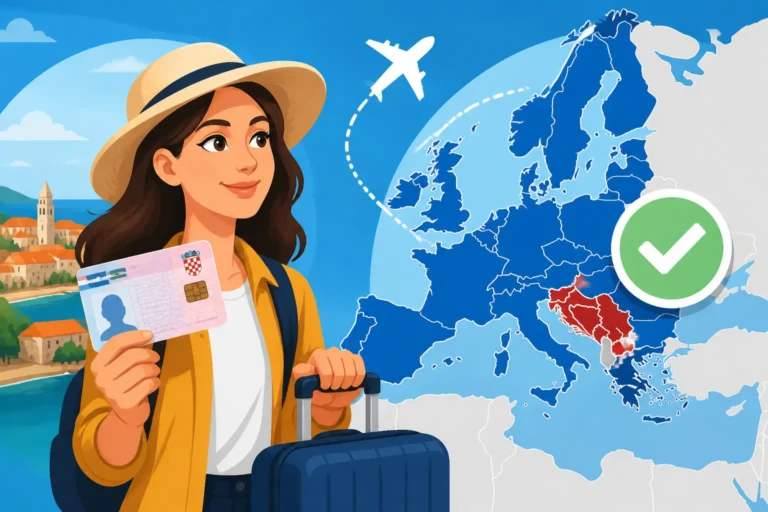
If you're a citizen of an EU/EEA country (which includes Iceland, Liechtenstein, and Norway), you generally have the right to live and work in Croatia without needing a specific work permit. This is part of the freedom of movement within the European Union. However, you're not entirely off the hook.
While you don't need a work permit, if you plan to stay in Croatia for more than three months, you absolutely must register your residence with the local police (MUP). This is a vital step and often overlooked by newcomers. You'll need to gather documents like proof of address, financial self-sufficiency (or an employment contract), and health insurance. Failing to register can result in fines, so don't skip this. For a smooth registration process, remember to read up on Registering Your Residence in Croatia: The Complete MUP Guide.
Non-EU/EEA Citizens
For anyone outside the EU/EEA bloc, the situation is more complex, and you will almost certainly need a single work and residence permit to work legally in Croatia. This includes citizens from countries like the United States, United Kingdom, Canada, Australia, and many others.
The Croatian government wants to protect its domestic labor market, so there are stricter controls. The single permit system, as discussed, is designed for you. It means your employer, or you if you're self-employed, will apply for permission for you to both live and work in Croatia simultaneously. This is where most of the administrative heavy lifting occurs. The specific requirements will vary based on your job type, qualifications, and even the local unemployment rate in the region you plan to move to.
Specific Exemptions and Cases
While the general rule applies, there are a few specific exemptions or different pathways to consider:
- Digital Nomads: Croatia was one of the first countries in Europe to introduce a dedicated digital nomad residence permit. This permit allows you to live in Croatia and work remotely for foreign companies. Crucially, it does not allow you to work for Croatian companies or clients. If you're a freelancer working for international clients, this might be your ideal route. You'll need proof of income, health insurance, and accommodation. For a deeper dive into this, check out How to Apply for a Croatian Digital Nomad Permit.
- Family Reunification: If you're a non-EU/EEA citizen joining a family member who is already a Croatian citizen or legal resident, you might apply for a residence permit based on family reunification. While this initially grants residence, it often comes with the right to work as well, depending on the status of your family member. This pathway prioritizes family unity over specific employment needs.
- Students: International students coming to study at Croatian universities will apply for a residence permit for study purposes. This usually comes with restrictions on working hours (e.g., part-time work only), if any work is permitted at all, and often requires a separate work permit or notification if they exceed those limits.
- Researchers and Scientists: There are often specific, more streamlined pathways for academics and researchers coming to work for Croatian scientific institutions, recognizing their valuable contribution.
It’s crucial to understand your specific category and citizenship to embark on the correct application journey. Don't assume your situation is the same as a friend's from a different country or with a different purpose of stay.
The Single Work and Residence Permit: Your Main Pathway
For the vast majority of non-EU/EEA citizens looking to build a life and career here, the single work and residence permit is the document you'll be chasing. This isn't just a piece of paper; it’s the gateway to your new life in Croatia, combining the right to live and the right to earn. Let's delve into what this means in practical terms.
Labor Market Test: The Gatekeeper
Before a single work and residence permit can even be considered for most employed positions, a "labor market test" is often required. This sounds daunting, and frankly, it can be a bit of a bureaucratic dance. The idea is to ensure that there isn't a qualified Croatian or EU/EEA citizen available and willing to do the job your prospective employer wants to hire you for.
Here’s how it typically works:
- Job Advertisement: Your potential Croatian employer must first advertise the position with the Croatian Employment Service (HZZ) for a specified period, usually 15-30 days.
- Candidate Search: HZZ will then search its database for suitable candidates. If they find one, your application might hit a roadblock.
- HZZ Opinion: If no suitable candidate is found, or if those found are unwilling or unqualified, HZZ will issue a "positive opinion" (or a "negative opinion" if they find someone). This positive opinion is a crucial document for your permit application.
Now, there are some exceptions where the labor market test isn't needed. These usually involve highly sought-after professions (think IT specialists, certain medical doctors, or specific engineering roles) or jobs where international expertise is clearly required. Always check the latest list of professions exempt from the labor market test, as this can change annually based on the needs of the Croatian economy.
Quotas and Annual Limits
Croatia, like many countries, used to operate on a quota system for foreign workers, meaning only a certain number of permits were issued each year for specific industries or roles. This could be incredibly frustrating, as talented individuals might be rejected simply because the quota for their profession had been filled.
However, recent reforms have largely moved away from rigid annual quotas for most types of employment. Instead, the focus has shifted more towards the labor market test and the specific needs of the employer. This is generally good news for expats, as it means your chances aren't strictly limited by an arbitrary number but rather by your qualifications and the employer's genuine need. Nonetheless, it’s always wise to check the most current legislation, as policies can evolve.
Employer's Role in the Application Process
When you're applying for a single work and residence permit based on employment, your Croatian employer plays a pivotal role. In fact, they are usually the ones who initiate most of the process. This isn't something you tackle entirely on your own from abroad.
The employer will typically:
- Initiate Labor Market Test: If required, they'll post the job advertisement with HZZ and await the opinion.
- Submit Application to MUP: Once they have the necessary HZZ opinion (if applicable) and other required documents (your qualifications, a draft employment contract, etc.), they will submit the application for your single work and residence permit to the local MUP office where their company is registered.
- Provide Documentation: They will also need to provide various company documents, such as proof of registration, tax clearance, and evidence that they are a legitimate business.
This partnership with your employer is critical. You'll need to provide them with all your personal and professional documents, and they'll handle the local bureaucratic steps. It’s essential to maintain clear communication throughout this process, as delays often stem from missing information on either side.
Specific Residence Permit Scenarios Beyond Standard Employment
While the single work and residence permit for traditional employment covers many cases, Croatia offers various other paths for foreigners. Each comes with its own set of rules, frustrations, and ultimately, rewards. Let's explore some of these specific situations.
Digital Nomad Permit
Croatia has truly embraced the digital nomad movement, offering a specific permit that has attracted many remote workers. This permit is for non-EU/EEA citizens who work remotely for companies outside Croatia or run their own non-Croatian businesses. The key here is that you cannot work for Croatian entities or clients.
To qualify, you'll need to demonstrate:
- Remote Work: Proof that you perform remote work for a foreign employer or your own foreign-registered company.
- Proof of Funds: You must show sufficient financial means to support yourself, which is typically a specific multiple of the Croatian average net salary. As of early 2024, this was set at a monthly income of around €2,500 (2.5 times the average net salary), with additional funds for dependents. This requirement can change, so always check the latest figures.
- Accommodation: Proof of where you'll be staying in Croatia.
- Health Insurance: Comprehensive health insurance valid in Croatia is a must. Many digital nomads opt for international providers like Cigna Global to ensure they are fully covered for any medical emergencies or routine care during their stay.
- Clean Criminal Record: A background check from your home country.
The digital nomad permit is granted for up to one year and can be renewed, but there's a catch: you usually have to leave Croatia for 90 days after your permit expires before you can apply for a new one. This is a crucial point for long-term planners. The application can be made online, at a Croatian embassy or consulate abroad, or at a MUP office within Croatia if you are already here as a tourist, though applying from outside is often recommended to avoid any overstay issues.
Self-Employment (Obrt or d.o.o.)
For those with an entrepreneurial spirit, setting up your own business in Croatia can also be a route to a residence permit. This usually involves establishing either an obrt (a simpler, sole proprietorship type of business) or a d.o.o. (a limited liability company).
The process here is generally more hands-on for you, the individual, rather than an employer. You'll need to:
- Register Your Business: This involves navigating the Croatian commercial court or other relevant authorities to legally establish your obrt or d.o.o. This step can be complex, requiring a good grasp of Croatian business law or the help of a local accountant. For many, the paušalni obrt (flat-rate trade) is a popular choice due to its simplified tax structure.
- Prove Financial Viability: You must demonstrate that your business is viable and that you can sustain yourself and your family. This often involves a business plan, projected income, and proof of initial capital.
- Secure Health Insurance: As with other permits, health insurance is mandatory. You’ll be contributing to the Croatian health insurance fund (HZZO) through your self-employment contributions. Understanding How the Croatian Health Insurance Fund (HZZO) Works: A Full Overview is key here.
The application for the residence permit will then be based on your registered business. This route offers a lot of flexibility and independence but requires a significant upfront investment in understanding the local business landscape and administrative requirements.
Family Reunification
If you are a non-EU/EEA citizen with a family member (spouse, child, parent) who is a Croatian citizen or holds a valid Croatian residence permit, you can apply for a residence permit based on family reunification. This is a human-centric pathway, designed to keep families together.
Key aspects include:
- Proof of Relationship: You'll need official documents like marriage certificates or birth certificates, all legalized and translated into Croatian.
- Financial Means: The family member sponsoring you (the Croatian citizen or resident) must demonstrate sufficient financial means to support you. This is crucial to ensure you won't become a burden on the Croatian social system.
- Accommodation: Proof of shared accommodation or that suitable housing is available.
- Health Insurance: Again, mandatory health insurance. If your sponsoring family member is covered by HZZO, you may be able to register as a dependent. Learn more about How to Register Family Members for Health Insurance in Croatia.
The processing time for family reunification permits can sometimes be lengthy, depending on the MUP office and the complexity of your case, but it provides a clear route for families to unite in Croatia.
Students
Croatia’s universities are attracting more international students, particularly with programs offered in English. If you're coming to study, your primary goal is a residence permit for study purposes.
The requirements generally include:
- Acceptance Letter: Proof of enrollment from a recognized Croatian educational institution.
- Proof of Funds: You'll need to show you have enough money to cover your tuition fees and living expenses for the duration of your studies. This can be bank statements, scholarship letters, or a declaration of support from parents/guardians.
- Accommodation: Proof of student housing, a rental contract, or a statement from a host.
- Health Insurance: You must have valid health insurance. Students often register with HZZO once their residence permit is approved.
- Clean Criminal Record: A background check may be requested.
Student permits usually have restrictions on working hours during your studies, often limited to part-time, and you may need to notify authorities or even apply for a separate work permit if you intend to exceed these limits. Always clarify the specific rules regarding student employment with your university and the MUP.
The Application Process: Step-by-Step
Alright, this is where the rubber meets the road. The actual application process for a Croatian work and residence permit can feel like a gauntlet, but by breaking it down, you’ll be much better prepared. Remember, patience is your best friend here!
Where to Apply
Your application point depends on where you are currently located and your citizenship.
- Croatian Embassy or Consulate Abroad: If you are a non-EU/EEA citizen and require a visa to enter Croatia (Type D long-stay visa), or if you simply prefer to have your permit sorted before arrival, you’ll start your application at the Croatian embassy or consulate in your country of residence. They will review your documents and forward your application to MUP in Croatia. This is often the most straightforward path for those not already in Croatia.
- Ministry of Interior (MUP) in Croatia: If you are an EU/EEA citizen registering your residence, or a non-EU/EEA citizen who can enter Croatia visa-free (e.g., US citizens for short stays) and are eligible to apply from within the country (e.g., for a digital nomad permit), you can apply directly at the local MUP office. These offices are located in larger cities like Zagreb, Split, Rijeka, and Dubrovnik. Each MUP office has specific opening hours and procedures, so it's always best to check their local website or call ahead. You’ll definitely want to ensure you have all your ducks in a row before Booking an Appointment at the MUP for Immigration Matters.
Key Stages of the Application
Regardless of where you apply, the process generally follows these stages:
- Gathering Documents: This is arguably the most critical and often the most frustrating step. We'll detail the required documents in the next section, but expect to collect birth certificates, marriage certificates, diplomas, criminal background checks, bank statements, and more. Ensure all foreign documents are apostilled or super-legalized and officially translated into Croatian by a certified court interpreter. Don't underestimate this! Many applications get delayed because of improperly prepared documents.
- Labor Market Test (if applicable): As discussed, if your permit is for employment, your employer will typically initiate this with the Croatian Employment Service (HZZ). You wait for a positive opinion.
- Submitting the Application:
- From Abroad: The Croatian embassy/consulate will review your documents. If everything is in order, they forward your application to the MUP in Croatia for processing.
- From Within Croatia: You'll submit your complete dossier to the MUP directly. Be prepared for potential queues and remember that speaking a little Croatian can go a long way, though many MUP officers in larger cities do speak English.
- Processing and Background Checks: MUP will then process your application, conduct various background checks (including security checks), and verify your documents. This stage can take several weeks or even months. The official processing time can vary greatly depending on the MUP office's workload and the complexity of your case.
- Decision and Notification: If your application is approved, MUP will notify you or the embassy/consulate. If you applied from abroad, you’d then typically receive a Type D long-stay visa in your passport, allowing you to enter Croatia to finalize your permit.
- Biometrics and Residence Card Issuance: Once in Croatia (or if you applied from within), you'll need to visit MUP to provide your biometric data (fingerprints, photo, signature). After this, your boravišna iskaznica (biometric residence card) will be issued. This is your official ID and proof of your legal status. This card is your identity document in Croatia, so keep it safe!
Processing Times: A Test of Patience
Let’s be realistic: Croatian bureaucracy moves at its own pace. Processing times can vary significantly. While officially they might state a certain timeframe (e.g., 30-60 days), it's not uncommon for it to take longer, especially during peak seasons or for complex cases.
- Digital Nomad Permits: These are often processed relatively quickly compared to employment permits, sometimes within a few weeks, especially if all documents are perfect.
- Employment Permits: These can take 2-3 months, sometimes more, especially if a labor market test is involved.
- Family Reunification: These can also be quite variable, ranging from a couple of months to half a year.
It's crucial to apply well in advance of your intended move or the expiration of any current legal stay. Do not book non-refundable flights or make irreversible plans until you have received confirmation of your permit. This journey requires a deep breath and a large dose of understanding that things often just take time.
Key Documents and Requirements
This is where the real administrative heavy lifting comes in. Getting your documents absolutely perfect is the biggest favor you can do yourself. Any missing piece or improperly translated paper can send you back to square one, adding weeks or even months to your timeline.
General Documents for All Applicants
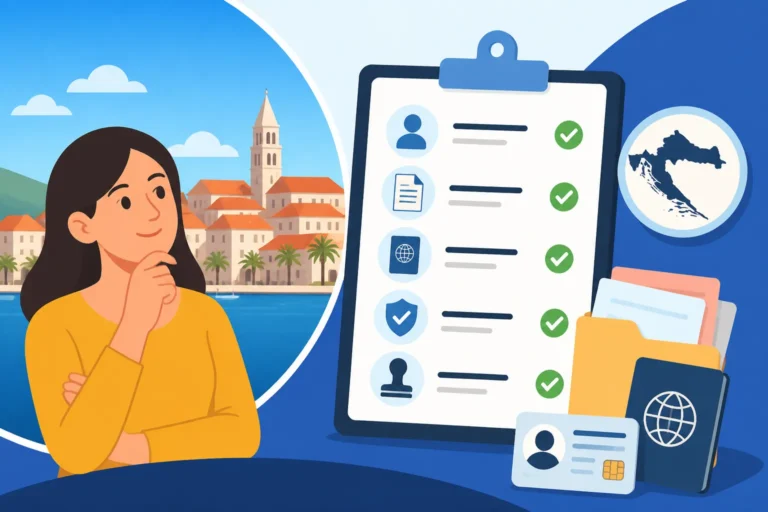
Regardless of your specific permit type, most applicants will need to furnish a core set of documents:
- Valid Passport: This must be valid for at least three months beyond the intended period of stay and have at least two blank pages. Make sure it's in pristine condition; any damage can cause issues.
- Application Form: The official MUP application form, completed fully and accurately.
- Passport-Sized Photos: Usually two, conforming to specific biometric standards.
- Proof of Accommodation: A rental agreement, a statement from a host, or a property ownership certificate. This proves you have a place to live.
- Proof of Sufficient Funds: Bank statements showing you can support yourself without becoming a burden on the state. The exact amount varies by permit type, often linked to the average Croatian salary. For those with jobs, your employment contract can serve this purpose. For digital nomads or self-employed individuals, liquid assets are key. For advice on handling money, consider The Expat Guide to Opening a Bank Account in Croatia.
- Health Insurance: Proof of comprehensive health insurance covering your stay in Croatia. This is absolutely non-negotiable. If you're employed in Croatia, you'll eventually be covered by HZZO, but you might need private insurance like Cigna Global initially. You can learn more about Health Insurance in Croatia: Mandatory, Supplementary and Private Options Explained.
- Criminal Background Check: A certificate of no criminal record from your home country (and any other country you've resided in for more than one year in the past few years). This needs to be recent (usually not older than 6 months).
- OIB (Personal Identification Number): While you might not have this before applying, it's essential for virtually all financial and legal dealings in Croatia. Sometimes MUP will issue it as part of your permit process, or you might need to apply for it separately at the tax office. Knowing How to Get Your OIB and Why It Matters for Healthcare Access is fundamental.
- Administrative Fees: Be prepared to pay various fees for the application, the biometric card, and potentially for legalizations and translations. Keep exact cash as not all MUP offices accept cards.
Specific Documents for Employment-Based Permits
If you're coming to work for a Croatian employer, you'll need additional items:
- Employment Contract: A signed contract or pre-contract outlining the terms of your employment with the Croatian company.
- HZZ Opinion: As discussed, a positive opinion from the Croatian Employment Service (HZZ), if the labor market test was required.
- Employer's Documentation: Your employer will need to provide their company registration documents, proof of tax clearance, and possibly proof of why they need to hire a foreign national.
- Educational Qualifications: Copies of your diplomas, degrees, and professional certifications. These may need to be recognized by the Croatian Agency for Science and Higher Education (AZVO) for certain professions. Find out more about How to Get Your Foreign Degree Recognised in Croatia: The AZVO Guide.
Specific Documents for Self-Employment Permits
For entrepreneurs, your documentation will revolve around your business:
- Business Registration Proof: Official documents showing the registration of your obrt or d.o.o. in Croatia.
- Business Plan: A detailed plan outlining your business activities, financial projections, and how it will contribute to the Croatian economy.
- Proof of Initial Capital: Evidence that you have the necessary funds to start and run your business.
Specific Documents for Digital Nomad Permits
The digital nomad permit has its own tailored requirements:
- Proof of Remote Work: Contracts with foreign clients, proof of business registration abroad, or letters from foreign employers stating your remote work status.
- Minimum Income Threshold: Bank statements or other financial documents proving you meet the income requirements (e.g., around €2,500/month as of early 2024, but this changes).
- Statement on Non-Engagement with Croatian Employers: A signed declaration that you will not work for any Croatian company or client while on this permit.
Legalization and Translation: The Bureaucratic Gauntlet
This part is often the biggest headache. Any document not originally issued in Croatia or by an EU/EEA country (and sometimes even then) will likely need to be:
- Apostilled or Super-Legalized: Depending on whether your home country is a signatory to the Hague Apostille Convention. This certifies the authenticity of the public document.
- Officially Translated: Translated into Croatian by a certified court interpreter in Croatia. Do NOT use Google Translate or a friend who speaks Croatian; it must be a certified translator whose stamp and signature are recognized by Croatian authorities.
Always assume your foreign documents need this process unless explicitly stated otherwise. It adds time and cost to your application, so factor it into your planning and budget.
Common Challenges and How to Overcome Them
Moving to a new country and navigating its bureaucracy is rarely a seamless experience. Croatia has its own unique set of quirks and challenges that can test even the most patient expat. But forewarned is forearmed, right? Let's talk about the common roadblocks and how to tackle them.
Language Barrier
Unless you're blessed with natural linguistic talent, the language barrier will be one of your first and most persistent challenges. While many Croatians, especially younger generations and those in tourist areas, speak English, government offices are often a different story. MUP officials are there to do their job, and speaking Croatian is often expected.
How to overcome it:
- Learn Basic Croatian: Even a few phrases can go a long way in showing respect and often elicit more helpful responses. Knowing simple greetings, "thank you," and phrases like "I need help with residence permit" can be invaluable. Consider taking some beginner classes; there are many options for Learning Croatian: A Complete Guide to Language Courses and Levels.
- Bring a Translator: If you have a Croatian-speaking friend, ask them to accompany you to MUP appointments, especially for initial inquiries or complex issues. If not, consider hiring a professional administrative assistant or a legal representative who specializes in expat services.
- Prepare in Writing: If you have a specific question or issue, write it down clearly in English and have it translated into Croatian. This way, you can present it directly.
Inconsistent Information
This is a classic expat frustration globally, and Croatia is no exception. You might ask two different MUP officers the same question and get two slightly different answers. Or the information on the website might not perfectly match the reality on the ground. This isn't usually malice, but rather a combination of differing interpretations, updates in policy, or simply human error.
How to overcome it:
- Triple-Check: Always try to verify information from multiple sources: the official MUP website (if available in English), local expat groups, and your employer or legal representative.
- Document Everything: Keep a clear record of who you spoke to, when, and what they advised. If possible, ask for information in writing or refer to official printed guidelines.
- Be Persistent but Polite: If you feel the information is inconsistent, politely ask for clarification or to speak to a supervisor. A calm and respectful approach is always more effective than getting frustrated.
Bureaucratic Delays
As mentioned, MUP isn't known for its lightning-fast processing. Delays can be caused by anything from high volumes of applications, understaffing, needing additional documents, or just the general pace of public administration. Waiting for weeks or months can be incredibly stressful, especially if your legal stay is expiring.
How to overcome it:
- Apply Early: This is the golden rule. Start gathering documents and submitting your application as early as legally possible.
- Follow Up Regularly: While you shouldn't pester them daily, a polite follow-up call or email (or visit, if brave enough) every few weeks can be appropriate, especially if you're approaching key deadlines.
- Have a Backup Plan: If your current visa or legal stay is nearing its end and your permit is not yet approved, understand what your options are. In some cases, you might be granted a temporary extension, but in others, you might be advised to leave the country. Knowing What Happens If My Croatian Residence Permit Expires? before it does is crucial.
Obtaining an OIB
While not strictly a permit challenge, getting your OIB (Personal Identification Number) is intricately linked to virtually everything you do in Croatia, including your permit. Without it, you can't open a bank account, sign a rental agreement, or officially register for health insurance.
How to overcome it:
- Apply Early: If you can, apply for your OIB at the tax administration (Porezna Uprava) as soon as you arrive, or even beforehand through a representative. This requires your passport and proof of address. Often, MUP will issue it automatically during your residence permit application, but having it beforehand simplifies many other administrative tasks. Knowing What Documents Do I Need to Get an OIB in Croatia? will save you a headache.
These challenges are a rite of passage for many expats. Approach them with a sense of humor and a deep well of patience, and you'll get through it.
After Approval: What Next?
Congratulations! You’ve navigated the bureaucratic maze, your application has been approved, and you're holding your shiny new Croatian biometric residence card. This isn't the finish line, though; it’s the starting gun for integrating into Croatian life. There are still a few crucial steps you need to take.
Registering Your Permanent Address (Prebivalište)
Your residence permit allows you to live in Croatia, but you also need to officially register your prebivalište (permanent address) or boravište (temporary address) with the MUP. This is a separate, albeit often concurrent, step from getting your permit approved. This means officially telling the authorities where you live.
- For long-term residents: You'll register your prebivalište at the MUP within 30 days of receiving your residence permit. You'll need your permit, passport, and proof of address (like your rental contract or property ownership deed). This is a legal requirement, and failure to do so can lead to fines.
- For digital nomads (who often have temporary stays): You might register a boravište, which is for stays longer than three months but shorter than a year, or if your residence permit is tied to a specific temporary address.
This registration is essential for everything from receiving mail to being included in local population records. It's a fundamental part of establishing your legal presence in Croatia.
Health Insurance Activation
If your permit requires you to be part of the Croatian health insurance system (HZZO), you'll need to activate your coverage. This is especially true for those with employment or self-employment permits.
- For Employees: Your employer will typically register you with HZZO. Make sure to follow up and get your HZZO card (or proof of application for it) as soon as possible.
- For Self-Employed: You are responsible for registering yourself with HZZO at the local HZZO office, usually after your business is registered and your permit is approved. You will pay monthly contributions.
- For Family Reunification: If you're joining a Croatian citizen or resident who has HZZO, you might be able to register as a dependent.
It’s important to understand the difference between mandatory (basic) health insurance and supplementary insurance (dopunsko osiguranje). While basic HZZO covers a lot, supplementary insurance covers co-payments (participacija) which can otherwise add up quickly, even for basic doctor visits or prescriptions. Consider whether Understanding Dopunsko Zdravstveno Osiguranje (Supplementary Insurance) in Croatia is right for you. Until your HZZO coverage is fully active, ensure you have private health insurance to avoid any unexpected medical bills.
Opening a Bank Account
With your OIB and residence card in hand, opening a Croatian bank account becomes much easier. While you might have managed with a foreign account or fintech solutions like Revolut or Wise initially, a local bank account is essential for salary payments, paying utility bills, and generally integrating into the Croatian financial system.
Popular banks in Croatia include Zagrebačka Banka, Privredna Banka Zagreb (PBZ), Erste Bank, and OTP Bank. Each has slightly different offerings and fee structures, so shop around. You'll need your passport, OIB, and residence card to open an account. For detailed guidance, refer to The Expat Guide to Opening a Bank Account in Croatia.
Other Administrative Tasks
Your residence permit unlocks a host of other tasks you’ll want to take care of:
- Utility Connections: Setting up electricity, water, gas, and internet in your name.
- Driver's License Exchange: If you plan to drive, you might need to exchange your foreign driver's license for a Croatian one, depending on your nationality. For more on this, see How to Exchange Your Foreign Driving Licence in Croatia.
- Integration: Start exploring local communities, learning more Croatian, and connecting with other expats.
The administrative journey doesn't end with the permit, but each step brings you closer to feeling truly settled in Croatia.
Renewing Your Permit: Don't Get Caught Out!
Just when you thought you were done with MUP for a while, remember: temporary residence permits are, by their nature, temporary! Unless you've obtained permanent residence (a much longer-term goal, typically after 5 years of continuous legal temporary residence), you'll need to renew your permit periodically. Don't let your current permit expire; it's a common and costly mistake.
When to Apply for Renewal
The general rule of thumb is to apply for renewal at least 30 to 60 days before your current permit expires. This gives MUP sufficient time to process your application and avoids any gaps in your legal status. If you apply too late, you might find yourself in an awkward situation where your permit expires while your renewal is still pending, which can lead to complications, fines, or even a requirement to leave the country.
MUP typically sends out a reminder letter a few months before expiry, but do not rely solely on this. Mark your calendar, set reminders, and be proactive!
The Renewal Process
The good news is that the renewal process is often less arduous than the initial application. Many of the same documents will be required, but you won't necessarily need new criminal background checks unless you've been absent from Croatia for a significant period.
Key documents for renewal usually include:
- Current Residence Permit and Passport: Original and copies.
- New Application Form: Filled out.
- Proof of Continued Purpose: This is crucial.
- For Employment: A renewed employment contract or a letter from your employer confirming continued employment.
- For Self-Employment: Proof of continued business activity and financial viability (e.g., tax returns, bank statements).
- For Digital Nomads: Updated proof of remote work and continued sufficient income.
- For Family Reunification: Continued proof of relationship and financial support.
- Proof of Funds: Updated bank statements.
- Health Insurance: Proof of active HZZO coverage or private insurance.
- Proof of Accommodation: Current rental agreement or property ownership.
- Administrative Fees: For the new permit and biometric card.
You will submit these documents to the local MUP office where your current permit was issued. They will review everything, and if approved, you'll provide new biometrics for your updated residence card.
Potential Changes and Challenges During Renewal
- Changes in Circumstances: If your situation has changed significantly (e.g., new job, new address, change in marital status), make sure to highlight these changes and provide corresponding documentation.
- Income Thresholds: Minimum income requirements for digital nomads or self-employed individuals can be updated annually, so ensure you still meet the latest thresholds.
- Policy Updates: Immigration policies can evolve. Always check the latest MUP guidelines before submitting your renewal application.
- Waiting Periods for Permanent Residence: Each successful temporary residence permit brings you closer to the possibility of How to Apply for Permanent Residence (Stalni Boravak) in Croatia after five years. Keep accurate records of all your temporary residence periods, as MUP will count them.
Renewing your permit is a testament to your continued commitment to living in Croatia. Treat it with the same diligence as your initial application, and you'll smoothly continue your expat journey.
Essential Tips for a Smoother Process
Living in Croatia as an expat is an incredible experience, but getting through the initial administrative hurdles requires strategy and patience. Having guided many through this, here are some insider tips to make your work and residence permit journey as smooth as possible.
Start Early, Always
This cannot be stressed enough. Bureaucracy, especially immigration, operates on its own timeline. Don't wait until the last minute. As soon as you know you're moving or need to renew, start gathering documents. This proactive approach will save you immense stress down the line. If you're coming from afar, ideally, kick off the process months before your intended move. Remember that getting your degree recognized, as covered in How to Get Your Foreign Degree Recognised in Croatia: The AZVO Guide, can also be a lengthy process.
Be Organized and Meticulous with Documents
Imagine a MUP officer looking at hundreds of applications a day. A neatly organized file, with documents clearly labeled and in the correct order, will be appreciated.
- Checklists: Create a detailed checklist for all required documents and tick them off as you gather them.
- Folders: Use separate folders for originals, copies, and translations.
- Copies, Copies, Copies: Always bring originals and several sets of copies of every document. MUP often requires both.
- Translations: Double-check that all necessary documents are officially translated into Croatian by a certified court interpreter. Don't try to skimp here.
Learn Basic Croatian Phrases
While not strictly required for every interaction, learning even a few basic phrases demonstrates respect and can significantly improve your experience. "Dobar dan" (Good day), "Molim" (Please), "Hvala" (Thank you), and "Ne razumijem" (I don't understand) can go a long way. Croatian officials, like people everywhere, appreciate the effort. It also helps you grasp snippets of conversations, making you feel less lost.
Network and Join Expat Communities
Fellow expats are an invaluable resource. They've been through it all and can offer practical advice, share recent experiences, and even recommend reliable translators or legal assistants.
- Online Groups: Join Facebook groups for expats in Croatia, or specifically in your city (e.g., "Expats in Zagreb").
- Local Meetups: Attend expat meetups. Not only do you get to socialize, but you also tap into a wealth of collective knowledge.
Just remember that individual experiences can vary, so always cross-reference information with official sources where possible.
Consider Professional Assistance
For complex cases, or if you simply find the bureaucracy overwhelming, don't hesitate to hire professional help. This could be an immigration lawyer, a legal consultant, or an administrative assistant specializing in expat services. They can help with:
- Document Preparation: Ensuring all documents are correctly prepared, legalized, and translated.
- Application Submission: Guiding you through the submission process or even submitting on your behalf (in some cases).
- Communication with Authorities: Acting as a liaison with MUP or other government offices.
- Troubleshooting: Helping to resolve issues or delays.
While an added expense, the peace of mind and time saved can be well worth it, especially when navigating something as critical as your legal status. Services offered by companies like Sirelo might provide assistance with moving logistics, which ties into getting settled and having a registered address for your permit.
Patience, Patience, Patience
Finally, the ultimate tip: embrace patience. Things in Croatia often move slower than you might be used to. There will be waiting, there will be forms, and there might be unexpected requests. Getting frustrated or angry won't speed up the process; it will only make it harder on yourself. Approach each step with a calm, persistent, and respectful attitude. Enjoy the process as part of your unique expat adventure!
Disclaimer
The information provided in this guide is for general informational purposes only and does not constitute legal or professional advice. Immigration laws and procedures in Croatia are subject to change, and individual circumstances can vary greatly. While we strive to provide accurate and up-to-date information, we strongly recommend consulting with the official Ministry of Interior (MUP) website, a Croatian embassy or consulate, or a qualified legal professional specializing in Croatian immigration law for advice tailored to your specific situation. We are not liable for any actions taken or not taken based on the information presented herein.