How Do I Access Cancer Screening Programs in Croatia?
Finding out how to navigate preventative healthcare in a new country is often one of the most stressful experiences for any foreigner, especially when dealing with high-stakes issues like oncology. In Croatia, the system is robust but can feel like a labyrinth of paperwork and language barriers. This guide provides a detailed walkthrough on how to access the National Cancer Screening Programs, manage referrals, and utilize both public and private options to ensure your long-term health is protected while living in the Balkans.
Understanding the National Cancer Screening Programs in Croatia
Croatia operates several nationwide initiatives known as "Nacionalni programi ranog otkrivanja raka." These programs are designed to catch cancer in its earliest, most treatable stages. For an expat, the challenge isn't the existence of these programs, but rather the administrative trigger that gets you into the system. Most of these programs function on a "call-and-response" basis, where the state identifies eligible residents through the Croatian Health Insurance Fund database.
If you are a resident, your first step is understanding How the Croatian Health Insurance Fund (HZZO) Works: A Full Overview. The HZZO maintains the registry that dictates who receives invitation letters for screenings. Currently, Croatia focuses on three primary areas: breast cancer, colon cancer, and cervical cancer. The invitations, which locals call "pozivi," are sent to your registered home address. One of the most common frustrations for foreigners is receiving a letter entirely in Croatian and assuming it is a utility bill or junk mail. These letters often contain a specific time, date, and location for your screening, along with a stool sample kit for colon screenings or a scheduled mammogram appointment.
For those who are newly arrived or perhaps living here on a digital nomad permit, you might not yet be in the HZZO database. If you are in this transitional phase, you might rely on international providers like SafetyWing to cover your initial health needs, though it is important to remember that most travel-medical policies focus on emergencies rather than elective preventative screenings. However, having that baseline coverage from a provider like SafetyWing can give you the peace of mind to navigate the local system without fear of catastrophic costs should an initial screening reveal something that requires urgent intervention.
The Role of the Family Doctor as the Gatekeeper
In the Croatian medical system, you cannot simply walk into a hospital and demand a cancer screening. Everything flows through your primary care physician. This is why The Expat Guide to Finding a Family Doctor (Obiteljski Liječnik) in Croatia is the most important resource you will read. Your family doctor, located at a local "Dom Zdravlja" (Health Centre), is the person who issues the "uputnica" or referral.
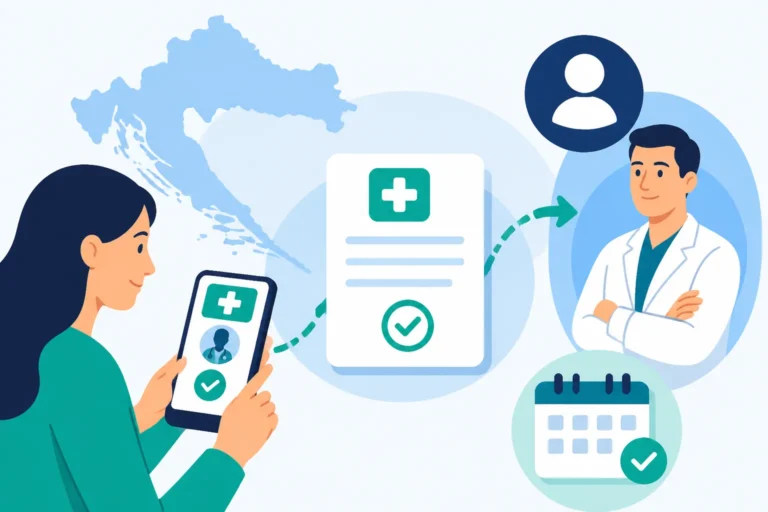
When you visit your doctor, you need to be proactive. Do not wait for the invitation letter to arrive in the mail if you have a family history of cancer or are within the target age bracket. You should explicitly ask for a screening referral. The doctor will then issue an "e-uputnica," which is an electronic referral sent directly into the central system. Understanding How e-Uputnica (E-Referrals) Work for Specialist Appointments in Croatia will help you realize that you don't always need a physical piece of paper anymore, although many old-school clinics still prefer to print one out for you.
Language Barriers and Administrative Hurdles
The reality of the public system is that while doctors often speak excellent English, the administrative staff at the front desk (the "sestra") may not. This is a significant pain point for expats. When you are trying to book a screening at a "Klinički bolnički centar" (KBC), you may be met with abrupt communication or long waiting lists. For instance, a routine screening mammogram in the public system in Zagreb might have a waiting list of several months depending on the current backlog.
To mitigate this, many expats choose to supplement their basic HZZO coverage. Understanding Dopunsko Zdravstveno Osiguranje (Supplementary Insurance) in Croatia is vital because it covers the "participacija" or co-payments for these screenings and the subsequent specialist visits. Without it, you will find yourself paying small out-of-pocket fees for every blood test or imaging session, which can add up quickly if you require follow-up diagnostics.
Accessing Specific Screenings: Breast, Colon, and Cervical
The three pillars of Croatian preventative oncology have different protocols. Knowing the specifics of each will help you prepare for the appointment and understand what is expected of you as a patient.
Breast Cancer Screening (MAMMA Program)
The national program for breast cancer typically targets women aged 50 to 69. Every two years, women in this age group receive an invitation for a mammogram. If you are younger but have a family history, you must go through your family doctor to get an ultrasound (UZV dojke) or a mammogram (mamografija) outside of the national program.
Wait times in the public system for breast imaging can be notorious. In cities like Split or Rijeka, you might wait three to six months for a non-urgent ultrasound. This is where many foreigners decide to pivot to the private sector. By using Understanding Private Polyclinics (Poliklinike) in Croatia, you can often book an appointment within 48 hours. The cost is higher, but for many, the reduction in anxiety is worth the price. If you are using a plan from SafetyWing for your general medical needs while traveling, ensure you understand the boundaries between what is covered under "emergency" and what falls under "preventative," as the latter is almost always an out-of-pocket expense in the private sector.
Colon Cancer Screening
This program targets both men and women aged 50 to 74. You will receive a kit in the mail to collect stool samples. You then mail these samples back in a pre-paid envelope. If the test comes back positive for occult blood, the HZZO will schedule a colonoscopy for you at a nearby hospital.
The colonoscopy is a point of significant cultural difference. In many Western countries, these are done under deep sedation. In the Croatian public system, they are often performed with only local numbing or mild sedation unless you specifically advocate for "anestezija." If you prefer a more comfortable experience, looking into Public vs Private Healthcare in Croatia: Which Should Expats Choose? becomes a critical decision. Private clinics will offer full sedation for colonoscopies, whereas public hospitals might require a much longer wait for a "sedated" slot.
Cervical Cancer Screening
The cervical cancer screening program is currently undergoing restructuring in Croatia to move toward more frequent HPV testing alongside traditional Pap smears. This is managed by your "ginekolog" (gynecologist). Unlike in some countries where the family doctor does the Pap smear, in Croatia, you must register with a specific primary care gynecologist.
If you haven't yet registered, you should look into How to Get an OIB and Why It Matters for Healthcare Access because you cannot register with a gynecologist or any primary doctor without this identification number. Once registered, your gynecologist will perform the screening during your annual check-up.
| Screening Program | Target Group | Frequency | Public Access Method |
|---|---|---|---|
| Breast Cancer | Women 50-69 | Every 2 years | Invitation letter or GP Referral |
| Colon Cancer | Adults 50-74 | Every 2 years | Stool kit via mail |
| Cervical Cancer | Women 25-64 | Every 3 years | Primary Gynecologist visit |
| Lung Cancer | Heavy smokers 50-75 | Periodic | GP Referral for low-dose CT |
The Private Alternative: Polyclinics and Costs
If the public system feels too slow or the language barrier is too high, the private sector in Croatia is excellent. Many of the doctors who work in the prestigious KBC hospitals during the day also have afternoon hours at private "Poliklinike."
Why Choose Private Screenings?
The primary reason to go private is speed. When it comes to cancer, time is of the essence. If you find a lump or have a concerning symptom, waiting four months for a public MRI or CT scan is often unacceptable for expats. Private polyclinics offer state-of-the-art equipment and usually have staff who speak fluent English and are accustomed to dealing with international patients.
When you go private, you pay per service. The Cost of Healthcare in Croatia: A Complete Breakdown for Foreigners (2026) can give you an idea of the pricing, but generally, a private mammogram costs between 60 and 100 EUR, while a colonoscopy under sedation can cost between 300 and 500 EUR. If you are an expat who is not yet eligible for HZZO, having a medical policy like SafetyWing ensures you are covered for sudden illnesses, while you can budget for these specific preventative screenings out of pocket.
Finding the Right Specialist
Finding a specialist you trust is essential. You might want to ask in local expat groups or check the websites of major polyclinics in Zagreb like Aviva, Croatia Poliklinika, or Sveta Katarina. These institutions often offer "sistematski pregled" (systematic check-ups), which are comprehensive packages that include various cancer screenings based on your age and gender.
If your private screening reveals an issue that requires surgery or long-term oncology treatment, you will likely be transitioned back into the public system, as the public hospitals like Rebro or Dubrava in Zagreb are the primary centers for complex cancer care. Understanding Hospital Care at a KBC (Clinical Hospital Centre) in Croatia is vital for this transition, as it is where the most advanced radiation and chemotherapy treatments are administered.
Practical Steps to Take Right Now
If you have moved to Croatia and want to ensure you are covered for cancer screenings, follow these specific steps to avoid getting lost in the "birokracija."
- Get your OIB and Residence: You cannot access the public health system without these. Once you have your residence permit, register with HZZO immediately.
- Choose your Primary Care Team: Find a family doctor and, if applicable, a gynecologist. Don't just pick the one closest to your house; ask for recommendations for English-speaking doctors.
- Check your Mailbox: Ensure your name is clearly marked on your mailbox. The invitation letters for national programs are sent by physical mail, and if the postman can't find your name, you will miss your screening window.
- Register for e-Građani: This is the digital portal for citizens and residents. You can often see your lab results and referrals here without having to wait for a phone call from the clinic.
- Consider Supplementary Insurance: To avoid unexpected costs during the diagnostic process, getting a Dopunsko policy is highly recommended. You can also research How Much Does Private Health Insurance Cost in Croatia in 2026? to see if a full private plan is better suited for your lifestyle.
Living as an expat in Croatia means learning to balance patience with persistence. The healthcare system is capable and the doctors are skilled, but the administrative "middle-man" can be frustrating. Whether you choose the path of the public HZZO programs or opt for the efficiency of private polyclinics, being proactive about your cancer screenings is the best way to ensure your Mediterranean dream isn't interrupted by a health crisis. Many expats find that keeping a flexible insurance option like SafetyWing for the "unknowns" while actively engaging with the local Croatian "Dom Zdravlja" for routine care provides the most comprehensive safety net.
Disclaimer
The information provided in this guide is for informational purposes only and does not constitute professional medical or legal advice. Healthcare regulations and screening protocols in Croatia can change, and you should always consult with a qualified medical professional or the Croatian Health Insurance Fund (HZZO) for the most current information regarding your specific health needs. Any reliance on the information provided herein is at your own risk.