How Do I Get a Mortgage from a Croatian Bank as a Foreigner?
Navigating the financial labyrinth of a new country is one of the biggest headaches expats face, and securing a mortgage in Croatia as a foreigner can feel like trying to solve a Rubik's Cube blindfolded. The rules are often opaque, the process can be agonizingly slow, and cultural expectations differ wildly from what you might be used to back home. This comprehensive guide is here to unravel that mystery, providing realistic, step-by-step advice to help you understand what it really takes to get a mortgage from a Croatian bank.
Understanding the Landscape: Can Foreigners Even Get a Mortgage in Croatia?
Before you even start dreaming about that perfect stone house on the coast or a chic apartment in Zagreb, you need to understand the fundamental legal and banking landscape for foreigners in Croatia. It's not a simple 'yes' or 'no' answer; it's more of a 'yes, but…' situation, heavily dependent on your citizenship and the property type.
Reciprocity Agreements and EU vs. Non-EU Citizens
The primary factor determining your eligibility for property ownership, and by extension, a mortgage in Croatia, is your citizenship. Croatia, being an EU member state, operates under a principle of reciprocity.
For citizens of EU/EEA countries, the process is generally straightforward. You are largely treated the same as Croatian citizens when it comes to purchasing property and applying for a mortgage. This means fewer legal hurdles and a more familiar experience, at least in theory. You won't face extra restrictions on the type of property you can buy, be it residential, commercial, or even agricultural land in some cases (though agricultural land has its own complexities, even for Croatians). This is a huge advantage and certainly streamlines things.
However, if you're a non-EU/EEA citizen, things get a bit trickier. You can still buy property and get a mortgage, but only if there's a reciprocity agreement between Croatia and your home country. This means that Croatian citizens must be able to buy property in your home country under similar conditions for you to be able to buy in Croatia. This isn't just a formality; it requires approval from the Ministry of Justice, which can add significant time to the process. Moreover, certain types of properties, like agricultural land or properties in protected areas, might be off-limits for non-EU citizens, regardless of reciprocity. This distinction is absolutely crucial and one of the first things you need to confirm. Don't waste time looking at properties you can't legally own, or for which you won't get banking approval!
The Local Banking Mentality and Initial Hurdles
Once you've cleared the reciprocity hurdle (or skipped it as an EU citizen), you'll encounter the unique culture of Croatian banking. This isn't Silicon Valley, folks. Croatian banks are, by and large, conservative. They prioritize stability, predictable income, and a clear financial history. They are often risk-averse, especially when it comes to lending significant sums to foreigners who might not have a long-standing credit history within Croatia itself.
One of the biggest frustrations you’ll face is the sheer amount of documentation required, and the meticulous scrutiny it undergoes. Banks here tend to want to see everything, often requesting documents that might seem redundant or overly intrusive by Western standards. And don't even get me started on the language barrier. While larger banks in major cities like Zagreb, Split, or Rijeka might have English-speaking staff, it's not guaranteed, and the official documents will always be in Croatian. This often necessitates hiring a translator or relying on a Croatian-speaking friend, which can add stress and cost. The pace is also something to prepare for; things move slowly. Patience isn't just a virtue here; it's a survival skill. Be prepared for multiple visits, endless copies, and waiting periods that could test the patience of a saint.
The Mortgage Application Process for Expats: A Step-by-Step Breakdown
Alright, you've got your head around the general idea. Now, let's dive into the nitty-gritty of actually applying for that mortgage. This is where most expats hit their first real wall of paperwork and cultural differences.
Essential Documents and Financial Proof
This is where the conservative nature of Croatian banks really shines through. They want to know everything about your financial situation, and they want it proven with official, translated, and often notarized documents. You'll need your OIB (Personal Identification Number) – absolutely non-negotiable for any major financial transaction here. If you don't have one, you'll need to get it first. You'll also need a valid passport, proof of your temporary or permanent residence permit in Croatia, and possibly even a police certificate from your home country.
When it comes to proving your income, this is where it gets particularly demanding for foreigners. If you're employed by a Croatian company, your pay stubs and employment contract will suffice, but they'll want to see consistent income over a significant period – often 6 to 12 months, or even longer. For those working remotely for foreign companies or who are self-employed, the requirements become even more complex. You'll need bank statements showing consistent income deposits, official letters from your employer detailing your salary and contract terms (often translated and notarized), and crucially, your tax returns. Croatian banks will scrutinize your foreign tax returns to confirm your declared income and tax residency. This is where expertise in international tax matters, like that offered by services such as Taxes for Expats, can be invaluable to ensure all your financial declarations are impeccable and meet Croatian standards. Don't underestimate the importance of meticulous documentation; incomplete or poorly translated documents are almost guaranteed to cause delays or outright rejection. Remember, the banks here have a "trust, but verify" mentality, and "verify" often means demanding layers of official proof. For more on getting set up financially, you might want to read about How to Get an OIB (Personal Identification Number) in Croatia and The Expat Guide to Opening a Bank Account in Croatia.
Income Verification and Debt-to-Income Ratios
Croatian banks typically look for a stable, verifiable income stream to ensure you can consistently meet your mortgage repayments. They will assess your debt-to-income (DTI) ratio, which is a measure of your monthly debt payments compared to your gross monthly income. While specific percentages vary by bank and loan product, a lower DTI ratio is always better. For expats, especially those with non-standard employment like freelancing or remote work for foreign companies, proving this stability can be tough. Banks may require more extensive documentation, longer income histories, or even higher income thresholds than for local applicants.
They'll also consider your existing debts, both in Croatia and abroad. Any outstanding loans, credit card balances, or other financial obligations will factor into their assessment of your repayment capacity. If your income is in a foreign currency, they will likely apply a conversion rate and may even add a buffer for currency fluctuations, potentially reducing the amount they are willing to lend. It’s crucial to be transparent about all your financial obligations. Trying to hide anything will only backfire and lead to a rejection. For a deeper dive into how income is taxed, check out Understanding Income Tax in Croatia: The Full Expat Guide.
The Role of a Down Payment and Loan-to-Value (LTV)
The down payment is your initial contribution towards the property purchase, and it plays a significant role in a Croatian mortgage application. For foreigners, banks often require a higher down payment than for Croatian citizens, typically ranging from 20% to 40% of the property's value. This higher requirement serves as a risk mitigation strategy for the bank, especially when dealing with applicants who have limited local credit history.
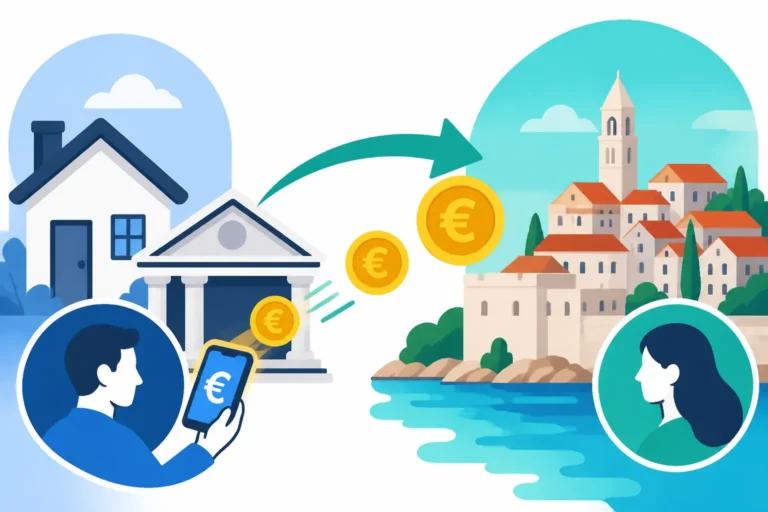
The loan-to-value (LTV) ratio is the inverse of your down payment. If you put down 30%, your LTV is 70%. A lower LTV (meaning a higher down payment) makes your application much more appealing to banks, as it signals less risk for them. Be prepared to provide proof of funds for this down payment, which typically means bank statements showing the money in your account for several months. If you're transferring a large sum from abroad, be aware of international transfer limits and potential fees. Services like Wise can be helpful for transparent and cost-effective international money transfers when bringing your down payment funds into Croatia. Always factor in these transfer times when planning your purchase timeline.
Choosing Your Croatian Bank and Understanding Mortgage Products
So, you're ready to tackle the banks. It's not just about getting approved; it's about finding the right partner and the right product for your needs.
Major Croatian Banks and Expat Services
Croatia has several prominent banks, and while their offerings can seem similar, their approach to expat clients can differ. The largest players include Zagrebačka Banka (often abbreviated as ZABA), Privredna Banka Zagreb (PBZ), Erste Bank, and OTP Banka. These banks generally have more resources, a wider network of branches, and are more likely to have some English-speaking staff, especially in bigger cities.
ZABA and PBZ are often considered the market leaders and have significant experience with various types of clients. Erste Bank, being part of an Austrian group, sometimes has a slightly more "international" feel. OTP Banka, with Hungarian roots, is also a strong contender. When approaching these banks, it's worth asking if they have a dedicated department or individual who specializes in assisting foreign clients. This can make a world of difference in navigating the bureaucratic maze. However, don't expect a red carpet treatment; even with expat services, you'll still need to provide all the extensive documentation and adhere to their strict requirements. Visiting a few different banks is always a good strategy to compare their specific terms, interest rates, and overall willingness to work with foreigners. They might each have slightly different criteria for what they consider "acceptable" foreign income or documentation.
Fixed vs. Variable Interest Rates and Loan Terms
Croatian banks offer both fixed and variable interest rate mortgages, each with its own set of pros and cons.
- Fixed-rate mortgages offer stability. Your interest rate and monthly payment remain the same for a set period (e.g., 5, 10, or 15 years), regardless of market fluctuations. This provides predictability and makes budgeting easier, which can be particularly reassuring for expats adjusting to a new financial system. However, fixed rates are often slightly higher than initial variable rates.
- Variable-rate mortgages fluctuate with the market. Your interest rate is tied to an index (like EURIBOR, for Euro-denominated loans) plus a margin set by the bank. This means your monthly payments can go up or down. While they might start lower than fixed rates, they carry the risk of increasing, potentially impacting your budget significantly.
The choice depends on your risk tolerance and financial outlook. Given the current economic climate, many expats might lean towards the security of a fixed rate, at least for an initial period.
Loan terms typically range from 10 to 30 years. Longer terms mean lower monthly payments but more interest paid over the life of the loan. Banks will assess your age, income stability, and the property's value to determine the maximum loan term they are willing to offer you. It's crucial to understand the total cost of the loan over its lifetime, not just the monthly payment.
Associated Costs and Fees
Getting a mortgage isn't just about the principal and interest. There are numerous associated costs and fees that can add a significant chunk to your total expenses. These can easily add up to several percentage points of the property's value, so budget for them.
- Application/Processing Fees: Banks often charge a fee for processing your mortgage application, usually a percentage of the loan amount or a flat fee.
- Property Appraisal Fee: Before approving a loan, the bank will require an independent appraisal of the property to determine its market value. You'll bear this cost.
- Notary Fees: All property transactions and mortgage agreements must be notarized, and these fees can be substantial. For more details, see Understanding Notary Fees and Property Purchase Costs in Croatia.
- Legal Fees: While not always mandatory, hiring a lawyer specializing in real estate is highly recommended for foreigners to navigate the contracts and ensure your interests are protected.
- Real Estate Transfer Tax (Porez na Promet Nekretnina): This is a mandatory tax on the purchase of real estate, usually 3% of the property's value, paid by the buyer. You can find more about this in Understanding the Real Estate Transfer Tax Porez na Promet Nekretnina.
- Mortgage Registration Fees: Fees for registering the mortgage with the Land Registry (Zemljišne Knjige).
- Insurance: Banks will almost certainly require you to take out property insurance, and potentially life insurance, as a condition of the mortgage. You'll also want to consider Understanding Home Insurance Options in Croatia.
- Early Repayment Penalties: If you plan to pay off your mortgage earlier than the agreed term, check if there are any penalties involved.
These costs need to be factored into your overall budget, separate from your down payment.
Strategies for a Successful Mortgage Application
Getting a mortgage in Croatia as an expat is a marathon, not a sprint. But with the right approach and expectations, you can significantly improve your chances.
Building a Relationship and Local Credit History
One of the best things you can do is to start building a relationship with a Croatian bank early. Open a local bank account, even if you primarily use international services like Wise for your day-to-day. Show consistent income coming into this account, pay your bills on time, and generally demonstrate financial responsibility. While Croatia doesn't have a centralized "credit score" system quite like some other countries, banks maintain internal records of your financial behavior. Having an established, positive history with a local bank will work in your favor when you apply for a mortgage. Even small steps, like getting a credit card (if offered) and managing it responsibly, can contribute positively to their assessment of you as a reliable client. The longer you've been reliably banking in Croatia, the better.
Seeking Professional Advice
Don't go it alone. The Croatian real estate and banking system can be convoluted, and trying to navigate it without local expertise is a recipe for frustration and potential mistakes.
- Real Estate Agent: A good, reputable real estate agent who understands the needs of foreign buyers can be invaluable. They can not only help you find suitable properties but also guide you through the initial stages and recommend banks that are more expat-friendly. For guidance on finding one, refer to How to Find a Reliable Real Estate Agent in Croatia.
- Lawyer: Hiring a lawyer specializing in real estate law is not an option; it’s a necessity, especially for non-EU citizens or if you're buying complex property. They will review contracts, ensure all legal requirements are met, and protect your interests. They can also help with the reciprocity application if needed.
- Mortgage Broker: While less common than in some Western countries, some financial advisors or brokers in Croatia might specialize in mortgages and can help you compare offers from different banks and navigate the application process.
These professionals will be your advocates and can save you immense amounts of time, stress, and potential financial pitfalls.
Patience and Persistence
This really needs its own section because it's paramount. The process of getting a mortgage in Croatia, especially as a foreigner, is not fast. You will encounter bureaucracy, multiple requests for the same document, and delays that seem inexplicable. Bank staff might not always provide consistent information, or they might change requirements mid-process. It's not personal; it's often just "how things are."
Your ability to remain patient, persistent, and polite will be your greatest asset. Follow up regularly, keep meticulous records of all communications and submitted documents, and be prepared to provide information multiple times. Think of it as a marathon, not a sprint. Eventually, with enough perseverance, you will get there. This is part of the true expat experience in Croatia – learning to adapt to a different pace and way of doing things. For a broader view of the property buying process, consider reading How to Buy Property in Croatia as a Foreigner: The Full Guide (2027).
Key Considerations for Your Mortgage Application
| Feature | EU/EEA Citizens | Non-EU/EEA Citizens |
|---|---|---|
| Property Ownership | Generally treated like Croatian citizens. | Subject to reciprocity agreements and Ministry of Justice approval. Some property types may be restricted. |
| Documents Required | Passport, OIB, residence permit, proof of income, tax returns, bank statements. | Same as EU/EEA, plus proof of reciprocity agreement, potentially more extensive foreign financial history. |
| Down Payment (LTV) | Typically 15-30% (LTV 70-85%). | Often higher, 20-40% (LTV 60-80%), due to perceived higher risk. |
| Income Verification | Standard employment contracts, payslips. | More scrutiny of foreign income, remote work, or self-employment; extensive bank statements and foreign tax returns often required. |
| Credit History | No formal "credit score," but local banking history helps. | Limited to no local credit history; foreign financial stability is key. |
| Language Barrier | Possible, but major banks in cities may have English staff. | More prevalent; translation and notary for all documents is critical. |
| Process Timeline | Can be slow, but generally smoother. | Often significantly longer due to reciprocity approval and additional scrutiny. |
| Professional Advice | Highly recommended (lawyer, agent). | Essential (lawyer for reciprocity, agent for property). |
Disclaimer
The information provided in this guide is for general informational purposes only and does not constitute legal, financial, or tax advice. While we strive to keep the information up-to-date and accurate, laws, regulations, and banking policies in Croatia can change frequently. It is essential to consult with qualified legal, financial, and tax professionals in Croatia for advice tailored to your specific situation before making any decisions related to property purchase or mortgage applications.