How Do I Open a HEP Electricity Account in My Name?
Ah, the joys of settling into a new country! Moving to Croatia is often a beautiful adventure, filled with stunning coastlines and charming towns. But let's be real, the administrative hurdles, like simply getting your home connected to electricity and putting the account in your name, can quickly dampen that initial glow. Navigating the Croatian utility system, especially with HEP – Hrvatska elektroprivreda – can feel like trying to solve a Rubik's Cube blindfolded, even more so when you're grappling with a new language and unfamiliar processes. This guide is here to untangle that knot, walking you through how to open a HEP electricity account in your name, step by frustrating but ultimately achievable step, so you can finally switch on those lights and feel truly at home.
Understanding HEP and the Croatian Electricity Landscape
Before we dive into the nitty-gritty, it helps to understand who HEP is and how things generally work here. HEP, short for Hrvatska elektroprivreda, is Croatia's national electricity company. For all intents and purposes, they hold a near-monopoly on electricity distribution and supply to households. When you need electricity connected to your apartment or house, you'll be dealing with them, specifically through their subsidiary, HEP ODS (Operator distribucijskog sustava), which handles the distribution network.
This means you don't really get to "shop around" for electricity providers like you might in other countries. You're pretty much assigned to HEP. While this simplifies the choice, it also means you're beholden to their processes, which, let's just say, operate at their own unique pace. You'll hear many expats share stories of varying experiences, from surprisingly quick resolutions to weeks of back-and-forth. The key is patience, preparation, and knowing exactly what HEP needs from you. Understanding this framework helps set realistic expectations for the journey ahead.
One crucial detail many expats overlook is that electricity accounts are tied to the meter at a specific address, not directly to the person. This is why you'll often need information about the previous tenant or owner when transferring an account. It’s less about who you are and more about confirming the continuity of service for that particular meter. This might seem counterintuitive if you're used to systems where you simply call up and start a new contract, but here, it's often a "transfer of responsibility" more than a brand-new setup, even if the previous tenant left months ago.
The Step-by-Step Gauntlet of Opening Your HEP Account
Alright, let's get down to business. Opening a HEP account in your name is a multi-step process that requires careful attention to detail and, often, a healthy dose of perseverance. Forget trying to do this completely online; while HEP has some online services, the initial account opening or transfer usually requires an in-person visit.
Gathering Your Essential Documents
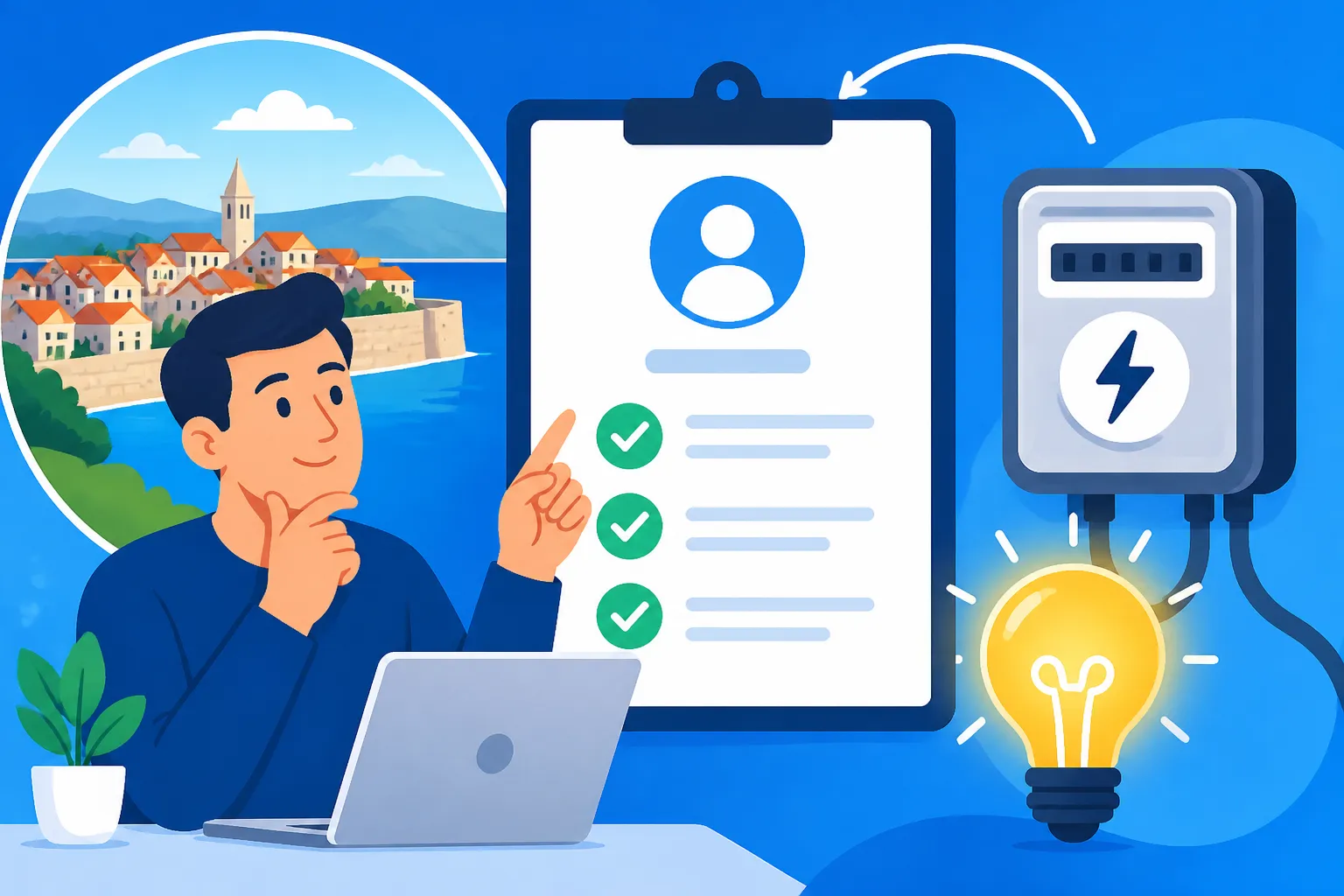
This is where the real work begins. Croatian bureaucracy loves documents, and HEP is no exception. Make sure you have both originals and copies of everything. It’s always better to have too much than too little.
Here’s what you’ll typically need:
- OIB (Personal Identification Number): This is your Croatian tax number, and you'll need it for almost everything official in Croatia, including opening a bank account or setting up utilities. If you don't have one yet, make sure to get it sorted first. You simply cannot do anything without it. If you need help, our guide on How to Get an OIB (Personal Identification Number) in Croatia can walk you through it.
- Proof of Residence: This is usually your rental contract (if you're renting) or your vlasnički list (ownership certificate) if you've purchased property.
- For Renters: Your lease agreement needs to be officially registered with the tax administration (Porezna Uprava) to be fully valid. This is a crucial step that your landlord should handle, but it’s worth double-checking. For a deeper dive, check out The Complete Guide to Renting an Apartment in Croatia.
- For Owners: Your vlasnički list proves you own the property. This document is your official proof of ownership, obtained from the land registry (Zemljišne knjige). If you're still navigating property purchase, our guide on How to Buy Property in Croatia as a Foreigner: The Full Guide has all the details.
- Previous Tenant/Owner Information: This is often the trickiest part. HEP will want the name and OIB of the person who previously had the electricity account at your address. If you're renting, your landlord must provide this. If you bought a property, it should be in the handover documents from the previous owner. Without this, transferring the account can be significantly delayed or complicated.
- Current Meter Reading: Take a clear, dated photo of the electricity meter reading on the day you move in or take possession. This ensures you're only paying for your own consumption.
- Valid Photo ID: Your passport or Croatian ID card will be needed.
Your Trip to the HEP Office
Once your documents are in order, you need to visit a local HEP ODS office, often referred to as 'HEP Elektra' in many cities. This isn't always the main HEP headquarters building; look for a specific "HEP ODS" or "Elektra" branch in your city or region. For example, in Zagreb, you'd head to the one on Ulica grada Vukovara.
- Find the Right Office: A quick Google search for "HEP ODS [Your City/Town]" should point you in the right direction. It's vital to go to the distribution operator's office, not just any HEP office.
- Take a Number and Wait: Like many administrative offices in Croatia, you'll likely need to take a numbered ticket and wait your turn. This can sometimes be a long wait, so bring a book, stay charged (maybe use your Airalo eSIM to keep connected!), and be prepared to settle in.
- The Application Process: When your number is called, present all your documents to the clerk. You'll be given a form to fill out. This form asks for your personal details, OIB, the address of the property, the meter number (if known, it's usually on the meter itself), and the previous account holder's details.
- Tip: If your Croatian isn't up to snuff, try to bring a Croatian-speaking friend, landlord, or even a professional translator. This significantly reduces miscommunication and frustration.
- Confirming Connection Type: The clerk will confirm whether you need a new connection (rare for existing properties) or a transfer. They'll also confirm the obračunsko mjerno mjesto (OMM) number, which is unique to your meter and address. This number is key for all future interactions and payments.
- Payment and Activation: You might be asked to pay a small administrative fee on the spot, though sometimes this appears on your first bill. The clerk will usually give you an estimated timeframe for activation or transfer. This can vary wildly, from a few days to a couple of weeks, depending on whether it's a simple transfer or requires physical work.
What Happens Next?
After your visit, it’s mostly a waiting game. You should start receiving bills in your name within a month or two. These bills will typically include an advance payment based on estimated consumption, which will be adjusted later based on actual meter readings.
Navigating the Hurdles: Common Challenges and Troubleshooting for Expats
Let's face it, nothing is ever as straightforward as it seems when dealing with bureaucracy, especially in a new country. Expats often hit specific snags when dealing with HEP.
The Language Barrier
This is perhaps the biggest hurdle. While some HEP staff, especially in larger cities like Zagreb or Split, might speak some English, it's far from guaranteed. Trying to explain complex situations or understand detailed instructions in Croatian can be incredibly stressful.
- Solution: As mentioned, bringing a Croatian speaker is invaluable. If you can't, use Google Translate or an app like SayHi to translate on the fly. Write down key phrases in Croatian beforehand (e.g., "I want to transfer electricity to my name," "Here is my rental contract," "This is the meter reading"). Even a little effort goes a long way.
Inconsistent Information
You might find that information given over the phone differs from what's said in person, or even varies between different HEP offices. It's not uncommon, and it's a source of immense frustration.
- Solution: Always get information in writing if possible, or at least note down the name of the person you spoke with and the date. If something seems off, politely ask to speak to a supervisor. Sometimes, trying a different office or calling on a different day can yield a different (and more helpful) outcome.
Missing Previous Owner/Tenant Data
This is a big one. If your landlord or previous owner can't or won't provide the necessary information, HEP might classify it as a "new connection," even if the electricity is already on. This can involve more paperwork, potentially a higher fee, and a longer waiting period.
- Solution: Stress the importance of this to your landlord or seller from the outset. Make it a condition of your rental agreement or property purchase that they provide this information. If electricity is already connected but you can't get the old details, HEP might require you to provide a sworn statement that you don't know the previous account holder, along with your proof of residence. They might then set up a new account, which could involve inspecting the meter. This is where patience is truly a virtue.
Slow Processing Times
Things can take time. Don't expect instant gratification. While some transfers might be quick, others can stretch for weeks.
- Solution: Follow up politely but persistently if you haven't heard anything within the timeframe they gave you. Call the customer service line (prepare your Croatian phrases!) or revisit the office. Keep copies of everything you submitted. Remember, companies like Sirelo can handle some relocation logistics, but utilities often need your direct involvement.
Understanding Your Bills
Once you start receiving bills, they will, of course, be in Croatian. Deciphering them can be a puzzle.
- Solution: Ask a Croatian friend or your landlord to help you understand the first bill. Look for key terms like "potrošnja" (consumption), "stanje" (current balance), "rok plaćanja" (payment deadline), and your OMM number. HEP's online portal, Moj HEP, can be incredibly helpful here, as it often visualizes consumption and payment history.
Table: Key Documents for Opening a HEP Account
| Document | Purpose | Important Notes |
|---|---|---|
| OIB (Personal ID Number) | Essential for all official transactions. | Apply for this first if you don't have it. |
| Proof of Residence | Rental contract (registered) or vlasnički list (ownership certificate). | Ensure your rental contract is officially registered by your landlord. |
| Previous Account Holder Info | Name and OIB of the last person with the electricity account. | Crucial for seamless transfer; obtain from landlord/seller. |
| Current Meter Reading | Records your starting point for billing. | Take a clear, dated photo upon moving in. |
| Valid Photo ID | For identity verification. | Passport or Croatian ID card. |
| Bank Account Details | For setting up direct debit (optional but convenient). | For direct payments via your Croatian bank account. The Expat Guide to Opening a Bank Account in Croatia can help. |
Managing Your HEP Account and Bills
Once you've successfully opened your HEP account, the next step is to understand how to manage it and, most importantly, how to pay your bills.
Understanding Your HEP Bills
HEP bills usually arrive monthly or bimonthly, depending on your consumption and tariff plan. They contain several key pieces of information:
- OMM (Obračunsko mjerno mjesto) Number: This is your unique meter identification number. Always have this handy when contacting HEP.
- Period of Consumption: The dates for which the bill is calculated.
- Consumption (Potrošnja): Measured in kWh. This section will detail both high-rate (viša tarifa, VT) and low-rate (niža tarifa, NT) consumption if you have a dual-tariff meter, which is common. Low-rate typically applies during off-peak hours (e.g., nights and weekends).
- Advance Payment (Akontacija): Often, HEP will estimate your monthly consumption and charge you an advance payment. This is adjusted periodically based on actual meter readings (which you might submit yourself or HEP staff will read).
- Total Amount Due (Ukupan iznos za plaćanje): The grand total.
- Due Date (Datum dospijeća / Rok plaćanja): The deadline for payment.
- Payment Information: This includes a barcode for easy payment and the necessary banking details (IBAN, reference number) if you want to pay electronically.
Don't be surprised if your first few bills are a bit high, especially if they include an adjustment for previous estimated consumption or a connection fee. The important thing is to understand what you're paying for.
Payment Methods
Thankfully, paying HEP bills is relatively straightforward once you know how. Croatia offers several convenient options:
- Direct Debit (Trajni nalog): This is by far the easiest method. You can set up a direct debit through your Croatian bank (PBZ, Erste, Zagrebačka Banka, etc.). Your bank will automatically pay the bill when it's due. This avoids missed payments and late fees. Just bring your bill to your bank, and they'll help you set it up.
- Online Banking: If you prefer to manually pay, you can use your Croatian online banking portal. You'll need the IBAN of HEP, the reference number (poziv na broj odobrenja) from your bill, and the amount.
- Post Office (Hrvatska pošta): Take your physical bill to any Hrvatska pošta office. They will scan the barcode, and you can pay in cash or by card. There's usually a small transaction fee.
- Fina (Financijska agencija): Similar to the post office, Fina branches also accept utility bill payments. They also charge a small fee.
- HEP Kiosks/Payment Points: Some larger HEP offices have dedicated payment counters or self-service kiosks.
The Moj HEP Online Portal
HEP offers an online portal called "Moj HEP" (My HEP) which is an absolute game-changer for managing your account. You can register for it using your OIB and OMM number.
Through Moj HEP, you can:
- View your bills: Access digital copies of all your past and current bills.
- Track consumption: See detailed graphs of your electricity usage, which helps you understand your patterns and potentially save money.
- Submit meter readings: If HEP doesn't read your meter, you can submit your own readings online, ensuring your bills are based on actual consumption rather than estimates.
- Change personal data: Update your contact information.
- Receive notifications: Get alerts about new bills or planned outages.
While the portal is primarily in Croatian, it's fairly intuitive, and with a browser's translate function, it becomes quite manageable. It's a fantastic tool for expats to gain more control over their electricity account without constant trips to the physical office.
What if You Move Again?
If you decide to move within Croatia, you'll need to go through a similar process in reverse. You'll inform HEP you're leaving your current address, provide a final meter reading, and typically receive a final bill. Then, at your new address, you'll start the "transfer to my name" process all over again. Remember to provide the new tenant or owner with your details for a smooth transition for them, too! This comprehensive approach to setting up your utilities is just one part of The Expat Guide to Setting Up Utilities in Croatia, which covers everything from electricity to water and gas.
Living in Croatia as an expat means adapting to new systems and, often, finding a new rhythm for things. Getting your HEP electricity account sorted might not be the most glamorous part of your journey, but it’s a foundational step to making your new house a true home.
Disclaimer
Please note that this guide provides general information and advice based on common experiences for expats in Croatia as of the date of publication. Administrative procedures and requirements can change without prior notice. While every effort has been made to ensure accuracy, it is always recommended to verify the latest information directly with HEP (Hrvatska elektroprivreda) or relevant Croatian authorities, or consult with a local expert for personalized advice.