How to Enrol Your Child in a Croatian Public School
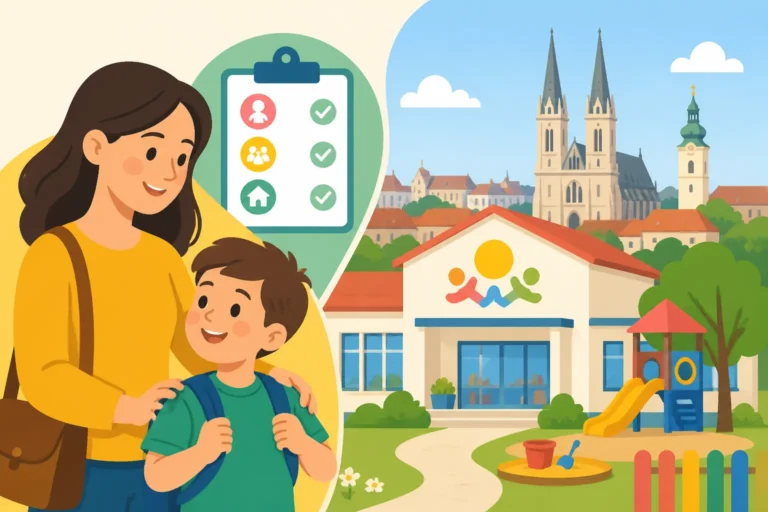
Moving to Croatia with children means navigating a whole new world of administration, and perhaps one of the most daunting tasks for expat parents is figuring out how to get their kids into a local school. It's not just about finding the right forms; it's about understanding a different system, overcoming language barriers, and easing your child's transition into an unfamiliar environment. This guide will walk you through the ins and outs of enrolling your child in a Croatian public school, sharing practical advice and empathy for the unique challenges you'll face.
Understanding the Croatian Public Education System
Before you even think about enrolment forms, it’s crucial to get a handle on how the Croatian public education system actually works. It's likely quite different from what you're used to, and knowing the basics can save you a lot of headaches and confusion down the line. Think of it as mapping out the terrain before you embark on a journey.
Structure and Age Groups
Croatia operates a centralized education system managed by the Ministry of Science and Education. Education is compulsory for children from the age of six or seven, starting with primary school. This initial stage, known as osnovna škola, typically lasts for eight years, encompassing grades 1 through 8. Children usually begin first grade in the calendar year they turn seven, though there are provisions for earlier or later starts depending on developmental readiness assessed by school psychologists.
After completing primary school, students proceed to secondary education, srednja škola, which generally lasts for either three or four years. This is where the paths diverge somewhat. You have Gymnasium schools (gimnazije) which are academically oriented and prepare students for university, and then you have vocational schools (strukovne škole) which focus on specific trades and skills. For younger children, the primary school structure is fairly uniform, but as they get older, the choices become more varied, impacting their future educational and career paths.
Curriculum and Language of Instruction
Here's the big one for most expat families: the primary language of instruction in Croatian public schools is, predictably, Croatian. This can be a significant hurdle for children who arrive with little to no prior knowledge of the language. While some schools in larger cities like Zagreb or Split might have a handful of teachers with decent English skills, especially for foreign language classes, the day-to-day teaching will be entirely in Croatian.
The curriculum is broad, covering subjects like Croatian language and literature, mathematics, history, geography, science (biology, chemistry, physics), foreign languages (English and often German are common), art, music, and physical education. Religious education is also offered, typically Catholic instruction, but it's entirely optional, and parents can choose for their children not to attend. It’s a common misconception that because Croatia is predominantly Catholic, religious education is mandatory, but rest assured, it’s not.
School Year and Holidays
The Croatian school year generally begins in early September and concludes in mid-June, mirroring many European systems. However, within this period, there are several breaks that you’ll need to be aware of. The main breaks include a significant winter holiday around Christmas and New Year, a shorter spring break around Easter, and, of course, the long summer holiday from mid-June to early September.
Exact dates for these holidays can vary slightly year by year and by region, so it’s always best to check the official school calendar for your specific county (županija) once your child is enrolled. These dates are usually published well in advance. Planning family trips or visits from abroad will revolve around this calendar, so getting familiar with it quickly becomes second nature. It's a rhythm that families adjust to, much like the pace of life here.
The Initial Steps: What You Need Before Enrolment
Navigating the bureaucracy for school enrolment in Croatia can feel like a scavenger hunt, but with a bit of preparation, you can minimize the stress. There are a few key documents and health requirements that are absolutely non-negotiable. Getting these sorted first will make the rest of the process much smoother.
Obtaining Necessary Documents
First and foremost, your child, like every resident in Croatia, will need an OIB – their personal identification number. Without it, you can’t really do anything official in Croatia, including school enrolment. While you're at it, ensure your family's temporary residence permit (privremeni boravak) is sorted, as this will also be required. The process of getting an OIB can sometimes be integrated with your residence application, but it’s always good to confirm. For more on this, check out our guide on How to Get Your OIB and Why It Matters for Healthcare Access.
Beyond the OIB and residence permit, you'll need your child’s original birth certificate. If it's not in Croatian, you'll need an official translation done by a sworn court interpreter (sudski tumač). Don't try to get a friend to translate it; only an official translation will be accepted. Similarly, any previous school records, such as report cards or transcripts from their home country, should also be officially translated. These records help the school assess the child's academic background and place them in the correct grade.
Health Check-ups and Vaccinations
Before any child can officially enrol in a Croatian primary school, they must undergo a mandatory health check-up. This isn't just a formality; it’s a comprehensive examination conducted at a designated school medicine office (školska medicina) which is part of the public health network. This check-up ensures that your child is physically and mentally ready for the school environment and identifies any special needs they might have.
You'll also need to provide proof of your child’s vaccination status. Croatia has a mandatory vaccination schedule, and schools will require evidence that your child has received the necessary immunizations for their age group. If your child's vaccination record is from another country, you’ll need to have it reviewed by a local paediatrician or the school medicine doctor, who will determine if any additional vaccinations are needed to align with Croatian requirements. Understanding the local requirements can be a bit of a maze, so our article on Understanding Vaccination Schedules and Requirements in Croatia might be a lifesaver. Ensure you register your family members for health insurance too, as this is crucial for accessing these services. See our guide on How to Register Family Members for Health Insurance in Croatia for details.
Language Assessment (If Applicable)
For children arriving without prior knowledge of Croatian, a language assessment is often a necessary step. This isn't usually a formal, high-stakes exam but rather an informal evaluation conducted by the school’s pedagogue or psychologist. The purpose is to gauge your child's proficiency level and understand how best to support their integration.
Depending on the school and its resources, they might offer some initial language support. However, it's realistic to expect that the onus will largely be on you, as parents, to supplement their language learning outside of school. Many expat families opt for private Croatian lessons to help their children catch up. It’s tough, yes, but kids are incredibly resilient and often pick up languages faster than adults. To give your child a head start, you might consider looking into options like those detailed in Learning Croatian: A Complete Guide to Language Courses and Levels.
The Enrolment Process: Step-by-Step
Once you have your documents in order and your child has had their health check, you're ready to tackle the actual enrolment. This part involves direct interaction with the school and local authorities, so be prepared for a mix of official procedures and navigating local customs.
Identifying Your Catchment School (Upisno Područje)
In Croatia, public schools operate on a strict catchment area system, known as upisno područje. This means your child is assigned to a specific school based on your registered address (prebivalište). You can't just pick any school you fancy; it has to be the one designated for your neighbourhood. This system is designed to ensure equitable distribution of students and resources.
To find out which school your child is assigned to, your first port of call should be your local administrative office (often within your city or municipal government – gradska uprava or općina) or even the MUP office where you registered your residence. They can provide you with the information regarding your child's catchment school. This is why having your address officially registered at the MUP is so vital; it directly dictates school placement. For a full rundown on residency, check out Registering Your Residence (Prebivalište) at the MUP.
Contacting the School and Scheduling an Appointment
Once you know your assigned school, the next step is to make direct contact. Don't just show up unannounced; it's always best to schedule an appointment. You'll typically want to speak with the school's pedagogue (pedagog) or psychologist (psiholog), as they are usually the point of contact for new student enrolments, particularly for those with unique circumstances like expat children.
When you call or email, be clear that you are an expat parent wishing to enrol your child. If you’re not confident in your Croatian, ask if there’s anyone who speaks English, or bring a Croatian-speaking friend or interpreter with you. This initial meeting is your chance to ask about their specific enrolment procedures, what support they offer for non-Croatian speakers, and any other concerns you might have. It’s a good idea to have a list of questions prepared, just in case nerves get the better of you.
Submitting the Application and Required Forms
During your scheduled appointment, the school will provide you with their specific enrolment forms. These are usually pretty standard, asking for basic information about the child and parents. You'll need to present all the documents you've painstakingly gathered: your child's OIB, residence permit, officially translated birth certificate, and previous school records. This is also when you'll provide the certificate from the school medicine office confirming their health check and vaccination status.
Always make sure to bring both the originals and photocopies of all documents. While they might only need to see the originals and take copies, it’s better to be over-prepared. Keep a personal folder of all copies for your records, as you'll likely refer back to them. Be prepared for a bit of back-and-forth; sometimes a missing stamp or a slight discrepancy can lead to another trip to an office. It’s part of the charming Croatian administrative experience, so try to approach it with patience and a sense of humour.
| Document Type | Required for Enrolment | Notes |
|---|---|---|
| OIB (Personal ID) | Yes | For both child and parents. |
| Residence Permit | Yes | Child's permit (Privremeni Boravak). |
| Birth Certificate | Yes | Original + official Croatian translation. |
| Previous School Records | Yes (if applicable) | Report cards, transcripts + official Croatian translation. |
| Health Check Certificate | Yes | Issued by school medicine office. |
| Vaccination Card | Yes | Reviewed by local paediatrician/school doctor. |
| Parent's ID/Passport | Yes | For verification purposes. |
| Proof of Address | Yes | Usually linked to your MUP registration. |
After Enrolment: Settling In and Support
Getting your child officially enrolled is a huge milestone, but the journey doesn’t end there. The real work begins as your child starts school and adjusts to a completely new environment, language, and culture. As parents, your support during this phase is absolutely critical.
Adapting to a New Environment and Language
The first few weeks and months are often the toughest. Your child will likely experience a mix of excitement, confusion, and sometimes, profound frustration. Imagine being dropped into a classroom where you understand very little – it’s a daunting prospect for anyone, let alone a child. They might feel isolated, struggle with making friends, or find it hard to express their needs. This is where your empathy and patience will be tested.
Encourage them to talk about their day, even if it's just a few words. Celebrate every small victory, whether it's understanding a new Croatian word or making a connection with a classmate. Look for activities outside of school that might help them integrate, such as sports clubs or art classes, where language might be less of a barrier initially. Consider getting a local SIM card and an affordable data plan, perhaps with a provider like Airalo, so your child (if old enough) can connect with you or use translation apps if they have a phone, providing a sense of security during their early days. Many schools have a school psychologist or pedagogue who can offer support and guidance to both your child and you during this transition.
Parent-Teacher Communication
Effective communication with your child's teachers is paramount, especially when your child is still learning Croatian. Croatian schools hold regular parent-teacher meetings (roditeljski sastanci) where you’ll receive updates on your child's progress and behaviour. There are also usually specific hours set aside for individual consultations with teachers.
If you don't speak Croatian, don't be afraid to ask if there's an English-speaking teacher available to help translate, or bring a trusted Croatian-speaking friend along. Some schools in larger cities might have staff who are used to dealing with expat families. Being proactive and showing genuine interest, even with a language barrier, goes a long way. Use simple phrases, gesture, and consider using translation apps on your phone to bridge the gap. Remember, the teachers want your child to succeed just as much as you do.
Extracurricular Activities and Support Programs
Beyond the core curriculum, Croatian public schools often offer a range of extracurricular activities (izvannastavne aktivnosti) that can be fantastic for integration. These can include sports clubs, drama groups, choir, art workshops, or various academic clubs. These activities provide a less formal setting for your child to make friends, practice Croatian, and discover new interests.
Some schools might also have specific support programs for children struggling academically or with language acquisition. These aren't always widely advertised, so it's worth asking the school pedagogue or your child's class teacher directly about what options might be available. Every little bit of extra support can make a huge difference in their confidence and ability to thrive in their new school.
Alternative Options and Considerations
While public schools are the most common choice, especially for long-term expat families, it's wise to consider all your options and understand the broader educational landscape in Croatia. What works for one family might not be the best fit for another.
International Schools vs. Public Schools
The choice between a public Croatian school and an international school is one many expat parents grapple with. International schools in Croatia, primarily located in Zagreb and Split, offer curricula like the International Baccalaureate (IB), British, or American systems. The main advantage is that instruction is in English, which removes the language barrier for your child and often provides a smoother transition culturally and academically.
However, international schools come with a hefty price tag in the form of tuition fees, which can be a significant financial burden. Public schools, on the other hand, are free of charge. The public system offers deep immersion into Croatian language and culture, which is invaluable for long-term integration and understanding of the country. For a more detailed comparison of the pros and cons, our guide on Understanding International Schools and Their Costs in Croatia delves into this very topic. The decision often boils down to budget, your child's age, and your family's long-term plans in Croatia.
Private Tutoring and Language Support
Regardless of whether your child attends a public or international school, private tutoring, particularly for Croatian language, can be an absolute game-changer. For children in public schools, it provides that much-needed extra help to bridge the language gap and keep up with their classmates. Even in international schools, having a private Croatian tutor can accelerate their ability to interact with the local community and fully appreciate their life here.
You can find private tutors through recommendations from other expat parents, online platforms, or even by asking at language schools or universities. Some language schools offer one-on-one lessons tailored for children. Investing in this early on can significantly ease your child's stress and build their confidence, leading to a much happier and more successful integration into their new life.
Navigating the Teen Years and Secondary Education Choices
For older children, especially those entering secondary school, the choices become more complex. As mentioned earlier, Croatia offers Gymnasium schools, which are academic powerhouses, and vocational schools, which prepare students for specific careers. The decision often depends on your child's academic strengths, interests, and future aspirations.
If your teenager plans to pursue higher education in Croatia, a Gymnasium is typically the preferred route, culminating in the državna matura (state matriculation exam) which is essential for university applications. If they wish to study abroad, an international school might offer a curriculum (like IB) that is more readily recognized globally. It’s important to engage your teenager in this decision-making process, as their buy-in will be crucial for their success. Resources like The Complete Guide to Studying at a Croatian University (2027) can give you insights into the next steps for those considering higher education here. When moving all your belongings for this big move, considering international moving companies like Sirelo can help ensure all school supplies, beloved books, and personal effects arrive safely to support your child's studies.
Moving to Croatia and enrolling your child in a public school is a significant undertaking. It comes with its fair share of administrative hurdles and emotional challenges, but it’s also an incredible opportunity for your child to immerse themselves in a new culture, learn a new language, and grow in ways you might not have imagined. Approach the process with patience, a good sense of humor, and plenty of support for your kids (and yourself!), and you’ll find that Croatia offers a welcoming environment for families. It’s a rewarding experience that ultimately enriches your child's global perspective, fostering resilience and adaptability. Plus, they’ll probably be speaking Croatian better than you in no time, which is both impressive and a little humbling! Remember, you're not alone in this journey; many expat families have navigated these waters before you.
Disclaimer
Please note that while every effort has been made to provide accurate and up-to-date information, rules and regulations regarding school enrolment and immigration in Croatia can change. This guide is intended for informational purposes only and does not constitute legal or professional advice. Always consult with the relevant authorities, such as the Ministry of Science and Education, local schools, or legal professionals, for the most current and specific guidance pertaining to your individual circumstances.