Understanding International Schools and Their Costs in Croatia
Moving to a new country like Croatia with children often brings a whirlwind of concerns, and perhaps none are as pressing for expat parents as finding the right educational fit. The idea of navigating a new school system in a foreign language can feel utterly daunting, especially when you're still grappling with your own relocation logistics. This comprehensive guide aims to demystify international schools in Croatia, providing you with a clear roadmap of options, costs, and the application process, so your family can settle in with confidence.
Why International Schools are a Lifeline for Expat Families in Croatia
For many expat families, the decision to opt for an international school in Croatia isn't just about convenience; it's about providing stability, continuity, and a familiar educational framework in an unfamiliar land. While integrating into the local Croatian school system is a valid path for some, international schools offer a distinct set of advantages that cater specifically to the transient nature and diverse backgrounds of the expat community.
Bridging the Language Barrier and Curriculum Gap
One of the most immediate and significant hurdles for expat children entering a new country is the language barrier. Croatian is a beautiful but complex language, and expecting a child, especially an older one, to seamlessly transition into a full Croatian curriculum can be incredibly challenging, leading to frustration, academic setbacks, and social isolation. International schools, by their very nature, operate primarily in English or other major European languages (like German or French), immediately removing this formidable obstacle.
Beyond language, there's the curriculum itself. Most international schools follow internationally recognized educational programs such as the International Baccalaureate (IB), American, British, German, or French systems. This continuity is invaluable for children who may move between countries multiple times during their schooling years. Imagine your child picking up their studies in Zagreb exactly where they left off in London or New York, without missing a beat. This consistency not only supports their academic progress but also eases the psychological burden of adapting to a new environment. They don't have to learn a new way of learning; they can focus on new friends and new surroundings.
Fostering a Familiar Learning Environment
International schools are microcosms of the global expat community. Children will find classmates from dozens of different nationalities, many of whom are also experiencing the joys and challenges of expat life. This shared experience creates an incredibly supportive and understanding environment. Students often bond over their diverse backgrounds and shared sense of adventure, which can be a huge comfort when everything else feels new and different.
Teachers in international schools are often expats themselves, or highly experienced local educators with a deep understanding of the needs of foreign students. They are accustomed to working with children from various educational backgrounds, learning styles, and emotional states related to relocation. This understanding translates into a more empathetic and flexible approach to teaching and pastoral care, which can be crucial during those initial months of adjustment. The school often becomes a hub for parents too, offering a ready-made network of like-minded individuals facing similar challenges, from understanding healthcare in Croatia to navigating the local bureaucracy.
The Long-Term Benefits for Global Mobility
For families with careers that involve frequent international moves, international schools are not just a temporary solution but a strategic choice for their children's long-term educational journey. The curricula offered, especially the International Baccalaureate, are designed to be transferable and globally recognized, facilitating smooth transitions to universities and colleges worldwide. A student graduating from an IB program in Zagreb will have their qualifications understood and respected by admissions officers in Canada, Australia, or anywhere else.
This global outlook also extends beyond academics. International schools often place a strong emphasis on intercultural understanding, critical thinking, and developing a global perspective. Children learn to appreciate diversity, collaborate with peers from different cultures, and adapt to change – skills that are not only vital for academic success but also for thriving in an increasingly interconnected world. These experiences often shape young expats into exceptionally adaptable, open-minded, and resilient individuals, perfectly prepared for whatever future moves their families might undertake.
Exploring the Top International Schools in Croatia
While Croatia is a beautiful country to live in, the options for international schooling are predominantly concentrated in its capital city, Zagreb. If you're considering moving to other parts of Croatia, like Split or Rijeka, you'll find far fewer, if any, dedicated international school choices, which can be a significant factor in your decision-making process.
Zagreb's Prominent International Educational Institutions
Zagreb is home to several well-regarded international schools, each offering a distinct curriculum and educational philosophy. These institutions serve a diverse student body, primarily catering to the children of diplomats, international business professionals, and expat families.
The American International School of Zagreb (AISZ) is perhaps the most well-known. Established in 1966, AISZ offers an American curriculum from early childhood through high school, culminating in the International Baccalaureate (IB) Diploma Programme for its high school students. It's fully accredited and widely recognized, providing a rigorous academic environment alongside a strong focus on extracurricular activities. Many expat parents find its structured approach and emphasis on American educational values very appealing. Their campus is modern, with good facilities designed to support a wide range of learning and sporting activities.
Another prominent choice is the British International School of Zagreb (BISZ), which follows the National Curriculum of England, adapted for an international context. BISZ caters to students from nursery to Year 13, offering IGCSEs and A-Levels, which are globally recognized qualifications for university entry. For families accustomed to the British system, BISZ provides that familiar framework, often with smaller class sizes that can offer more individualized attention. Their community is vibrant, reflecting the diverse backgrounds of families choosing a British education.
Beyond the English-speaking options, Zagreb also hosts the French School of Zagreb (École Française de Zagreb) and the German International School of Zagreb (Deutsche Internationale Schule in Zagreb). These schools offer curricula aligned with their respective national educational systems, primarily in French and German, respectively. They are popular among families from those countries, as well as Croatian families seeking a multilingual education for their children. The French School covers education from preschool to high school, following the French national curriculum accredited by the French Ministry of Education. Similarly, the German School offers a comprehensive German-language education leading to the German Abitur. For families looking for a trilingual environment that includes Croatian, these schools often present unique advantages.
Options Beyond the Capital
Unfortunately, the landscape for international schooling outside of Zagreb is considerably sparser. While smaller initiatives or private language-focused kindergartens might exist in larger coastal cities like Split or Rijeka, a full-fledged international school offering a complete K-12 curriculum in English (or another major world language) is generally not available.
If you are considering moving to Split, for example, your options would primarily be local Croatian public or private schools. While some of these schools might have English language programs or offer additional language support, they would not provide the full international curriculum and expat community focus found in Zagreb. This lack of international school infrastructure is a crucial point for families to consider if their work or lifestyle preferences draw them to regions outside the capital. It might mean a greater reliance on homeschooling or a more intensive integration into the local system, including potentially enrolling children in Learning Croatian: A Complete Guide to Language Courses and Levels to help them adapt.
Curricula Offered: IB, American, British, German, French Systems
Understanding the different curricula is vital, as it dictates the academic approach, teaching methodologies, and ultimately, the qualifications your child will receive.
- International Baccalaureate (IB): Offered by schools like AISZ (for the Diploma Programme), the IB is a globally recognized program designed to develop intellectually, emotionally, physically, and ethically balanced individuals. It emphasizes critical thinking, research, and community service across three programs: Primary Years Programme (PYP), Middle Years Programme (MYP), and Diploma Programme (DP). It’s excellent for children who will likely move countries again, as it’s consistent worldwide.
- American Curriculum: This system typically focuses on a broad liberal arts education, encouraging students to explore a wide range of subjects. It often includes Advanced Placement (AP) courses for high school students seeking college-level rigor. The American curriculum is known for its flexibility and emphasis on critical thinking and problem-solving.
- British Curriculum (National Curriculum of England): Followed by BISZ, this curriculum is highly structured, with clear learning objectives at each key stage. It culminates in GCSEs (General Certificate of Secondary Education) at age 16 and A-Levels (Advanced Levels) at age 18. A-Levels are highly respected for university admissions, especially in the UK and Commonwealth countries.
- German Curriculum: Schools like the German International School in Zagreb follow the German national curriculum, leading to the Abitur. This system is known for its academic rigor, comprehensive scientific and humanities education, and high standards.
- French Curriculum: The French School of Zagreb offers the French national curriculum, which is highly academic and emphasizes logical reasoning, critical analysis, and a strong foundation in core subjects. It leads to the Baccalauréat, a widely recognized qualification for university entrance, particularly in France and other Francophone countries.
When selecting a school, it’s not just about the curriculum itself, but how well it aligns with your child's learning style, your family's future plans, and your own educational philosophies. For example, if your family anticipates a move back to the US, an American curriculum might offer a smoother transition. If university in Europe is the goal, IB or A-Levels could be highly advantageous.
Unpacking the Costs: Tuition Fees and Beyond
Let's be brutally honest: international schooling in Croatia is a significant investment. It's often one of the largest single expenses for expat families, even surpassing The Complete Guide to Cost of Living in Croatia for Expats (2026) in some cases. Understanding the full scope of these costs is crucial for accurate financial planning before you make the big move.
A Detailed Look at Tuition Fee Structures
Tuition fees are, of course, the main component of international school costs. These vary considerably depending on the school, the curriculum offered, and most importantly, the age or grade level of the child. Generally, fees tend to increase as the child moves up through the school, with high school (especially those pursuing IB Diploma or A-Levels) being the most expensive.
For instance, at the American International School of Zagreb (AISZ), annual tuition fees for the 2023-2024 academic year could range from approximately €8,000 for early childhood programs to well over €20,000 for high school students. The British International School of Zagreb (BISZ) presents a similar scale, with fees starting around €7,000-€8,000 for nursery and reception classes and climbing to €15,000-€18,000 or more for senior secondary students. The French and German schools also fall within a comparable range, often with slight variations depending on whether the child is from a specific nationality (e.g., French citizens might have different fee structures at the French school).
These figures are typically for one academic year and are often payable in annual, bi-annual, or quarterly installments. It's always wise to check the school's official fee schedule for the most up-to-date and precise information, as these can change year to year. Remember, these are just tuition – the tip of the iceberg!
Additional Compulsory Fees
Beyond the stated tuition, nearly all international schools have a host of other compulsory fees that can add a substantial amount to your annual bill. These are not optional and must be factored into your budget.
- Application Fee: A non-refundable fee paid when you submit your child's application. This is typically a few hundred euros and ensures the school processes your paperwork.
- Registration/Enrolment Fee: Once your child is accepted, a one-time, non-refundable registration or enrolment fee is usually required to secure their place. This can be anywhere from €500 to €2,000 or even more, depending on the school.
- Capital Levy / Development Fund: Some schools charge a capital levy or development fund fee, either as a one-time payment upon entry or an annual contribution. This money is typically used for facility upgrades, new equipment, or future expansion projects. These can be significant, sometimes in the range of €1,000 to €5,000.
- Technology Fee: With modern education relying heavily on digital tools, many schools have a compulsory technology fee to cover IT infrastructure, software licenses, and sometimes even a school-provided device (like an iPad or laptop).
- Exam Fees: For older students pursuing IGCSE, A-Levels, or the IB Diploma, external examination fees are compulsory. These are usually set by the examination boards (e.g., Cambridge, Edexcel, IBO) and passed directly on to parents.
- Material Fees: Sometimes, a general "materials fee" covers textbooks, classroom supplies, and other consumables throughout the year.
Always request a full breakdown of all fees from the admissions office to avoid nasty surprises. When you're busy sorting out your How to Get an OIB (Personal Identification Number) in Croatia and Registering Your Residence in Croatia: The Complete MUP Guide, it's easy for these extra costs to slip your mind until you get the bill.
Hidden and Optional Costs
And then there are the "optional" costs that, in reality, often feel anything but optional. These can quietly inflate your total annual expenditure:
- Uniforms: Most international schools require uniforms, which can be purchased from specific suppliers. Expect to spend several hundred euros initially, plus replacement costs as children grow.
- Extracurricular Activities: While some basic clubs might be included, specialized activities like private music lessons, competitive sports teams, or robotics clubs often come with additional fees.
- School Trips and Excursions: Educational trips, whether local day excursions or international residential trips, are almost always an extra cost. These can range from a few dozen euros for a museum visit to hundreds or thousands for overseas adventures.
- School Transport: If the school offers bus service, this is typically an additional annual fee, which can be substantial depending on the distance and availability.
- School Lunch Programs: Many schools offer cafeteria services, and while packed lunches are usually an option, the convenience of a school-provided meal comes at an extra cost.
- Learning Support / ESL: If your child requires additional learning support, such as for specific learning differences or English as a Second Language (ESL) tutoring, these services are almost always billed separately and can add significantly to the fees.
- Medical Services: While basic first aid is usually covered, extensive medical checks or on-site nurse services might have a small annual fee. This is separate from your general The Complete Guide to Healthcare in Croatia for Expats (2027).
- Technology for Home Use: Beyond school-provided devices, consider the need for reliable internet at home (check out How to Set Up Internet at Home in Croatia) and other tech for homework and research. If you're using a temporary SIM card upon arrival, something like an Airalo eSIM might be useful for initial communications before you get your home setup sorted.
- Relocation Costs for Belongings: Don't forget the costs of moving all your family's belongings, including school supplies and personal items. Services like Sirelo can help you compare moving companies and get quotes, ensuring your budget for household goods is realistic.
The best approach is to budget an additional 20-30% on top of the stated tuition and compulsory fees to cover these "optional" extras. It's a significant financial commitment, but for many expat families, the value of a consistent, high-quality education in a familiar language outweighs the expense.
The Application and Admissions Journey for Expats
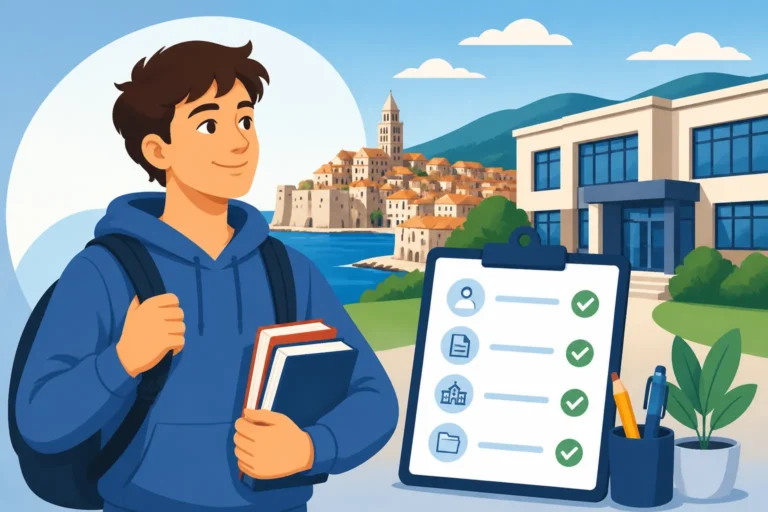
Navigating the application process for international schools in Croatia can feel like a mini-relocation project in itself. It requires meticulous planning, an understanding of timelines, and gathering the right documents. Don't underestimate the effort, especially if you're doing this from abroad while trying to coordinate other aspects of your move.
Navigating the Application Process: Key Steps and Documentation
The application process typically begins online, but quickly moves into a series of detailed information exchanges and assessments. Here’s a general walkthrough:
- Initial Inquiry and Information Gathering: Most schools will have an online inquiry form. Fill this out to express your interest and receive an admissions packet, which will include fee schedules, curriculum details, and application forms. This is your first step to understanding the school’s specific requirements.
- Online Application Submission: You'll then complete a comprehensive online application form. This form asks for detailed information about your child, including their academic history, any special educational needs, and extracurricular interests. You'll also provide family details and your anticipated relocation date.
- Required Documentation: This is where organization is key. You'll typically need to provide:
- Completed application form.
- Copies of your child's birth certificate and passport.
- Copies of parents' passports or ID cards.
- Official academic transcripts or report cards from the previous two to three academic years, translated into English if necessary.
- Standardized test scores (if applicable, for older students).
- Letters of recommendation from current teachers or school administrators.
- Any psychological or educational assessments if your child has special learning needs.
- A photograph of your child.
- Proof of payment for the non-refundable application fee.
- Sometimes, a copy of your residence permit application or actual permit for Croatia is requested, but this might come later in the process.
- Assessments and Interviews: Depending on the child's age and the school's policy, they might require an admissions assessment. This could be an online test, an in-person assessment, or an interview (often via video call if you’re abroad). These assessments help the school determine if they can meet your child's educational needs and ensure they will thrive in the environment. For younger children, it might be more of an observation-based interaction.
- Offer of Admission and Enrolment: If your child is accepted, you’ll receive an official offer of admission. This offer usually includes a deadline by which you must accept and pay the registration/enrolment fee and typically the first installment of tuition to secure the spot.
It’s important to remember that applying from abroad can be a bit more complex, particularly with time differences and document submission. Ensure all translations are certified if required, and keep digital copies of everything you submit.
Understanding Waiting Lists and Early Planning
International schools, especially the well-established ones in Zagreb, can have waiting lists, particularly for popular year groups. This is often due to limited class sizes and a consistent influx of expat families.
- Impact of Waiting Lists: If a year group is full, your child may be placed on a waiting list even if they meet all the admissions criteria. This can add a layer of uncertainty to your relocation plans, as securing schooling is often a prerequisite for a family move.
- Early Application is Key: To mitigate the risk of waiting lists, it is highly advisable to apply as early as possible – ideally six months to a year before your intended start date. Many schools open applications for the following academic year in the autumn of the preceding year.
- Flexibility on Start Dates: While the academic year in Croatia (and international schools) generally runs from late August/early September to June, some schools might accept mid-year admissions if space becomes available due to other families relocating. However, relying on this is risky.
- Proactive Communication: Maintain open lines of communication with the admissions office. They can provide insights into class availability and offer guidance on the best timing for your application. Don't be shy about following up politely.
Essential Tips for a Smooth Transition
A smooth transition for your child extends beyond just getting accepted into a school. It involves emotional, social, and logistical preparation.
- Prepare Your Child: Talk openly with your child about the move and the new school. Show them pictures of the school, its website, and even videos if available. Emphasize the exciting aspects, like making new friends from around the world. Address any anxieties they might have.
- Visit if Possible: If you have the opportunity, schedule a visit to the school before you commit. This allows your child to see the campus, meet some staff, and get a feel for the environment. Even a virtual tour can help.
- Connect with the Expat Community: Many international schools have active parent-teacher associations (PTAs) or informal parent groups. Connect with current expat families before your move if possible. They can offer invaluable insights into school life, extracurriculars, and navigating expat life in Croatia. This network can be incredibly supportive, whether you're looking for How to Find English-Speaking Doctors in Croatia or tips on local playgrounds.
- Logistics of Relocation: Ensure your overall relocation planning, especially regarding accommodation and settling in, supports a smooth school start. Having your How to Find and Rent Long-Term Accommodation in Croatia sorted and a stable home environment makes a huge difference to a child's ability to adjust to school. Services like Sirelo can simplify the moving process, giving you more time to focus on your child's transition.
- Understand School Rules and Culture: Every school has its own culture. Read the parent handbook carefully. Understand the daily routines, communication channels, and expectations for parental involvement. Being proactive in understanding and adhering to these will make your and your child's experience much smoother.
Weighing the Alternatives: Public vs. Private Croatian Schools
While international schools are a popular choice for many expat families, they are not the only option. Croatia offers a public school system and a small selection of local private schools, which might be suitable for certain families, especially those committed to longer-term integration or those on a tighter budget.
The Public School Experience: Integration and Challenges
Croatia's public school system is free for residents and provides a high-quality education primarily in Croatian. For families looking to deeply immerse their children in Croatian culture and language, this can be an excellent path.
- Language Immersion: Enrolling in a local public school offers unparalleled language immersion. Children typically pick up Croatian remarkably quickly, especially at younger ages. This can be a huge benefit for families planning a long-term stay in Croatia and wanting their children to be fully bilingual and culturally integrated.
- Cultural Integration: Public schools are the heartbeat of local communities. Your child will make Croatian friends, participate in local traditions, and truly experience life as a local. For parents, it provides a direct gateway into the Croatian community.
- Academic Quality: Croatian public schools generally maintain good academic standards, especially in core subjects. They follow a national curriculum that is robust and challenging.
- The Language Hurdle: The primary challenge, of course, is the language. While younger children adapt faster, older children entering the system without prior Croatian knowledge may struggle significantly, leading to academic stress and social isolation in the initial months. There’s typically no formal ESL support equivalent to international schools. Patience and external tutoring will likely be essential.
- Curriculum Differences: The curriculum and teaching methods might differ significantly from what your child is used to. Adapting to a new pedagogical approach, alongside a new language, requires resilience.
- Documentation and Enrolment: The process for enrolling in a public school will require your child to have a Croatian OIB, registered residence, and usually a medical check-up. You'll need to work with your local Dom Zdravlja (health centre) and possibly coordinate with a pediatrician (pedijatar) for necessary forms.
For some EU citizens, particularly those moving from neighboring countries, the public school system can be a more seamless transition. For non-EU citizens, ensuring all residence permits and related documents are in order is paramount, as detailed in The Complete Guide to Croatian Residence Permits for Expats (2027).
Local Private Schools: A Niche Option
In addition to the public system and international schools, there are a handful of local private schools in Croatia. These schools also primarily teach in Croatian and follow the national curriculum but may offer smaller class sizes, enhanced facilities, or specific pedagogical approaches (e.g., Montessori, Waldorf, or religious affiliations).
- Advantages: Local private schools can offer a more personalized learning environment than public schools, with potentially more resources or specialized programs. They might also appeal to families who want the Croatian curriculum but a different school ethos.
- Language and Integration: Like public schools, the language of instruction will be Croatian, requiring significant adaptation for non-Croatian speakers. However, some might offer more support or have a higher proportion of bilingual students than a typical public school.
- Cost: While generally less expensive than international schools, local private schools still involve tuition fees, which can vary widely. These fees might be more manageable than the top-tier international schools but would still require careful budgeting.
- Limited English Options: Don't expect these schools to offer a fully English-language curriculum. Any English instruction would likely be as a foreign language subject, not as the primary medium of education.
Hybrid Approaches and Homeschooling Considerations
For some expat families, a hybrid approach or even homeschooling can provide a flexible solution to their educational needs in Croatia.
- Hybrid Learning: This could involve enrolling in a Croatian public school for cultural and language immersion but supplementing it with online international curricula or private tutoring in subjects where a child needs additional support in English. This allows for both integration and academic continuity.
- Homeschooling: Homeschooling is legally permitted in Croatia under certain conditions, primarily requiring the child to be registered with a local public school and pass annual exams to demonstrate progress. This option offers maximum flexibility in terms of curriculum, pace, and location, allowing families to design an education perfectly tailored to their child’s needs.
- Requirements: Croatian law dictates that homeschooled children must still undergo annual examinations at a designated public school to ensure they meet the national curriculum standards. This means parents essentially teach the Croatian curriculum, or a significant portion of it.
- Advantages: Full control over educational content, personalized learning, flexibility for travel, and deeper family bonding.
- Challenges: The burden of teaching falls entirely on parents, requiring significant time, resources, and often prior teaching experience. Socialization can also be a concern, requiring proactive efforts to connect with other homeschooling families or extracurricular groups. The need to prepare for and pass Croatian curriculum exams can also be a significant undertaking if parents are not fluent in Croatian.
- Resources: Finding English-language resources that align with the Croatian curriculum can be tricky. Online international schools or distance learning programs can support this, but parents must be prepared for the administrative and pedagogical responsibilities.
Choosing an educational path is deeply personal and depends on your family's unique circumstances, budget, long-term plans for living in Croatia, and your child's adaptability. Each option comes with its own set of rewards and challenges.
Financial Planning and Support for Expat Education
The high costs of international schooling mean that financial planning is not just advisable, it's absolutely essential. Many families rely on support structures or meticulous budgeting to make this educational choice viable.
Employer Sponsorships and Relocation Packages
One of the most common ways expat families manage the cost of international education is through employer support. If you're relocating to Croatia for work with an international company, especially a multinational corporation or diplomatic mission, inquire about your relocation package.
- Tuition Reimbursement: Many companies offer partial or full tuition reimbursement for international schooling as part of their expat benefits. This can be a lifesaver, covering a significant portion of the direct school fees.
- Education Allowances: Beyond tuition, some packages include allowances for other education-related expenses, such as uniforms, books, or extracurricular activities.
- Consult with HR: Before accepting a job offer or making definitive relocation plans, have a detailed discussion with your company's HR or global mobility department about their education policy for expat children. Get these details in writing. Understanding the specifics of your benefits package can significantly impact your financial viability for living in Croatia, especially in cities like Zagreb where international school options are concentrated.
- Tax Implications: Be aware of any potential tax implications of employer-provided education benefits in Croatia, as this can vary. It might be wise to consult with a tax advisor experienced in expat taxation.
These sponsorships are less common for individuals who are self-employed or working for smaller local companies, making the financial burden entirely their own.
Budgeting for International Schooling: A Realistic View
If employer sponsorship isn't an option, then a robust personal budget is your best friend. Approaching international school costs with a realistic and detailed perspective will prevent financial strain down the line.
- Create a Comprehensive Spreadsheet: Itemize every potential cost: tuition (broken down by payment schedule), application, enrolment, capital levy, technology, exam fees, uniforms, transportation, lunch, extracurriculars, trips, and any potential learning support.
- Factor in Annual Increases: International schools typically increase their fees annually, usually by 3-5%. Build this inflationary expectation into your long-term budget.
- Emergency Fund: Always have an emergency fund set aside for unexpected educational costs or if there's a delay in salary payments or other income streams.
- Long-Term Planning: If you plan for your child to attend international school for many years, project the total cost over that entire period. It's an astronomical figure, but seeing it laid out can help you make informed decisions about savings and investments.
- Currency Fluctuations: While Croatia uses the Euro, if your income is in a different currency, be mindful of exchange rate fluctuations and how they might impact your ability to pay school fees.
- Cost of Living in Croatia: Don't forget that school fees are just one part of your overall The Complete Guide to Cost of Living in Croatia for Expats (2026). You'll also need to budget for housing, food, utilities, leisure, and other day-to-day expenses.
Many expat families find that even with careful planning, international schooling is a significant financial stretch, often requiring sacrifices in other areas of their lifestyle.
Exploring Scholarships and Financial Aid Opportunities
While less common than in some other countries, some international schools in Croatia may offer limited scholarships or financial aid to deserving students. This is usually need-based or merit-based.
- Enquire Directly: The best approach is to directly ask the school's admissions or finance office if they offer any scholarships, bursaries, or financial assistance programs for expat students. Don't assume; always ask.
- Application Process: If available, financial aid usually involves a separate application process, requiring detailed financial disclosures and potentially essays or interviews.
- Eligibility Criteria: Scholarships are often highly competitive and may have strict eligibility criteria, such as specific academic achievements, artistic talents, or financial need thresholds.
- Local Croatian Scholarships: It’s highly unlikely that international students attending international schools would qualify for Croatian government scholarships, as these are typically aimed at Croatian citizens attending public institutions. However, it's always worth checking with the school if they have any internal funds for families facing temporary financial hardship.
For most expat families, employer sponsorship or diligent personal savings and budgeting remain the primary strategies for financing international education in Croatia. It’s a commitment, but one that many parents feel is entirely worth it for the continuity and quality of their children's education during their global adventures.
Disclaimer
The information provided in this guide is intended for general informational purposes only and does not constitute professional advice. While we strive to ensure accuracy and provide up-to-date information, educational policies, fees, and regulations in Croatia can change. We recommend verifying all critical details directly with the relevant international schools, the Croatian Ministry of Education, or qualified educational consultants before making any decisions. Always consult official sources for the most current and specific information.