How Do I Get a Croatian Driving Licence from Scratch?
Moving to Croatia is an adventure, but let's be honest, navigating the local bureaucracy can sometimes feel like trying to solve a Rubik's Cube blindfolded. If you're an expat who's never held a driving licence before, or perhaps your previous licence isn't eligible for exchange, you might be facing the daunting prospect of getting a Croatian driving licence from scratch. This comprehensive guide will walk you through every step of the process, sharing realistic expectations and practical tips to get you on the road legally in Croatia.
The Reality of Getting a Croatian Driving Licence from Scratch as an Expat
For many of us who've moved here, the thought of needing to obtain a new driving licence can be a real headache. Especially if you've driven for years in another country but, for whatever reason, your licence isn't simply transferable. Or maybe you're a new driver entirely, and the Croatian system is your first foray into the world of motoring. Either way, preparing yourself for a journey that involves more than just a quick road test is crucial.
Why "From Scratch" is a Big Undertaking in Croatia
Unlike countries where you might just pass a theory test and then a practical exam to get a licence, Croatia operates on a structured "driving school" model. This means that if you're starting fresh, you're not just taking tests; you're enrolling in a full curriculum. This journey includes mandatory classroom hours for traffic regulations, a separate first aid course, and a prescribed minimum number of practical driving lessons. It’s a thorough system, designed to ensure drivers are well-prepared, but it can be a significant time and financial commitment for a newcomer.
The administrative burden alone can be enough to make you want to throw your hands up. You'll be dealing with multiple institutions, paperwork in Croatian, and potentially different interpretations of rules depending on who you speak to. It's not uncommon to feel frustrated by the lack of a clear, single point of contact for the entire process. Furthermore, for non-EU/EEA citizens, the ability to simply exchange a foreign driving licence might not exist, forcing you into this "from scratch" route even if you've been driving for decades elsewhere. This is vastly different from how easy it might be to, say, Exchange Your Foreign Driving Licence in Croatia.
Essential Prerequisites Before You Even Start
Before you even step foot in a driving school, there are a few foundational requirements you'll need to sort out in Croatia. Think of these as your building blocks – without them, the whole structure falls apart.
First and foremost, you need to have a legal basis to reside in Croatia. This means you must possess a valid temporary or permanent residence permit. The authorities need to know you're a legitimate resident to issue you a Croatian driving licence. Whether you're here on a work permit, a digital nomad visa, or family reunification, make sure your residency status is in order. For many, the first step is always securing their Registering Your Residence in Croatia: The Complete MUP Guide.
Secondly, you'll absolutely need your OIB (Osobni identifikacijski broj), Croatia's personal identification number. This nine-digit number is your key to almost all official transactions in the country, including enrolling in driving school and applying for your licence. If you don't have one yet, getting your How to Get Your OIB and Why It Matters for Healthcare Access should be high on your priority list.
Finally, you'll need to meet the minimum age requirement, which is 18 years old for category B (passenger cars). Different age limits apply for other categories like motorcycles or trucks, so be sure to check those specifics if you're aiming for something other than a standard car licence.
One of the often-overlooked first steps is obtaining a medical certificate, or liječničko uvjerenje. This isn't just a quick check-up; it's a specific medical examination for drivers, performed by authorized doctors at certain health clinics or polyclinics. They'll check your vision, hearing, motor skills, and overall mental and physical fitness to drive. You'll need this certificate before you can even enroll in a driving school, so don't leave it until the last minute! It typically involves a small fee and can sometimes be a bit of a wait, so plan accordingly.
Navigating the Croatian Driving School (Autoškola) System
Once you've got your residency and OIB sorted, and you've passed your medical check, it's time to dive into the heart of the matter: the autoškola. This is where the real learning happens, and it's structured into several distinct phases.
Finding the Right Autoškola: Language and Location
Choosing the right autoškola is crucial, especially for expats. Most driving schools in Croatia operate entirely in Croatian, from the classroom theory lectures to the practical driving instructions. While some instructors might have a basic grasp of English, relying solely on that can be risky when complex traffic laws and nuanced driving techniques are being taught.
In larger cities like Zagreb, Split, or Rijeka, you might find a handful of driving schools that specifically cater to foreigners or have instructors proficient in English. It’s worth doing some research online, asking in expat groups, or even visiting a few schools to inquire about English-speaking options. Be prepared that these might be slightly more expensive, or have limited availability. If finding an English-speaking school isn't feasible, consider hiring a translator for the theory portions or finding an instructor willing to use translation apps on their phone for critical instructions during practical lessons. Location is also important; pick a school that’s convenient for you to attend, as you’ll be spending a fair bit of time there.
Word of mouth is golden in Croatia, so ask around in expat communities for recommendations. You might also find local Facebook groups dedicated to foreigners in your specific city that can offer valuable insights into which schools are most accommodating. You want an autoškola with a good reputation for pass rates, clear communication, and instructors who are patient and thorough.
The Structured Curriculum: Theory, First Aid, and Practical Driving
The Croatian driving school curriculum is quite comprehensive, breaking down the learning process into three main components: traffic regulations, first aid, and practical driving.
The first step is the Traffic Regulations (Prometni Propisi) classroom portion. This involves a set number of mandatory hours (usually 30 hours, divided into lessons) where you'll learn everything about Croatian road signs, traffic laws, priority rules, and safe driving practices. This is often the most challenging part for expats due to the language barrier, as these lectures are almost exclusively in Croatian. You'll be given a textbook, often quite dense, and expected to memorize a lot of information. It's not just about understanding; it's about knowing the exact rules as they are written.
Once you’ve completed your classroom hours, you'll move on to a separate First Aid (Prva Pomoć) course. This isn't usually taught by the driving school itself but is mandated and typically organized through the Croatian Red Cross (Hrvatski Crveni Križ). It involves both theoretical and practical components, teaching you how to react in the event of an accident, provide basic medical assistance, and ensure safety. You'll get a certificate upon completion. It feels like an extra hoop sometimes, but it's a critical skill to possess, and the certificate is non-negotiable for getting your licence.
Finally, there's the Practical Driving (Vožnja) component. After passing your theory exam, you'll start your practical lessons with a driving instructor. There's a minimum number of hours required (usually 35 hours for Category B), but many students find they need more to feel truly confident and proficient. These lessons cover everything from basic car control to complex maneuvers, city driving, and highway driving. Your instructor will guide you through various scenarios, preparing you for the practical test. The goal is not just to pass the test, but to become a safe and responsible driver on Croatian roads. This can be especially challenging given the varied terrain and driving styles you'll encounter, particularly if you are also adapting to life in a new country and perhaps just getting your How to Set Up Online Banking and IBAN Transfers in Croatia in order.
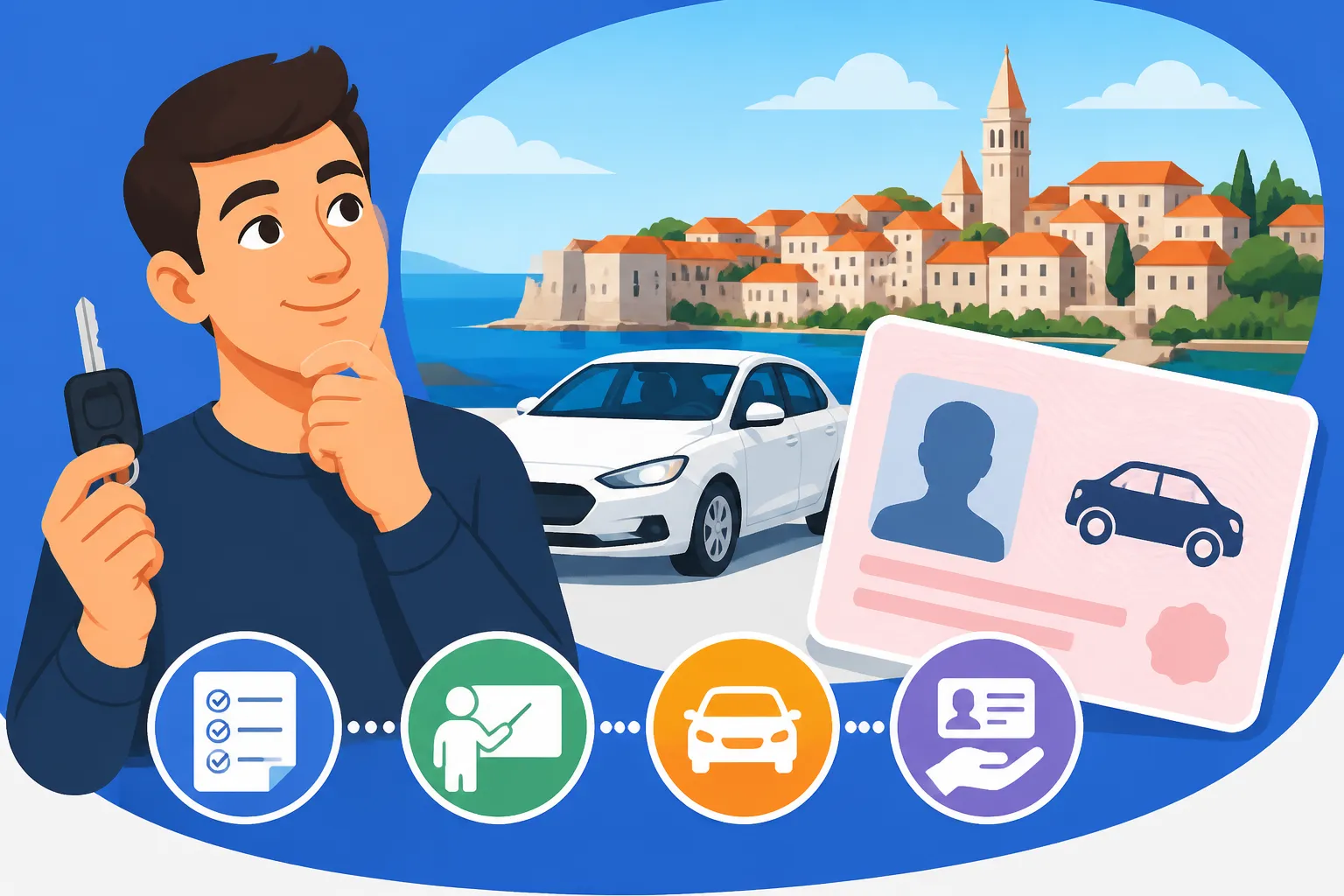
The typical sequence is: Medical Check > Enroll in Autoškola > Traffic Regulations (classroom) > Pass Theory Exam (at HAK) > First Aid Course/Exam (at Red Cross) > Practical Driving Lessons > Pass Practical Driving Exam (at HAK) > Apply for Licence at MUP.
The Examination Process: Theory, First Aid, and Practical Driving Tests
Passing your driving school curriculum is just one part of the puzzle. The next, and arguably most stressful, part is passing the actual examinations administered by the Croatian Automobile Club (Hrvatski Autoklub, or HAK) and the Red Cross.
The Theory Exam (Test iz Prometnih Propisa)
After completing your traffic regulations classes, your autoškola will register you for the theory exam, which is administered by HAK. This is a computer-based, multiple-choice test, typically taken at a HAK testing center. The questions cover all aspects of traffic laws, road signs, and safe driving principles. You'll have a set amount of time to answer the questions, and there's a strict passing score.
For expats, the major hurdle here is often the language. While some HAK centers in larger cities might offer the exam in English (you absolutely must confirm this with your driving school and HAK well in advance), it's not guaranteed. Even if an English option is available, the translation can sometimes be clunky or confusing, making it harder to understand the precise meaning of the questions. Your best bet is to diligently study the Croatian textbook, use online practice tests (many autoškola websites or independent apps offer these), and thoroughly understand the logic behind each rule. The exam environment is quite formal, with strict rules about not using phones or talking.
The First Aid Exam (Ispit iz Prve Pomoći)
Once you've completed your first aid course, you'll take the First Aid Exam, usually at a Red Cross facility. This exam typically has both a written (multiple-choice) and a practical component. For the practical part, you might be asked to demonstrate CPR, how to treat a wound, or how to put someone in the recovery position.
Again, language can be a challenge here. While the practical demonstrations are universal, understanding the instructions and theory questions in Croatian requires good preparation. Make sure your first aid course material is well-understood, and don't hesitate to ask for clarification during the course if you're struggling with the language. This might feel like another administrative hurdle, but it’s a vital part of preparing for real-world emergencies. This is a critical step in your journey toward Navigating the Croatian Healthcare System: An Expat's Roadmap (2027), as it introduces you to a vital emergency service provider.
The Practical Driving Test (Ispit iz Vožnje)
This is the big one, the culmination of all your efforts. After you've passed both your theory and first aid exams and completed your practical driving lessons, your autoškola will schedule your practical driving test with HAK. You'll take the test in the driving school car, accompanied by your instructor and a HAK examiner.
The practical test assesses your ability to safely and independently operate a vehicle, follow traffic rules, perform maneuvers (like parking, U-turns, three-point turns), and react appropriately to traffic situations. The examiner will give you directions, and you'll be judged on everything from your observation skills and use of mirrors to your adherence to speed limits and proper signaling.
It's a high-pressure situation for any driver, and for expats, the added stress of a different language, unfamiliar roads, and potentially different driving habits can be overwhelming. Practice makes perfect, so take all the driving lessons you need to feel completely comfortable. Ask your instructor to simulate test conditions, and don't be afraid to ask for specific practice on routes commonly used for tests in your area. While you can't officially drive until your license is issued, getting around the country through Understanding Train Travel with Croatian Railways (HŽ) or The Expat Guide to Public Transport in Croatia can help you familiarize yourself with road layouts and local driving styles.
Post-Test Steps and Getting Your Croatian Licence
Congratulations, you've passed all your exams! Take a moment to celebrate this significant achievement. But don't put your feet up just yet – there are a few more administrative steps before that coveted plastic card is in your hand.
Collecting Your Certificates and Visiting the MUP
Once you successfully pass your practical driving test, HAK will issue you a certificate of completion for the driving exam. You'll also have your First Aid certificate from the Red Cross and a confirmation from your autoškola that you've completed their program. Crucially, you'll need to retrieve your initial medical certificate as well, as all these pieces of paper form the official proof of your qualification.
With all these documents in hand, your next destination is the MUP (Ministry of Interior) – specifically, the administrative department responsible for issuing driving licences. You'll need to submit an application for your new Croatian driving licence. The specific MUP office you visit will depend on your registered residence; generally, it's the one in your local city or municipality. Be prepared with:
- Your completed application form (you'll get this at the MUP).
- All your certificates of passed exams (driving theory, practical driving, first aid).
- Your valid medical certificate.
- Proof of identity and residency (e.g., your passport, residence card).
- Your OIB.
- A recent passport-sized photograph (typically 3.5×4.5 cm).
- Proof of payment for the administrative fees for the licence itself.
Navigating the MUP can be a test of patience. Appointments are often recommended or even required in larger cities. You'll usually receive a number and wait your turn. Being polite, patient, and having all your documents organized will significantly smooth the process. This is similar to the process for getting your How to Get a Biometric Residence Card (Boravišna Iskaznica) in Croatia. Remember to keep some small change handy or have a functioning mobile data plan with a provider like Airalo just in case you need to access online forms or information while you wait.
Waiting for Your Licence and Provisional Driving
After submitting your application and all required documents at the MUP, you won't walk out with a physical driving licence that day. The MUP processes these applications, and the physical card needs to be printed. The waiting period can vary, but typically it takes a few weeks, sometimes up to a month or more, especially during peak times.
During this waiting period, can you drive? Generally, no, not legally on your own. You are not allowed to drive until you have the physical driving licence card in your possession. In some very specific cases, and at the discretion of the MUP official, they might issue you a temporary paper document that serves as proof you've applied and are awaiting your card. However, this is not a universal practice, and it's best to confirm this directly with the MUP when you submit your application. Assume you cannot drive until you have the physical card to avoid any legal issues. If you have any major moving or relocation plans during this period, consider services like Sirelo to help coordinate your logistics, as driving yourself might not be an option.
Once that shiny new plastic card is in your hand, you're officially a licensed driver in Croatia! Be sure to understand its validity period and any renewal processes so you don't find yourself in a bind down the road. Keep it safe, along with your other important documents.
Cost and Timeframe Expectations
Let’s talk brass tacks. Getting a driving licence from scratch in Croatia isn't just a time commitment; it’s a financial one too. While prices can vary between autoškola and regions, here’s a general overview to help you budget.
| Item | Estimated Cost (EUR) | Notes |
|---|---|---|
| Medical Certificate | 50 – 70 | Mandatory before enrolling in autoškola. Done at specific health clinics. |
| Driving School (Autoškola) | 1,000 – 1,500+ | Includes theory lessons (30h) and practical driving lessons (35h minimum for Cat. B). English-speaking schools might be slightly more expensive. Prices can vary significantly. Some schools offer installment payments. |
| HAK Theory Exam Fee | 15 – 20 | Paid to HAK, not the autoškola. |
| First Aid Course & Exam (Red Cross) | 70 – 100 | Separate from driving school. |
| HAK Practical Driving Exam Fee | 20 – 25 | Paid to HAK. You usually pay for the car rental from the autoškola for the exam as well, which is often included in the driving school package but sometimes an additional fee. |
| Administrative Fee for Licence Card | 30 – 45 | Paid to MUP when submitting your application. Standard vs. expedited issuance. |
| Total Estimated Cost | 1,185 – 1,760+ | This is a conservative estimate. Additional driving lessons will add to the cost. |
Please note these are estimates for 2024 and can fluctuate. Always get a detailed breakdown of costs from your chosen autoškola and other institutions.
As for the timeframe, this process is not quick. From enrolling in autoškola to getting your physical licence, you should realistically budget 3 to 6 months, and potentially longer if you need extra driving lessons, fail an exam and need to retake it, or face delays at the MUP.
- Medical check: 1 day (appointment + exam).
- Driving School (Theory & First Aid): 1-2 months (attending classes).
- Theory Exam: Can be scheduled soon after theory classes, but retakes add time.
- Practical Driving Lessons: 1-3 months (fitting in 35+ hours of lessons).
- Practical Driving Exam: Scheduled after lessons, subject to HAK availability. Retakes add significant time.
- MUP Application & Licence Issuance: 2-4 weeks.
It's a marathon, not a sprint. Be patient, persistent, and embrace the learning experience. The independence of driving on Croatia's stunning roads will be well worth the effort in the end.
Disclaimer
The information provided in this guide is for general informational purposes only and does not constitute legal or professional advice. While we strive to keep the information accurate and up-to-date, requirements and procedures in Croatia can change. It is always recommended to verify the latest regulations, fees, and processes directly with the relevant Croatian authorities (e.g., MUP, HAK, Croatian Red Cross, your chosen autoškola) or consult with a qualified local expert before making any decisions.