How Do I Book a MUP Appointment for My Residence Application?
Navigating the labyrinthine world of Croatian bureaucracy can feel like a full-time job, especially when it comes to securing your residence permit. One of the most common headaches foreigners face is simply getting a foot in the door – literally – at the local police station, or MUP (Ministarstvo unutarnjih poslova). This guide is here to untangle the complexities of booking that all-important MUP appointment for your residence application, providing real-world advice and strategies to help you get through it with minimal stress.
The Reality of MUP Appointments in Croatia: A Glimpse Behind the Curtain
Let's be honest: dealing with any government office in a new country can be daunting, and Croatia's MUP is no exception. For many expats, it's a rite of passage filled with long waits, confusing instructions, and moments that make you want to pull your hair out. But understanding why it's like this can help manage expectations and equip you with the patience you'll definitely need.
Why Booking an Appointment is Crucial (and Often Frustrating)
The MUP is the central authority for all things immigration, from temporary residence to permanent stay, and even citizenship. This means they handle an enormous volume of applications from people all over the world. Because of this sheer workload, coupled with a system that's still transitioning to full digitalization, securing an appointment isn't just a suggestion – it's often a strict requirement. You can't just waltz in, take a number, and expect to be seen for a complex residence application, especially in larger cities like Zagreb or Split.
Many expats arrive with a hopeful attitude, only to be met with signs explicitly stating that visits are by appointment only. This can be incredibly frustrating, especially if you've travelled a distance or are on a tight timeline for your visa or permit expiration. The MUP staff are typically overworked, and while some are incredibly helpful, others might seem less patient. This isn't personal; it's a reflection of a system under strain. Understanding this can help you approach your interactions with a little more grace, even when you feel utterly defeated. The reality is, without a pre-booked slot, you risk being turned away, forcing you to restart your efforts and further prolong your waiting period. It's a system that prioritizes those who have successfully navigated the booking portal or phone lines, making that initial hurdle a significant one.
The Different Ways to Book: Online, Phone, or In-Person?
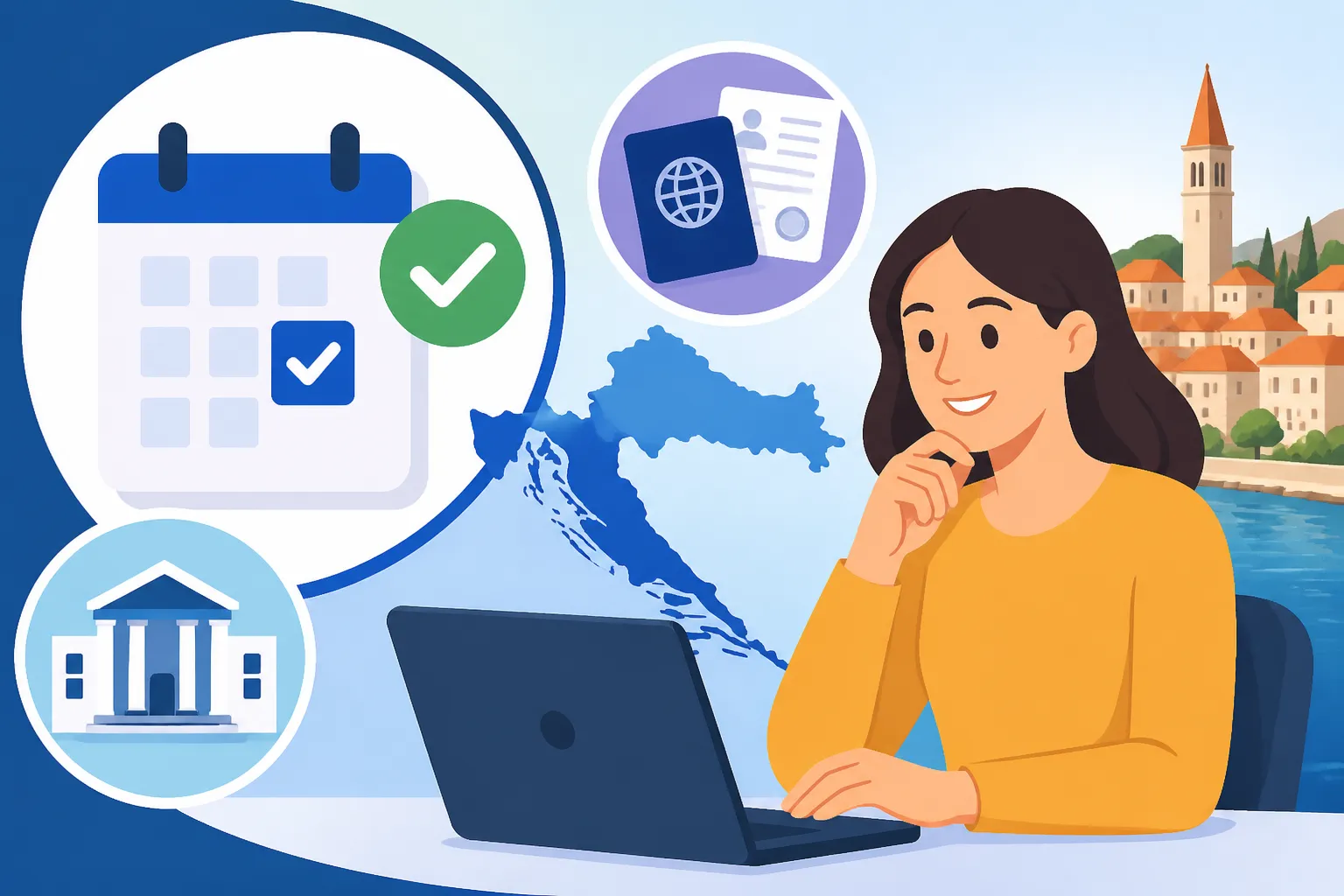
Croatia, like many EU countries, has been making strides towards digitalizing its public services. This means that for many immigration matters, the primary and often preferred method for booking an appointment is online. The e-Građani system, Croatia's e-citizen portal, is at the heart of this. However, it's not always a smooth, universally available option for every service or every foreigner.
While the push is for online booking, there are still instances where you might need to resort to the phone or even an old-fashioned in-person visit to secure a slot. This often depends on the specific MUP office (some smaller towns might operate differently), the type of service you need, or simply the persistent glitches in the online system. Don't be surprised if you find conflicting information or if one method works for one expat but not for another. It’s part of the charmingly unpredictable administrative landscape here. The key is to be flexible and persistent, understanding that no single method is a guaranteed silver bullet for everyone's situation. For those considering the wider implications of moving, thinking about services like those offered by Sirelo can help manage the overall logistical stress, of which MUP appointments are certainly a significant part.
Step-by-Step Guide to Booking Your MUP Appointment Online
For most residence permit applications, the online portal is your first and best bet for securing an appointment. It can be a bit opaque, especially if you're not fluent in Croatian, but with a bit of guidance, it's certainly doable.
Navigating the e-Građani System and MUP Portal
The journey usually begins with Croatia's e-Građani system. This is the central hub for accessing many public services digitally. To even think about using it, you first need to have your OIB (Personal Identification Number) – if you don't have one, that's your first hurdle, but there are resources like How to Get an OIB Personal Identification Number in Croatia to help you with that. Once you have your OIB, you'll need to activate your e-Građani account, which typically involves a visit to a FINA office to get an authentication method, such as an e-token or a digital certificate. This initial setup is crucial; without it, the online MUP portal will be inaccessible for booking.
Once you’re logged into e-Građani, you'll need to navigate to the section related to the Ministry of Interior or MUP services. This isn't always immediately obvious, as the interface can be dense. Look for terms like "MUP," "stranci" (foreigners), or "termini" (appointments). Once you find the MUP portal, you'll typically be presented with a list of available services. This is where the real hunt begins. Selecting the right service is paramount, as choosing the wrong one might mean your appointment is invalid when you arrive, or worse, you can't even book it.
The system will then ask you to choose your desired MUP office (e.g., Zagreb, Split, Rijeka), followed by a calendar showing available dates and times. Be prepared for disappointment here. It’s not uncommon to see weeks or even months with no available slots. This is where persistence truly pays off; many expats report success by checking the portal at odd hours (early morning or late at night) or repeatedly over several days, as new slots sometimes appear sporadically. Keep refreshing, keep checking, and don't give up after the first try.
Specifics for Residence Applications: Choosing the Right Service
When you reach the appointment booking page, you’ll usually see a list of service categories. This is where it’s critical to choose correctly for your residence application. Common categories you might encounter include:
- Prvi privremeni boravak (First temporary residence permit): For those applying for the first time.
- Produljenje privremenog boravka (Temporary residence permit extension): If you're renewing an existing permit.
- Stalni boravak (Permanent residence): For those applying for long-term residency.
- Obitelj (Family): For family reunification applications.
For example, if you're applying for your first temporary residence permit, perhaps under the digital nomad scheme, you'll need to specifically select the option that corresponds to your application type. Choosing "Temporary Residence (Privremeni Boravak) Categories in Croatia" is generally the umbrella term, but specific subcategories matter. Similarly, for those bringing family, understanding How to Apply for Family Reunification in Croatia can guide your selection.
Mistaking an "extension" for a "first application" can lead to your appointment being unproductive, wasting precious time. It’s vital to double-check the exact phrasing and ensure it aligns with your permit type. Some MUP offices have dedicated counters for certain types of applications, so your correct choice online ensures you're routed to the right place and that the staff are prepared for your specific needs. If you’re unsure, try to find official MUP guidance or ask in expat groups, but always cross-reference with the MUP portal itself.
What to Do If Online Booking Isn't Available or Fails
Let's face it, the online system isn't perfect. You might encounter situations where no slots are available for weeks, the website is down, or you simply can’t find the right category. This is where flexibility and a proactive approach come into play.
If the online portal consistently shows no availability, don’t panic immediately. First, as mentioned, keep checking at different times of the day. Sometimes slots are released in batches, or cancellations free up space. Second, consider reaching out to the MUP directly via phone or email, if contact information is available. While they might redirect you back to the online system, some offices do take appointments over the phone, especially if the online system is truly failing. Third, for those who are truly desperate and unable to get through digitally, an in-person visit to the MUP (outside of official appointment hours, if possible, to just ask about booking) might be a last resort. Be prepared for a wait and potentially being turned away, but sometimes, speaking to a human can yield results, particularly if you explain your specific predicament politely and clearly.
Remember that securing your residence permit also hinges on having valid health insurance. Many expats opt for international providers like Cigna Global to meet the requirements for their Croatian residence application, ensuring seamless coverage. This step is usually required before your MUP appointment, so make sure you're covered. What documents do I need for a Croatian Residence Permit? will highlight the importance of valid health insurance as part of your application.
Alternatives to Online Booking: Phone Calls and In-Person Visits
While the MUP is pushing for online appointment booking, it’s not always a guaranteed success. Sometimes, the old ways are the only ways.
Conquering the Phone System: Tips and Tricks
Trying to book a MUP appointment over the phone can be a test of endurance, but it’s a viable alternative if the online system proves fruitless. Each major city's MUP office will have a general contact number, but sometimes, specific departments have their own direct lines. You’ll often find these on the official MUP website (mup.gov.hr) or local city government sites. However, be prepared for long ring times, busy signals, or even unanswered calls.
When you do get through, a little Croatian goes a long way. Even if you only know a few basic phrases like "Dobar dan" (Good day), "Treba mi termin za boravak" (I need an appointment for residence), or "Ne govorim hrvatski dobro, možete li mi pomoći na engleskom?" (I don't speak Croatian well, can you help me in English?), it can help break the ice. If your Croatian isn't up to par, ask a Croatian friend or a professional translator to help you make the call. Persistence is key; call repeatedly, especially during off-peak hours (mid-morning or early afternoon, avoiding opening or closing times). Sometimes, simply being the person who calls ten times makes the difference between getting an appointment and being stuck in limbo. It’s a bit like playing the lottery, but you can improve your odds with tenacity.
The In-Person Gauntlet: When You Have No Other Choice
For some, especially in smaller towns, or when all other methods fail, an in-person visit to the MUP to try and book an appointment is the only option left. This strategy is less about walking in and being seen for your application and more about showing up to request a booking or to get clarification on the process. Prepare for a significant time commitment.
The classic advice for any Croatian administrative office is to arrive early. And when I say early, I mean early. If the MUP opens at 8:00 AM, aim to be there by 7:00 AM or even earlier if it's a major city office like the one in Zagreb. This gives you a chance to be among the first in line, whether it's to speak to an information desk or to pick up a number for an appointment booking counter. Be ready to explain your situation clearly and politely. If you have any previous emails or screenshots showing failed online booking attempts, bring them along as proof of your efforts.
While larger cities like Zagreb or Split have a more structured, often online-driven appointment system, smaller MUP offices might still operate on a first-come, first-served basis for booking appointments, even if the actual application requires a scheduled visit. This is why local knowledge is invaluable. Asking fellow expats in your specific region of Croatia (e.g., Dubrovnik, Rijeka) can provide real-time insights into their local MUP's preferred method. It's a stressful part of the process, but remember, countless expats have walked this path before you and come out the other side with their residence card in hand. You can find more general advice on Registering Your Residence in Croatia The Complete MUP Guide which explains the overall process.
Essential Preparation for Your MUP Appointment (Once Booked!)
Congratulations, you've secured that elusive MUP appointment! While it feels like a victory, the battle isn't over. The next crucial step is ensuring you arrive fully prepared, because nothing wastes an appointment slot like missing documentation.
Gathering Your Documents: The Croatian Way
Croatia's administrative system is big on paperwork, and the MUP is no exception. They love documents. And then they love copies of those documents. And sometimes, they love certified translations of those copies. The general rule is: if in doubt, bring it. Bring the original, at least two photocopies, and if it's not in Croatian, a certified translation. This applies to everything from your passport to your birth certificate, marriage certificate, and any educational degrees.
For a residence application, you’ll typically need:
- Your passport (original and copies of all stamped pages).
- Your OIB certificate.
- Proof of accommodation (e.g., a rental contract or property ownership deed, often verified by a notary).
- Proof of sufficient funds (bank statements).
- Health insurance documentation. Many expats opt for comprehensive private insurance like Cigna Global initially to ensure they meet the criteria, then later explore the Croatian public system. What Health Insurance Do I Need for a Croatian Residence Permit? provides detailed information on this.
- The specific application form (often found on the MUP website, filled out in Croatian).
- Photos meeting specific passport photo requirements.
- Proof of the reason for your stay (e.g., employment contract for a work permit, university acceptance letter for students, proof of remote work for digital nomads).
- Criminal background check from your home country.
Always check the specific requirements on the MUP website for your exact type of residence permit. The list can vary. Also, be aware that some documents, like your rental contract, may need to be notarized. This attention to detail in document preparation is crucial. It’s always better to have too many documents than too few, as being sent away to retrieve a missing paper means another frustrating appointment booking down the line. To get ahead, consult resources like What Documents Do I Need for a Croatian Residence Permit? and How to Prepare Documents for a Croatian Residence Application well in advance.
The Day of the Appointment: What to Expect
The day of your MUP appointment can still be nerve-wracking, even with everything in order. Plan to arrive early – at least 15-20 minutes before your scheduled time. This gives you a buffer for unexpected traffic, finding parking, or locating the correct department within the MUP building. Bring a pen, any payment slips you might need (e.g., for administrative fees, often paid at the post office or FINA before your appointment), and a healthy dose of patience.
Once inside, you'll likely check in at a reception or an information desk, or you might find a digital screen where you input your appointment number. Be prepared to wait, even if you have a scheduled time. Bureaucracy moves at its own pace. When your number is called, approach the counter calmly, with all your documents organized. Have your originals, copies, and translations clearly separated. The MUP officer will review your paperwork, ask questions, and potentially take your biometrics (fingerprints and photo) if it’s your first time applying for a biometric residence card. How to Get a Biometric Residence Card Boravišna Iskaznica in Croatia explains this part of the process.
Language can still be a barrier, even if you got through the booking process. While some MUP officers speak English, it's not guaranteed. If you're not confident in your Croatian, consider bringing a Croatian-speaking friend or a professional translator. They can help clarify any questions and ensure there are no misunderstandings. Remember, a polite and respectful demeanor goes a long way. The goal is to make the process as smooth as possible for both you and the MUP officer.
Navigating the MUP process is one of the trickier parts of settling in Croatia, but armed with patience and preparation, it’s entirely manageable.
MUP Appointment Booking Methods & Key Information
Here's a quick overview of the common methods and important points for MUP appointments in Croatia:
| Method | Description | Pros | Cons | Key for Expats |
|---|---|---|---|---|
| Online (e-Građani) | Access via the national e-citizen portal (e-Građani), requiring FINA authentication. Look for "MUP" or "Stranci" services to book. Predominant method in major cities like Zagreb, Split, Rijeka. | Convenient, available 24/7 (if slots exist), preferred by MUP for efficiency. Allows self-service without direct interaction. Good for those already familiar with Croatian e-services and with an activated e-Građani account. | Requires activated e-Građani (OIB, FINA visit), can be hard to navigate in Croatian, slots often scarce or unavailable for weeks/months, system can be buggy, not all services/MUPs are fully integrated. Frustrating to constantly check for new openings. | Always try this first, especially in larger cities. Ensure your e-Građani is set up. Be persistent in checking for slots. |
| Phone Call | Calling the general or specific department phone numbers of your local MUP office. Numbers are usually found on the MUP website (mup.gov.hr). | Direct human interaction (if you get through), sometimes new slots are offered that aren't online, can clarify specific questions immediately, useful for MUPs with less robust online systems. Can be easier for complex situations. | Long waiting times, calls often go unanswered or are busy, language barrier is a significant issue if you don't speak Croatian, information can vary depending on who you speak to. Requires persistence and patience. | Keep local MUP phone numbers handy. Use basic Croatian phrases or have a Croatian speaker assist. Good backup if online fails. |
| In-Person Visit | Physically going to the MUP office to inquire about appointments, especially in smaller towns, or if other methods have failed completely. Less common for booking in big cities, but sometimes needed for general info. | Can be effective in smaller, less digitalized MUP offices. Allows you to speak to someone directly, potentially getting specific advice or even an appointment on the spot if cancellations occur or if the MUP prefers this method for certain services. Crucial if facing an imminent deadline and online/phone methods are unresponsive. | Extremely time-consuming (expect long waits, potentially without success), often redirected back to online booking, not guaranteed to get an appointment, language barrier, can be emotionally draining. May be turned away if your visit is not for an emergency. Generally not for just booking an appointment in big cities. | Last resort for booking an appointment in major cities. Arrive extremely early. Better for clarifying urgent issues or if you're in a smaller town. Refer to How Do I Book an Appointment at the MUP for Immigration Matters for more details. |
Disclaimer
The information provided in this guide is intended for general informational purposes only and does not constitute legal advice. While we strive to keep the information up-to-date and accurate, Croatian immigration laws and administrative procedures can change frequently. We strongly recommend consulting the official MUP website (mup.gov.hr) or seeking advice from a qualified immigration lawyer or specialist in Croatia for your specific situation. Reliance on any information in this guide is solely at your own risk.