Can I Keep My HZZO Coverage If I Work Remotely for a Foreign Company?
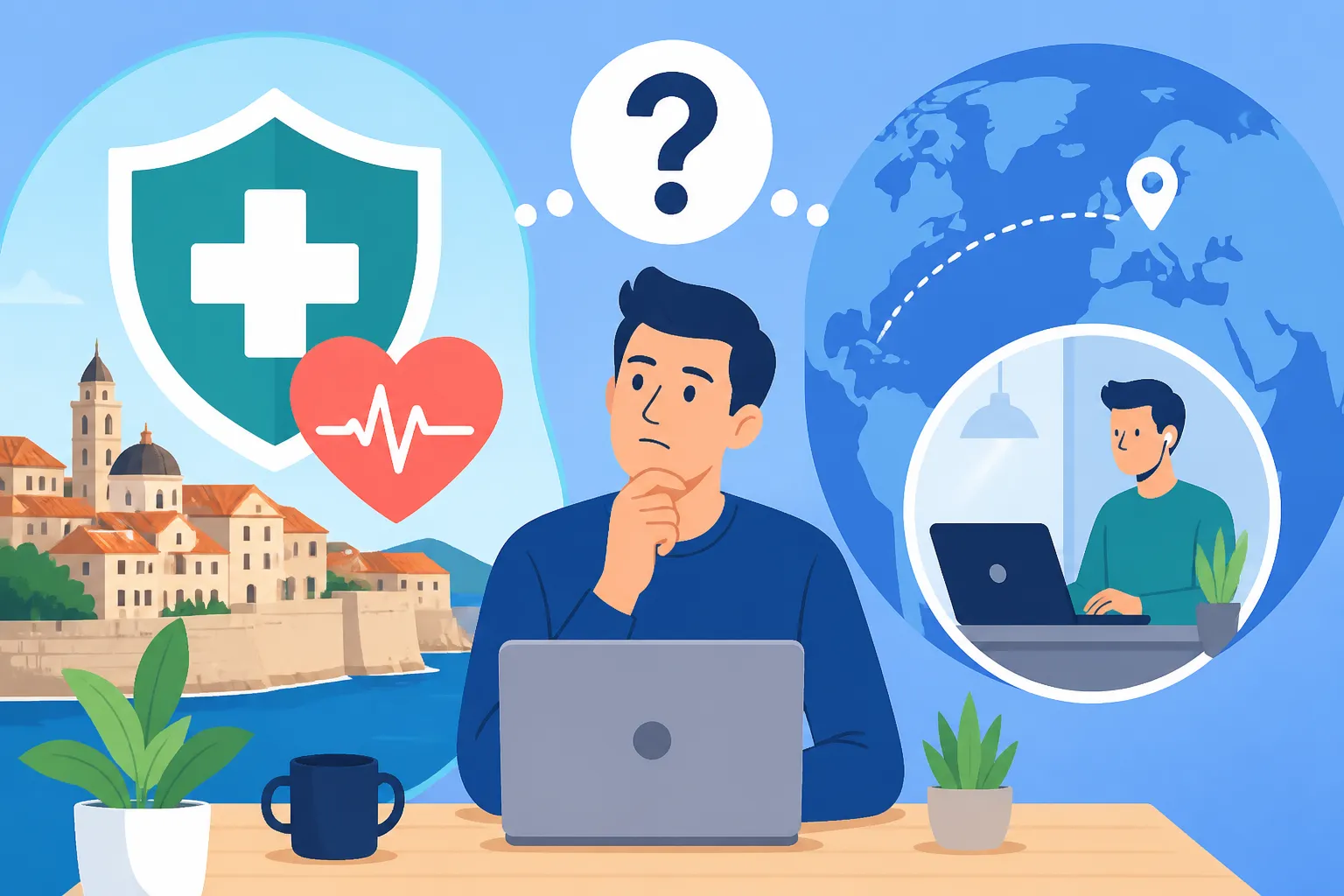
Ah, the million-dollar question for so many of us living the remote work dream in Croatia! You’ve landed in this beautiful country, found your rhythm, and now you’re wondering if you can keep tapping into the public healthcare system (HZZO) while your paychecks still come from abroad. It’s a common source of confusion, and believe me, you're not alone in trying to navigate these often-murky waters. This guide aims to clear up that tangled mess, offering a realistic look at your HZZO coverage options when working for a foreign company.
Understanding HZZO for Remote Workers in Croatia
Croatia's healthcare system, like many European systems, can be a bit of a labyrinth for foreigners. While it's generally excellent, figuring out where you fit in, especially with a non-Croatian employer, is key.
The Basics of HZZO and Why It Matters
Let’s start with what HZZO actually is. The Hrvatski Zavod za Zdravstveno Osiguranje, or Croatian Health Insurance Fund, is the backbone of Croatia's public healthcare system. When you're formally employed by a Croatian company, or you're self-employed and registered as an obrt or d.o.o. here, a portion of your income goes towards mandatory health and social security contributions. These contributions are what grant you access to the HZZO system, covering everything from doctor's visits and prescriptions to hospital stays and specialist care. Without these contributions, directly accessing the HZZO system can be tricky, if not impossible, for long-term residents. It’s not just "insurance" in the private sense; it's a social security pillar. For a deeper dive into the overall system, you might want to check out The Complete Guide to Healthcare in Croatia for Expats (2027).
The frustration often stems from the fact that in many countries, "health insurance" is a standalone product. Here, it’s deeply interwoven with your employment status and where your social contributions are paid. For those of us working remotely for foreign companies, our contributions often go to our home country's social security system, which doesn't automatically translate to HZZO eligibility. This creates a real headache when you're trying to settle down and access local services.
Initial Residency and Health Insurance Requirements
When you first apply for a temporary residence permit in Croatia, regardless of the basis (be it work, study, digital nomad, or family reunification), you are almost always required to demonstrate proof of health insurance. This initial insurance doesn't necessarily have to be HZZO. For many, especially those coming from non-EU/EEA countries, this often means showing proof of private travel or international health insurance.
For example, if you're applying for The Expat Guide to Temporary Residence (Privremeni Boravak) in Croatia, you'll need to submit documents proving you have adequate health coverage. This can be a commercial policy, or for EU/EEA citizens, your EHIC card often suffices for initial registration. The critical distinction here is that proving you have health insurance for your residence permit application is different from being eligible for HZZO. The former is a requirement to be allowed to live here; the latter is about the specific public system. Once you're approved for residence, the MUP (Ministry of Interior) will guide you on the next steps regarding your long-term health coverage, which, depending on your residence basis, might involve registering with HZZO. You'll also need to sort out your OIB – your personal identification number – as it’s crucial for just about everything, including healthcare. Understanding How to Get Your OIB and Why It Matters for Healthcare Access is an essential first step.
The Nitty-Gritty: Can You Keep HZZO with a Foreign Employer?
This is where the rubber meets the road. The simple answer, for most people working remotely for a foreign company, is often "no," but it's crucial to understand why and what the exceptions might be.
The Key Factor: Where Your Social Contributions Are Paid
The core principle of HZZO eligibility in Croatia is tied to where your mandatory social security contributions are being paid. If your foreign employer is paying your social security contributions in their home country, then you generally won't be eligible for HZZO coverage in Croatia based on that employment. Croatia's system is designed to provide coverage to those who contribute to its social security fund.
Think of it this way: your HZZO card is essentially your ticket to the public healthcare system, and that ticket is purchased through your contributions. If your foreign company isn't channeling those contributions into the Croatian system, then you're not buying a ticket, so to speak.
There are, however, some very specific scenarios where someone working for a foreign company might be covered:
- Posted Workers (A1 Certificate): If your foreign employer has posted you to work in Croatia and you have an A1 certificate (common within the EU/EEA), this means your social security contributions are still being paid in your home country but you are legally covered under their system while working in Croatia. In such cases, you might be able to register with HZZO based on this A1 certificate, and your home country's health insurance fund would effectively cover your costs in Croatia. This is complex and requires specific agreements between countries.
- Family Reunification: If you are here on a residence permit based on family reunification with a Croatian citizen or a foreigner who is contributing to HZZO, you might be able to register as a dependent under their HZZO coverage. In this scenario, your foreign employment isn't the basis for your HZZO, but your family status is. Learning How to Register Family Members for Health Insurance in Croatia can be very helpful here.
- Self-Employed (Obrt/D.O.O.) for Foreign Clients: If you establish a Croatian legal entity, such as a paušalni obrt (flat-rate trade) or a d.o.o. (limited liability company), and your foreign company becomes your client (rather than your employer), you will be required to pay Croatian social security contributions as part of running your business. In this case, you become eligible for HZZO through your Croatian self-employment. However, this means you are no longer just "working remotely for a foreign company" but running your own Croatian business. This is a significant change in your legal and tax status.
The Digital Nomad Permit and HZZO Challenges
This is perhaps the most common scenario for remote workers in Croatia. The digital nomad permit was specifically designed for individuals working for foreign companies and earning income from outside Croatia. A key condition of this permit is that you are not permitted to work for Croatian companies or clients.
Crucially, as a digital nomad, you are explicitly excluded from mandatory HZZO coverage. This is not a loophole or an oversight; it’s a foundational aspect of the digital nomad visa requirements. When you apply for your permit, you must provide proof of private health insurance for the entire duration of your stay. This private insurance is your sole health coverage in Croatia. It’s important to understand Understanding Digital Nomad Permit Income Requirements in Croatia as well, as these are often tied to showing financial self-sufficiency.
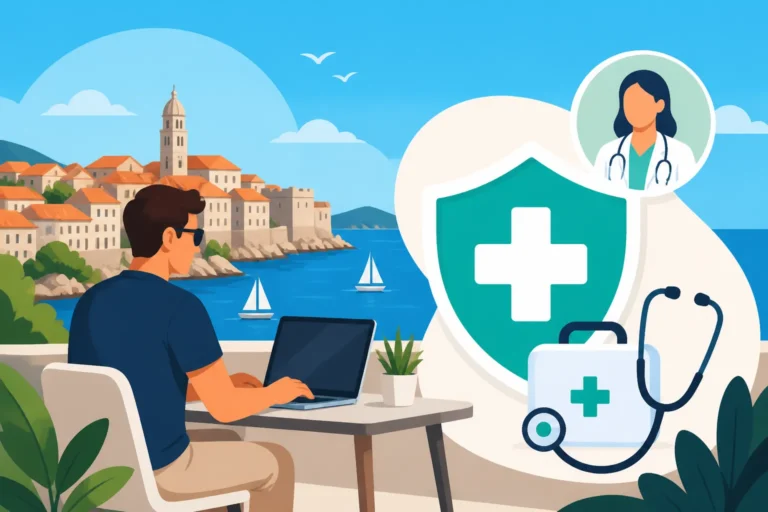
This means that if you're on a digital nomad permit, you absolutely cannot keep or even get HZZO coverage based on that permit. You must have private insurance. Many digital nomads opt for international health insurance providers like SafetyWing, which offers flexible, travel medical insurance designed for nomads, covering you globally. It's a pragmatic choice for many because it's often geared towards people who are constantly moving or working for foreign entities, providing comprehensive coverage without the ties to national social security systems.
Other Residence Bases and Their HZZO Implications
While the digital nomad permit is clear-cut, other residence categories might offer different pathways, though often not directly through remote foreign employment itself.
- Students: International students in Croatia are generally required to have health insurance. For EU/EEA citizens, their EHIC might suffice. Non-EU/EEA students often need to acquire private insurance, though some agreements or specific circumstances might allow for HZZO registration once their temporary residence is approved and they are enrolled in a recognized educational institution.
- Self-Employment via Croatian Company (Obrt/D.O.O.): As mentioned earlier, if you actively establish a Croatian legal entity and pay social contributions here, your HZZO coverage flows directly from that. This changes your status from simply "working remotely for a foreign company" to "running a Croatian business that serves foreign clients."
- Property Owners: Owning property in Croatia generally does not automatically grant you HZZO coverage. If your residence permit is based on sufficient means (e.g., as a retiree) rather than employment contributions, you will typically need private health insurance.
It’s vital to distinguish between simply having a valid visa or residence permit and being integrated into the Croatian social security system. The two are not always the same, especially for remote workers and digital nomads. Always consult official sources, such as the MUP or your local HZZO office, for the most up-to-date and specific information pertaining to your unique situation.
Navigating the Gap: What If You Can't Keep HZZO?
For most remote workers employed by foreign companies, particularly digital nomads, the reality is that HZZO coverage is not an option. This isn't a dead end, but rather a redirection towards suitable alternatives.
The Imperative of Private Health Insurance
If you fall into a category where you're not contributing to the Croatian social security system and thus aren't eligible for HZZO, then private health insurance isn't just a good idea – it's an absolute necessity. In fact, for digital nomads, it's a mandatory requirement for your residence permit. Ignoring this could lead to serious problems, both legal and financial, should you need medical attention.
Private health insurance for expats in Croatia comes in various forms. You can opt for international plans that cover you worldwide, or local private plans that focus on coverage within Croatia. Providers like SafetyWing are popular among digital nomads and remote workers because they understand the unique needs of this demographic, offering flexible, comprehensive plans that can adapt to a transient lifestyle. These plans typically cover medical emergencies, hospital stays, doctor visits, and sometimes even dental or prescription costs, depending on the policy you choose. Always read the fine print to ensure the coverage meets your specific needs and the requirements of your residence permit. For more options, take a look at Understanding Private Health Insurance Plans in Croatia.
Choosing a private plan means you bypass the HZZO system for your primary care. You'll typically seek treatment at private polyclinics (poliklinike) or hospitals, which often offer quicker appointments and English-speaking staff, but at a cost covered by your insurer. This can feel like a big shift if you're used to a public system, but it offers its own set of advantages in terms of access and convenience.
Comparing Your Options: Public vs. Private
To help clarify the differences, here’s a quick overview of what you can generally expect from HZZO (if eligible) versus private insurance in Croatia.
| Feature | HZZO (Public Health Insurance) | Private Health Insurance (e.g., SafetyWing) |
|---|---|---|
| Eligibility | Based on Croatian social security contributions (employment, self-employment in Croatia, specific family reunification, A1 certificates). | Open to anyone, typically required for digital nomads and those not HZZO-eligible. |
| Coverage Scope | Comprehensive basic care, specialist visits (with referral), hospital stays, medications (with co-payments). | Varies widely by plan; can be basic emergency to comprehensive international coverage. |
| Cost | Mandatory monthly contributions (based on income) plus potential co-payments (participacija). | Fixed monthly/annual premiums, varying by age, coverage, and provider. |
| Access to Care | Primarily through public domovi zdravlja (health centers) and public hospitals. Can involve waiting lists for specialists. | Direct access to private clinics (poliklinike) and hospitals; generally shorter wait times. |
| Doctor Choice | Must register with a HZZO-approved family doctor. | Can often choose any doctor or specialist within the network, sometimes globally. |
| Administrative Burden | Can involve MUP, HZZO, and tax administration for registration and changes. | Simpler, direct relationship with the insurance provider. |
For a more detailed breakdown of public versus private options, Public vs Private Healthcare in Croatia: Which Should Expats Choose? is an excellent resource. Remember, if you are not actively contributing to the Croatian social security system, the HZZO column often doesn't apply to you, and your focus should be entirely on securing robust private coverage.
Practical Steps and What to Watch Out For
Navigating the administrative landscape in Croatia can be… an experience. Here are some practical steps and warnings to keep in mind.
Consulting MUP and Porezna Uprava
My biggest piece of advice, and one I can't stress enough as a veteran expat, is to always confirm your specific situation with the relevant Croatian authorities. The rules, while generally clear, can have nuances based on your nationality, residence permit type, and personal circumstances.
- MUP (Ministry of Interior): This is your first stop for anything related to residence permits. When you apply for or renew your permit, clarify your health insurance requirements. They are the ones who ultimately approve your status and will tell you what form of health insurance you need to show. The process of How to Register Your Residence (Prebivalište) at the MUP is crucial for all expats.
- Porezna Uprava (Tax Administration): While HZZO is health insurance, it's intrinsically linked to your tax and social security contributions. If you have any doubts about your obligation to pay contributions in Croatia, or if you're considering setting up an obrt to gain HZZO eligibility, the Porezna Uprava is the place to get accurate information. Their guidance on The Complete Guide to Taxes in Croatia for Expats (2027) will also be invaluable.
Don't rely solely on forum advice or hearsay. While expat groups are fantastic for shared experiences, official bodies provide definitive answers. It's tedious, yes, but necessary. Sometimes, getting a clear answer means going to different offices or asking the same question multiple ways, but persistence pays off.
The Risk of Non-Compliance
Operating in Croatia without valid health insurance is not just unwise; it's risky and can lead to significant problems.
- Residence Permit Issues: Lack of valid health insurance is a primary reason for residence permit applications or renewals to be rejected. MUP takes this seriously.
- Financial Burden: Should you require medical attention, even for something minor, the costs can quickly skyrocket if you're uninsured. Emergency services, hospital stays, and complex treatments can run into thousands of euros. Don't assume anything will be free or cheap.
- Legal Consequences: Depending on your situation, failing to meet health insurance obligations could potentially lead to fines or complications with your legal status in Croatia.
It’s far better to invest the time and effort upfront to ensure you have the correct and adequate health coverage for your situation. Whether that means securing a private policy with a provider like SafetyWing or navigating the complexities of HZZO eligibility, being prepared will save you a lot of stress and potential expense down the line.
Final Thoughts for Remote Workers
Living and working remotely in Croatia is an incredible experience, but like any country, it comes with its administrative quirks. The question of HZZO coverage when your employer is foreign is one of those quirks, often leading to more head-scratching than necessary. For most digital nomads and remote workers who aren't contributing to the Croatian social security system, the answer is clear: HZZO is generally not an option, and robust private health insurance is your essential safeguard.
Embrace the beautiful Croatian lifestyle, but do so with the peace of mind that your health and legal status are fully covered. Do your homework, ask the difficult questions at the MUP and Porezna, and ensure you have a reliable plan in place.
Disclaimer
This article is for general informational purposes only and does not constitute professional advice. Laws, prices and regulations vary by location and change over time. Consult a qualified professional for guidance on your specific situation.