How Do I Register a Chronic Condition with My Croatian GP?
Moving to Croatia with a chronic health condition can feel like an uphill battle against a mountain of paperwork. Between finding a doctor who speaks your language and ensuring your prescriptions don't run out, the stress is real. This guide provides a clear, step-by-step roadmap for registering your chronic condition with a Croatian GP, navigating the digital health system, and securing long-term medication.
Securing Your Primary Healthcare Gateway
The foundation of managing any long-term illness in Croatia is finding a primary care physician, known locally as a Liječnik opće prakse or Obiteljski liječnik. In the Croatian system, your GP is the absolute gatekeeper. You cannot access specialists, get laboratory blood work, or receive subsidized prescriptions without their digital signature. For those of us used to booking specialists directly, this can be a frustrating shift in autonomy, but it is the only way to ensure your care is covered by the national insurance.
Understanding the Role of the Dom Zdravlja
Most expats will find their GP within a Understanding the Role of the Dom Zdravlja (Health Centre) in Croatia. These are community health centers scattered throughout every neighborhood in cities like Zagreb, Split, or Rijeka. Think of them as the hub for all basic medical needs. Inside a Dom Zdravlja, you will find multiple GPs, dentists, and sometimes even gynecologists or pediatricians. When you move to a new neighborhood, your first mission should be to visit the nearest center and ask which doctors are currently accepting new patients.
Be prepared for a bit of a "hunt." It is common to be told that a doctor's list is full. Don't take this personally; it’s a systemic capacity issue. If you find yourself hitting walls, you may need to visit several centers or look for a private practice that has a contract with the HZZO (the Croatian Health Insurance Fund). During this transition, if you are still waiting for your local paperwork to clear, having a bridge like SafetyWing can provide a safety net for any acute issues that arise before you are fully integrated into the public system.
The Registration Process and the OIB Requirement
Once you find a doctor willing to take you on, you will need to sign a form to officially register with them. You cannot do this without your OIB (Personal Identification Number) and proof of health insurance. If you are still in the process of Registering with HZZO in Croatia: The Complete Expat Guide (2027), you might feel like you're in a "Catch-22." However, the GP needs that HZZO card—or at least the temporary certificate—to create your digital health file.
The doctor’s nurse (sestra) is usually the one who handles the administrative side of this registration. In Croatia, the nurse is a powerful figure in the clinic; they manage the email, the phone, and the prescriptions. Building a polite, patient relationship with the nurse will make your life as a chronic patient significantly easier. They will enter your details into the system, and from that moment on, you are "linked" to that specific clinic for at least one year.
Preparing Your Medical Dossier for the Croatian System
When you first sit down with your new Croatian GP, you aren't just there for a check-up; you are there to prove your medical history so they can authorize your ongoing treatment. The Croatian medical system is highly digitized, but it relies on "source truth" from your previous doctors. You cannot simply tell a GP that you need a specific dosage of insulin or blood pressure medication; you must show them the evidence.
Translation and Legalization of Foreign Records
If your medical records are in English, many younger doctors in Croatia will be able to read them, but the official system often requires documentation in Croatian. For a chronic condition, it is highly recommended to have your most recent specialist report or "discharge summary" translated by a certified court interpreter. This ensures that the specific medical terminology is accurately captured.
The GP will look for specific markers in your reports: your diagnosis, your current treatment plan, and your most recent lab results. If you are arriving from outside the EU, check if your medications have the same names in Croatia. Most doctors use the ICD-10 coding system for diagnoses, which is universal. Showing these codes to your doctor can bypass many language barriers. While you are getting these local records settled, travel-friendly options like SafetyWing can be useful if you need to consult a private doctor for a quick English-language second opinion while the public bureaucracy churns.
The Importance of Universal Medical Codes
One of the best tips for expats is to ensure their foreign records include the generic chemical names of their medications rather than just brand names. For example, instead of just "Lipitor," ensure your records say "Atorvastatin." This allows your Croatian GP to find the equivalent medication available in the local pharmacies.
During your initial consultation, the GP will open your "e-karton"—your digital medical file. They will manually enter your chronic diagnosis codes into this file. This is a critical step because certain medications can only be prescribed if the corresponding "chronic" code is active in your file. If the doctor misses this, the system might block your prescription or charge you the full market price instead of the subsidized rate.
Navigating the e-Recept and Specialist Referral Systems
Once your condition is registered in the GP's system, the way you interact with healthcare changes. You move from "proving your illness" to "managing your care." This is where the Understanding the e-Recept (E-Prescription) System in Croatia becomes your best friend. In the old days, you had to pick up a paper slip for every refill; today, it’s almost entirely digital.
How to Get Your Chronic Meds Refilled
For chronic conditions, your GP can often set up "recurring" prescriptions. However, you still usually need to "order" them once a month or every three months. Most expats do this via email or a phone call to the nurse. You tell them your name, OIB, and the medication you need. The doctor then "sends" the prescription to the central cloud system.
You can then walk into any pharmacy (Ljekarna) in Croatia, hand over your HZZO card, and they will see the prescription waiting for you. It’s incredibly efficient once it’s set up. However, be aware of Understanding Participacija (Co-Payments) in the Croatian Health System. Even with basic insurance, you might pay a few euros for each box of medication unless you have supplementary insurance. If you are a digital nomad or a long-term traveler using SafetyWing, remember that these types of policies are generally for new, unexpected illnesses and won't cover these routine chronic refills, which is why getting into the HZZO system is so vital.
Securing e-Uputnica for Specialist Check-ups
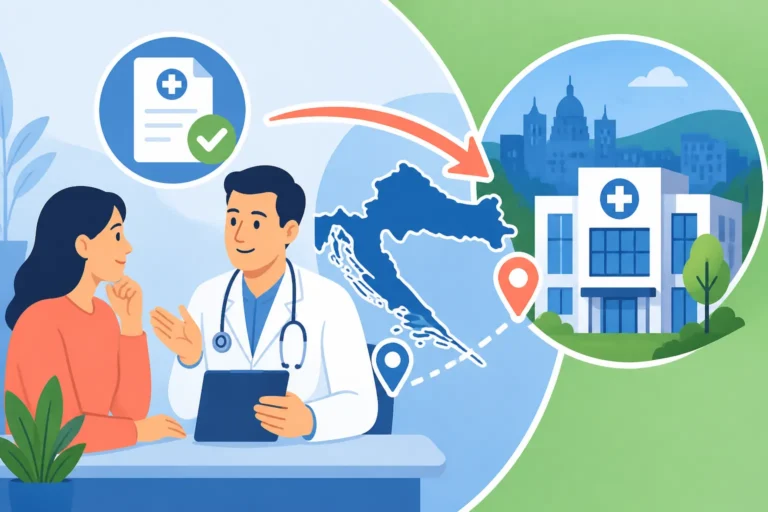
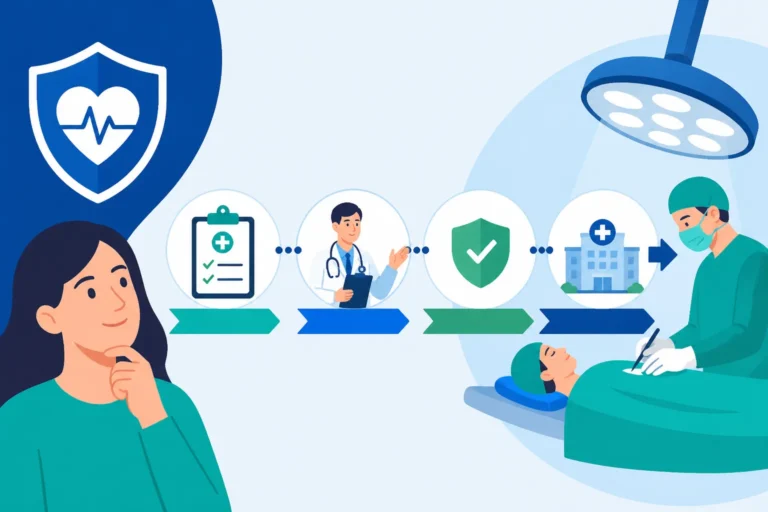
Chronic conditions often require annual or bi-annual specialist visits—for example, seeing an endocrinologist for diabetes or a cardiologist for heart disease. Your GP will issue an How e-Uputnica (E-Referrals) Work for Specialist Appointments in Croatia. Unlike the prescription, which goes to a general cloud, the referral is often targeted at a specific hospital or "Poliklinika."
The GP will ask you where you want to go. This is a moment where you should have researched which hospitals have the best specialists for your condition. Once the e-uputnica is issued, you (or your GP's office) must book the appointment. Be warned: waiting lists in the public system can be long—sometimes several months for non-urgent chronic monitoring. If your condition flares up and you can't wait six months, this is when people often look into Public vs Private Healthcare in Croatia: Which Should Expats Choose? to get faster answers.
| Feature | Public System (HZZO) | Private Polyclinics |
|---|---|---|
| GP Referral | Mandatory for all specialists | Never required |
| Medication Cost | Highly subsidized or free | Full market price |
| Wait Times | 3 to 12 months for routine | 1 to 7 days |
| Equipment Access | Modern but high demand | State-of-the-art |
| Language | Mixed (Croatian/English) | English is standard |
Long-Term Management and Financial Protection
Living long-term in Croatia with a chronic condition requires more than just a GP; it requires a financial strategy to deal with the inevitable co-payments and specialist fees. The cost of healthcare in Croatia is generally lower than in the US, but for a chronic patient, the "nickel and diming" of the public system can add up.
Why You Absolutely Need Dopunsko Insurance
If you have a chronic condition, you must sign up for Understanding Dopunsko Zdravstveno Osiguranje (Supplementary Insurance) in Croatia. Basic HZZO insurance only covers about 80% of most costs. The remaining 20% is the "participacija" (co-payment). For a hospital stay or expensive chronic meds, that 20% can reach a cap of hundreds of euros.
Dopunsko costs a flat fee (usually around 10 euros a month) and covers that 20% gap entirely. It also covers the small administrative fee you pay every time you visit a doctor or pick up a prescription. For a chronic patient, this pays for itself in the first month. Most expats choose to get their Dopunsko either directly through HZZO or through private banks and insurers. It’s the single best investment you can make for your peace of mind while living here.
Handling Emergencies and Travel
Even with a well-managed chronic condition, emergencies happen. You should know the location of the nearest Emergency Medical Care in Croatia: What Every Expat Needs to Know. In a crisis, you don't call your GP; you go straight to the Hitna Pomoć.
If you are traveling outside of Croatia but staying within the EU, make sure you have your EHIC card, which your HZZO insurance provides. However, if you are traveling back to your home country or outside the EU, your Croatian insurance won't provide much help. This is where a supplement like SafetyWing is invaluable for expats. While it doesn't replace your local HZZO for your chronic condition, it covers you for accidents and new illnesses when you leave your Croatian "home base," ensuring that a trip abroad doesn't result in a massive medical bill that drains your local savings.
Managing a chronic condition in a foreign language is never easy, but the Croatian system is robust and surprisingly digital once you get past the initial registration hurdles. Take it one "sestra" at a time, get your translations ready, and don't forget to advocate for your needs.
Disclaimer
This guide is intended for informational purposes only and does not constitute professional medical or legal advice. The Croatian healthcare system and its regulations are subject to frequent changes. Always consult with the Croatian Health Insurance Fund (HZZO), the Ministry of the Interior (MUP), or a qualified medical professional regarding your specific health needs and residency status.