How Do I Get a Prescription Renewed Without Seeing a Doctor in Croatia?
Managing the sudden realization that your prescription medication is about to run out while living in a foreign country can trigger a unique brand of administrative panic. In Croatia, the intersection of old-school bureaucracy and modern digital systems means you do not always need to sit in a crowded waiting room just for a refill. This guide provides the exact steps to navigate remote renewals and digital prescriptions efficiently.
Understanding the e-Recept System in Croatia
The first thing you need to realize as an expat is that Croatia has moved significantly toward a paperless medical system. When I first arrived, I expected a physical slip of paper for every single item, but the reality is much more streamlined. The "e-recept" or electronic prescription is the backbone of the public healthcare system. It is a digital order sent directly from your primary care physician's computer to a centralized national database.
How the Digital Link Works
When a doctor issues an e-recept, it is linked directly to your OIB (Personal Identification Number). You won't walk out of the office with a "script" in the traditional sense. Instead, the prescription "floats" in the digital ether, waiting for you to claim it at any pharmacy across the country. This system is designed specifically to reduce the burden on clinic waiting rooms. If you are already established in the system, the infrastructure is already there to support remote renewals without a face-to-face consultation.
To make this work, you must be properly registered within the state system. If you are still in the process of setting up your life here, you should consult the guide on How to Get Your OIB and Why It Matters for Healthcare Access to ensure your digital identity is ready. Once your OIB is active and linked to your health insurance, the pharmacist at any "Ljekarna" can pull up your pending medications simply by swiping your health insurance card or entering your OIB into their terminal.
The Role of the Family Doctor (Obiteljski Liječnik)
Your "Obiteljski Liječnik" is the gatekeeper of your health in Croatia. They are the only ones who can renew chronic prescriptions in the public system. Unlike some countries where a pharmacist might give you a "bridge" supply, Croatian pharmacists are strictly regulated by HALMED. You can learn more about this in our overview of Understanding HALMED and Medication Regulation in Croatia.
The relationship with your doctor is key. For chronic conditions—things like high blood pressure, asthma, or diabetes—the doctor usually notes in your file that you require long-term therapy. Once that "chronic" status is marked, the administrative hurdle for a refill drops significantly. However, even with this status, the prescription must be "pushed" into the system every month or three months, depending on the medication. This is the part you can do remotely if you know the local etiquette and the technological shortcuts available.
Renewing Prescriptions Remotely: Step-by-Step
If you are a resident and have already had your initial "entry" exam with a local GP, you likely never need to see them in person for a refill again. The Croatian healthcare system, while often criticized for its wait times, actually has a very efficient "back door" for administrative requests. Most doctors realize that their waiting rooms are full enough as it is, so they encourage remote communication for routine tasks.
Phone and Email Communication
The most common way to get a prescription renewed without an appointment is via a dedicated "refill line." Many GP offices in Croatia have a specific telephone number or a specific time of day (usually the last hour of their shift) dedicated to taking refill requests. When you call, you aren't actually speaking to the doctor; you are speaking to the "Sestra" (nurse). You will need to provide your name, date of birth, and the specific name of the medication.
In larger cities like Zagreb or Split, many modern practices now accept email requests. This is a lifesaver for expats who might struggle with the fast-paced Croatian spoken over a crackly phone line. You simply email the practice with your details and the request. Typically, the nurse will process these at the end of the day, and the e-prescription will be "visible" to pharmacists within 24 hours. For a deeper dive into how this works at the pharmacy counter, see our guide on How Do I Get an e-Recept Filled at a Pharmacy in Croatia?.
Using the e-Građani Portal
For the tech-savvy expat, the "e-Građani" (e-Citizens) portal is the ultimate tool. This is a digital gateway to almost all government services in Croatia. Once you have a high-level credential (like the one provided by your Croatian bank), you can log in and see your entire medical history. This includes a section for "Portal Zdravlja" (Health Portal).
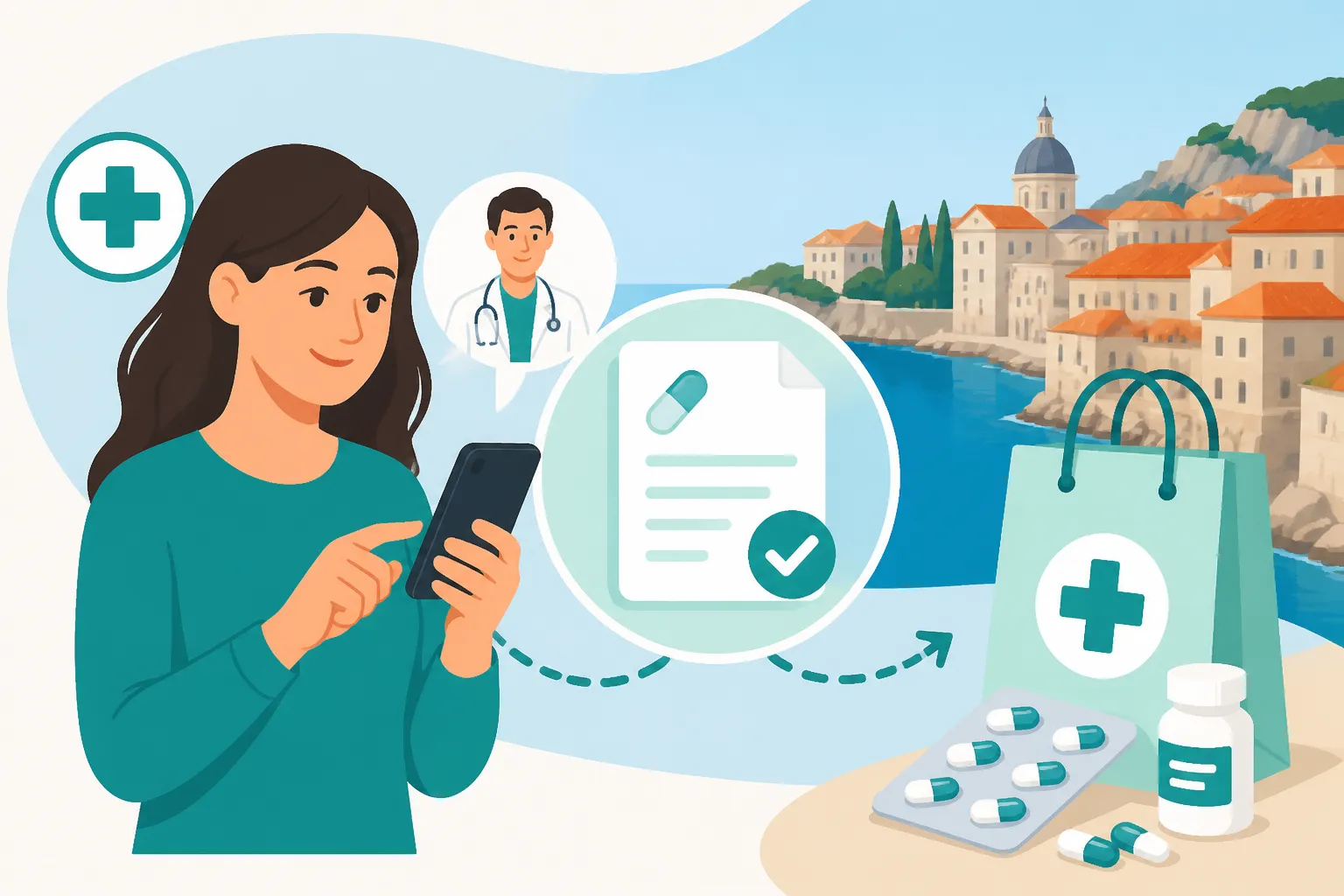
Inside the Health Portal, you can actually see all your active and expired prescriptions. Many doctors now allow patients to click a "Request Renewal" button directly within this interface. The request goes straight to the doctor's workflow. They review it, click "approve," and the e-recept is sent to the national system. It bypasses the need for phone calls entirely. If you are navigating the complexities of the system for the first time, I highly recommend checking out The Complete Guide to Healthcare in Croatia for Expats (2027) to see how e-Građani fits into the bigger picture.
Handling Prescriptions Without HZZO Coverage
Not everyone living in Croatia is part of the HZZO (public insurance) system. You might be a digital nomad, a tourist who stayed a bit too long, or someone waiting for their residency paperwork to clear. In these cases, the e-recept system isn't available to you because you aren't in the state database. However, you still need your medicine.
Private Polyclinics and White Prescriptions
If you don't have a public family doctor, you can visit a "Poliklinika" (private clinic). These clinics are everywhere in major hubs. You will pay for the consultation out of pocket, but the wait times are non-existent. After the doctor confirms your need for the medication, they will issue a "Bijeli Recept" (White Prescription). This is a physical piece of paper that is not linked to the HZZO system.
When you take a white prescription to the pharmacy, you will have to pay the full market price for the medication. For those of us using international coverage, this is where a provider like SafetyWing becomes incredibly useful. If you are on a digital nomad permit or traveling, SafetyWing can often cover the cost of the private consultation that led to the prescription. While SafetyWing doesn't typically cover routine chronic medication you had before you moved, it is essential for new illnesses or emergencies that arise while you are here.
| Prescription Type | System | Cost of Medication | Required Document |
|---|---|---|---|
| e-Recept (Blue) | Public (HZZO) | Subsidized / Free | OIB / Health Card |
| Bijeli Recept (White) | Private | Full Price | Physical Paper |
| Emergency Refill | Pharmacy Discretion | Full Price | Proof of prior use |
| Cross-border EU | EU Exchange | Variable | EU ID / Paper Script |
Travel Insurance and Emergency Refills
If you are a tourist and have lost your medication, things get slightly more complicated. Croatian law is strict about "Prescription Only" (Receptni) drugs. You cannot simply walk into a pharmacy and ask for antibiotics or blood pressure meds. However, if you have your original box from home with your name on the pharmacy label, or a digital copy of a prescription from your home country, some pharmacists may help you—but they are legally taking a risk.
In a true emergency, you should head to a "Dom Zdravlja" (Health Center) or an emergency room. They can issue an emergency script. This is another scenario where having a policy with SafetyWing is a major stress-reliever. SafetyWing handles the financial side of these emergency medical visits, ensuring that a lost inhaler or a forgotten bottle of insulin doesn't become a massive financial burden while you are navigating the Croatian medical landscape. For more on where to go in a pinch, refer to our list of What Pharmacies Are Open 24 Hours in Zagreb?.
Practical Tips for Foreigners in Croatian Pharmacies
Navigating the pharmacy, or "Ljekarna," involves more than just handing over an ID. There is a specific rhythm to it. Most pharmacists in Croatia are highly educated and speak excellent English, especially in tourist centers like Dubrovnik or Split. They are often more accessible than doctors and can provide a wealth of advice on over-the-counter alternatives.
Working with Pharmacists (Ljekarnik)
When you go to renew a prescription, always bring your "Matični broj osiguranika" (your health insurance number). If the doctor said they "sent" the prescription but the pharmacist can't find it, don't panic. Sometimes there is a lag in the system, or the doctor hasn't hit "send" yet. If you are a regular at a specific local pharmacy, the pharmacists will get to know you. This is a very Croatian way of doing things—building a "veza" or a relationship.
If you have supplementary insurance, known locally as "Dopunsko," the cost of many medications drops to zero. If you only have basic insurance, you might still pay a small "participacija" or co-payment. If you are wondering about these extra costs, you should read How Much Does Private Health Insurance Cost in Croatia in 2026? to see if adding extra coverage makes sense for your budget.
Emergency Situations and Out-of-Hours Care
If you realize you are out of medication at 9:00 PM on a Saturday, your GP will not be available. In this case, you need to find a "Dežurna Ljekarna" (Duty Pharmacy). These are pharmacies that are open 24/7 on a rotational basis. Every town has at least one. You can find the schedule posted on the door of any pharmacy or on the local city website.
For chronic medication, the pharmacist at a duty pharmacy can see your e-recepts just as easily as your neighborhood one. However, they cannot "renew" it for you if the doctor hasn't already authorized a refill in the system. This is why it’s vital to check your Understanding the Croatian Pharmacy (Ljekarna) System and Opening Hours before a holiday or weekend. If the prescription has expired, you will likely need to visit the "Hitna" (Emergency Room) to get a temporary script, which is a long and tedious process.
Always keep a photo of your current prescriptions on your phone. Even if you are covered by SafetyWing and using private doctors, having that visual proof helps the local Croatian doctors ensure they are giving you the exact local equivalent. Names of drugs vary wildly between the US/UK and the Balkans, so the chemical name (generic name) is what the pharmacist will look for.
Lastly, if your needs are related to mental health, be aware that those medications are often more strictly controlled. You might find the process for renewing those requires more frequent check-ins with your The Expat Guide to Finding a Family Doctor (Obiteljski Liječnik) in Croatia. For specific advice on that branch of care, check out our article on How to Access Mental Health Services in Croatia as an Expat.
Disclaimer
The information provided in this guide is for educational and informational purposes only. While every effort has been made to ensure the accuracy of the details regarding the Croatian healthcare system as of 2026, medical regulations and digital systems are subject to change. This guide does not constitute legal or medical advice. Always consult with a licensed medical professional in Croatia or your insurance provider regarding your specific health needs and the legality of prescription renewals.