How Do I Find a Pharmacy (Ljekarna) Near Me in Osijek?
Finding yourself in the middle of a health flare-up while living in or visiting a new city is always stressful, but in Osijek, the challenge is amplified by local signage and unfamiliar operating hours. Whether you are dealing with a sudden migraine in the historic Tvrđa district or searching for pediatric medicine in Retfala, knowing exactly how to locate a ljekarna—and more importantly, the specific one that is open when you need it—is essential. This guide provides a detailed roadmap to finding pharmacies in Osijek, understanding the on-call system, and managing your prescriptions as an expat.
Identifying a Pharmacy in Osijek
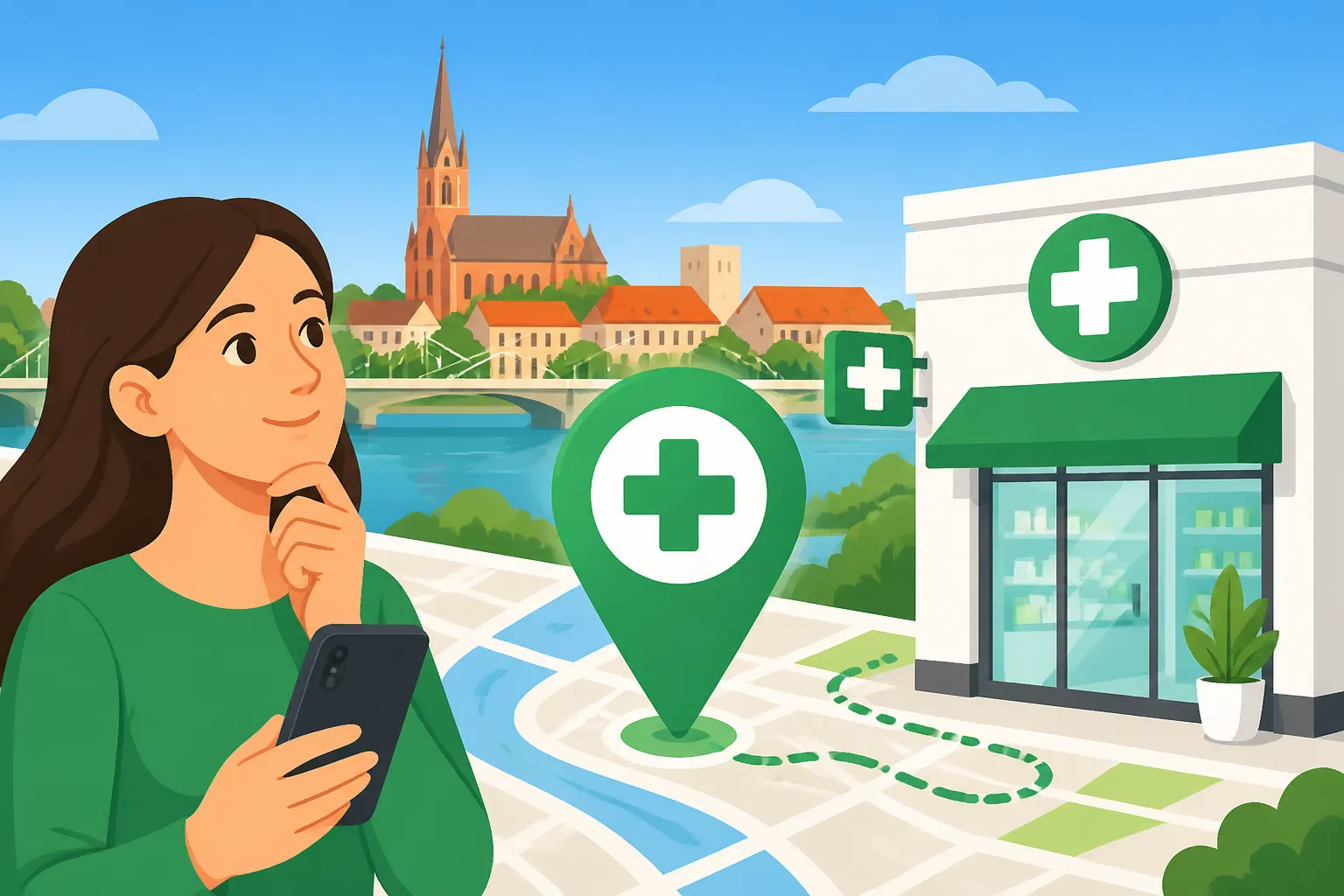
When you are walking down the streets of Osijek, you aren't looking for a "pharmacy" or a "drugstore" in the American or British sense. You are looking for a Ljekarna. The first thing you will notice is the universal symbol of the green cross. In Croatia, this cross is often neon and will blink if the pharmacy is open. However, do not confuse a ljekarna with a "drogerija" like DM or Müller. While those stores sell vitamins, toothpaste, and some supplements, they are legally prohibited from selling any medication, including basic painkillers like Ibuprofen or Paracetamol.
The Difference Between Ljekarna and Drogerija
It is a common mistake for newcomers to head to the nearest DM in the Portanova mall or on Kapucinska street hoping to find aspirin. In Croatia, the law dictates that all medicinal products must be sold in a licensed pharmacy. This means even the most basic headache relief requires a trip to a ljekarna. Understanding this distinction early on will save you a lot of time wandering through aisles of shampoo and makeup when you actually need medical relief.
Public vs. Private Pharmacies
Osijek has a mix of public pharmacies, often under the banner of "Ljekarna Osijek," and private chains like Prima Pharme or Farmacia. For the average expat or tourist, there is very little difference in the price of over-the-counter medications between the two. However, the public pharmacies are the ones that typically participate in the 24-hour on-call rotation. If you are exploring the city and need a quick supplement, any green cross will do, but for long-term care, you might want to look into Public vs Private Healthcare in Croatia: Which Should Expats Choose? to understand how your insurance coverage might vary.
Finding the Nearest Pharmacy Based on Your Neighborhood
Osijek is a sprawling city divided into several distinct districts, and the availability of pharmacies varies significantly between them. If you are living in a residential area like Jug II, your options might be limited to standard business hours, whereas the city center (Gornji Grad) offers more flexibility.
Gornji Grad (Upper Town/City Center)
The heart of Osijek is where you will find the highest density of pharmacies. If you are near Trg Ante Starčevića (the main square), you have several options within a five-minute walk. These pharmacies are accustomed to tourists and are more likely to have staff with high English proficiency. If you are staying in this area and have an urgent need, these central locations are your best bet. Because this is the commercial hub, pharmacies here often stay open until 8:00 PM or 9:00 PM on weekdays.
Retfala and Donji Grad
If you have moved into one of the newer apartment blocks in Retfala or the older, charming streets of Donji Grad, you will find smaller neighborhood pharmacies. These locations are excellent for building a relationship with a local pharmacist who might get to know your specific needs. However, keep in mind that these pharmacies often close early on Saturdays and are almost always closed on Sundays. For those moving into these areas, it is wise to check The Complete Guide to Healthcare in Croatia for Expats (2027) to see how your local primary care doctor connects with these community pharmacies.
Shopping Centers: Portanova and Mall Osijek
For those who prefer a one-stop-shop experience, both Portanova and Mall Osijek contain well-stocked pharmacies. The benefit here is the extended working hours. While a street-side ljekarna might close at 1:00 PM on a Saturday, mall pharmacies typically remain open as long as the mall is open—usually until 9:00 PM, seven days a week. This is a lifesaver for expats who work standard business hours and can't make it to a neighborhood pharmacy before they close.
Navigating the On-Call (Dežurna) System in Osijek
One of the most confusing aspects of the Croatian healthcare system for foreigners is the "Dežurstvo" or on-call system. Pharmacies do not all stay open 24/7. Instead, they rotate or have one designated central location that handles all nighttime and holiday emergencies. In Osijek, this responsibility is almost exclusively handled by one specific location in the city center.
The Central 24-Hour Pharmacy
The primary on-call pharmacy in Osijek is usually the Ljekarna "Središnja" located on the main square (Trg Ante Starčevića). This location is open 365 days a year, 24 hours a day. If you find yourself in need of medication at 3:00 AM on a Tuesday or during a public holiday like Victory Day, this is the only place you should go. Be prepared: during the night, the main door is usually locked. You will need to ring a small doorbell near a night-window (šalter). The pharmacist will speak to you through the window and provide your medication there.
How to Find the On-Call Schedule
If you aren't sure which pharmacy is on duty, every single ljekarna in Osijek is legally required to post a notice on their front door indicating the nearest open pharmacy. It is usually a small white piece of paper with the heading "Dežurna ljekarna." If you walk to your local pharmacy and find it closed, look for this sign. It will give you the address and often a small map to the on-call location. This is a vital part of Understanding the Croatian Pharmacy (Ljekarna) System and Opening Hours that every expat should memorize.
Fees for Nighttime Service
It is important to note that if you visit a pharmacy during the on-call hours (usually after 8:00 PM or 10:00 PM depending on the season), you may be charged a small "night fee" (noćni dodatak). This is a standard, nominal charge—usually around 1 to 2 Euros—added to your total. It applies to over-the-counter purchases but is often waived if you are filling an urgent prescription from the emergency room. If you are traveling and using a plan like SafetyWing, these small out-of-pocket costs are usually managed easily, but it is good to have some cash on hand just in case.
Using Prescriptions and the e-Recept System
If you have seen a doctor in Osijek, you likely won't receive a physical piece of paper. Croatia uses a highly efficient electronic prescription system known as e-Recept. This system connects your OIB (personal identification number) directly to the pharmacy network.
How to Redeem an e-Recept
When your doctor issues an e-prescription, it is uploaded to a central database. To pick up your medicine, simply walk into any ljekarna in Osijek and hand over your health insurance card (HZZO) or tell them your OIB. The pharmacist will see the prescription on their screen and dispense the medicine. This system is incredibly convenient, but it can be confusing if you are used to carrying a paper script. To learn more about how this works, you can read about Understanding the e-Recept (E-Prescription) System in Croatia.
Private Prescriptions and Foreign Coverage
If you are using private health insurance or a travel medical plan like SafetyWing, the process might differ. Sometimes a private doctor will give you a "white prescription" (bijeli recept). This is a physical paper that you must pay for out-of-pocket at the pharmacy. You then take the receipt and the paper copy back to your insurance provider for reimbursement. If you are a digital nomad or a long-term traveler, having a plan like SafetyWing ensures that these costs are covered if they result from a new illness or injury while in Osijek.
Comparing Pharmacy Types and Services in Osijek
| Feature | Ljekarna Osijek (Public) | Private Chains (Farmacia/Prima) | Mall Pharmacies (Portanova) |
|---|---|---|---|
| Opening Hours | Typically 07:00 – 20:00 | Typically 08:00 – 20:00 | 09:00 – 21:00 (Daily) |
| 24/7 Availability | Yes (Central Square only) | No | No |
| English Proficiency | Moderate to High | High | High |
| e-Recept Support | Full Support | Full Support | Full Support |
| Special Orders | Can order specialized meds | Extensive stock of dermacosmetics | Focus on OTC and wellness |
Communicating with Pharmacists in Osijek
A major fear for many expats is the language barrier. In Osijek, particularly in the city center and near the University (Sjenjak area), most pharmacists under the age of 50 speak excellent English. Pharmacology is a rigorous field of study in Croatia, and much of the literature is in English, so they are well-versed in medical terminology.
Useful Croatian Phrases for the Pharmacy
While you can likely get by with English, knowing a few key words can help if you find yourself in a smaller neighborhood pharmacy:
- Lijek za bolove (Lee-yek za boh-loh-ve) – Medicine for pain.
- Prehlada (Preh-lah-dah) – A cold.
- Kašalj (Kah-shaly) – Cough.
- Povišena temperatura (Po-vee-she-nah tem-pe-rah-too-rah) – High fever.
- Recept (Reh-tsept) – Prescription.
If you have a complex condition, it might be helpful to have your home country's prescription bottle with you. The pharmacist can look up the active ingredient (generic name) rather than the brand name, which often differs in Croatia. For instance, Tylenol is not a brand here; you would ask for Lupocet or generic Paracetamol. If your situation is more serious than a simple cold, you should know How to Find an English-Speaking Doctor in Croatia to get a proper diagnosis before self-medicating.
Understanding Over-the-Counter Limits
Pharmacists in Croatia act as a first line of defense in the medical system. They are highly trained and can offer advice on minor ailments. However, they are also quite strict. You cannot buy strong antibiotics or certain high-strength painkillers without a prescription. If you are used to buying large quantities of Ibuprofen over the counter, be aware that in Osijek, they usually sell smaller packs (10-20 pills) and may ask if you know how to use them. For more information on what you can and cannot buy, check out Are Prescription Medications Expensive in Croatia? or How Do I Get an e-Recept Filled at a Pharmacy in Croatia? for a deeper dive.
What to Do in a Medical Emergency
If the pharmacy is closed or if the pharmacist suggests that your symptoms are too severe for over-the-counter treatment, you must know where to go next. Osijek is home to a major Clinical Hospital Centre (KBC Osijek), which serves the entire Slavonia region.
If you need urgent care that a pharmacy cannot provide, do not wait for the ljekarna to open the next morning. You should seek Emergency Medical Care in Croatia: What Every Expat Needs to Know immediately. For those with international coverage like SafetyWing, your policy will often cover the costs of emergency room visits and the subsequent prescriptions you pick up at the 24-hour central pharmacy.
Always keep your OIB and insurance details in your wallet. If you are still in the process of moving and haven't received your local cards yet, you might find the information on What Documents Do I Need to Get an OIB in Croatia? useful to speed up your integration into the healthcare system.
Disclaimer
The information provided in this guide is for informational purposes only and does not constitute medical or legal advice. Healthcare regulations and pharmacy on-call schedules in Croatia can change. Always verify the current on-call status of pharmacies through official local sources or the notice boards posted at pharmacy entrances. In the event of a medical emergency, dial 112 or visit the nearest emergency room (Hitna Pomoć).