How Do I Find an Ophthalmologist (Oftalmolog) in Split?
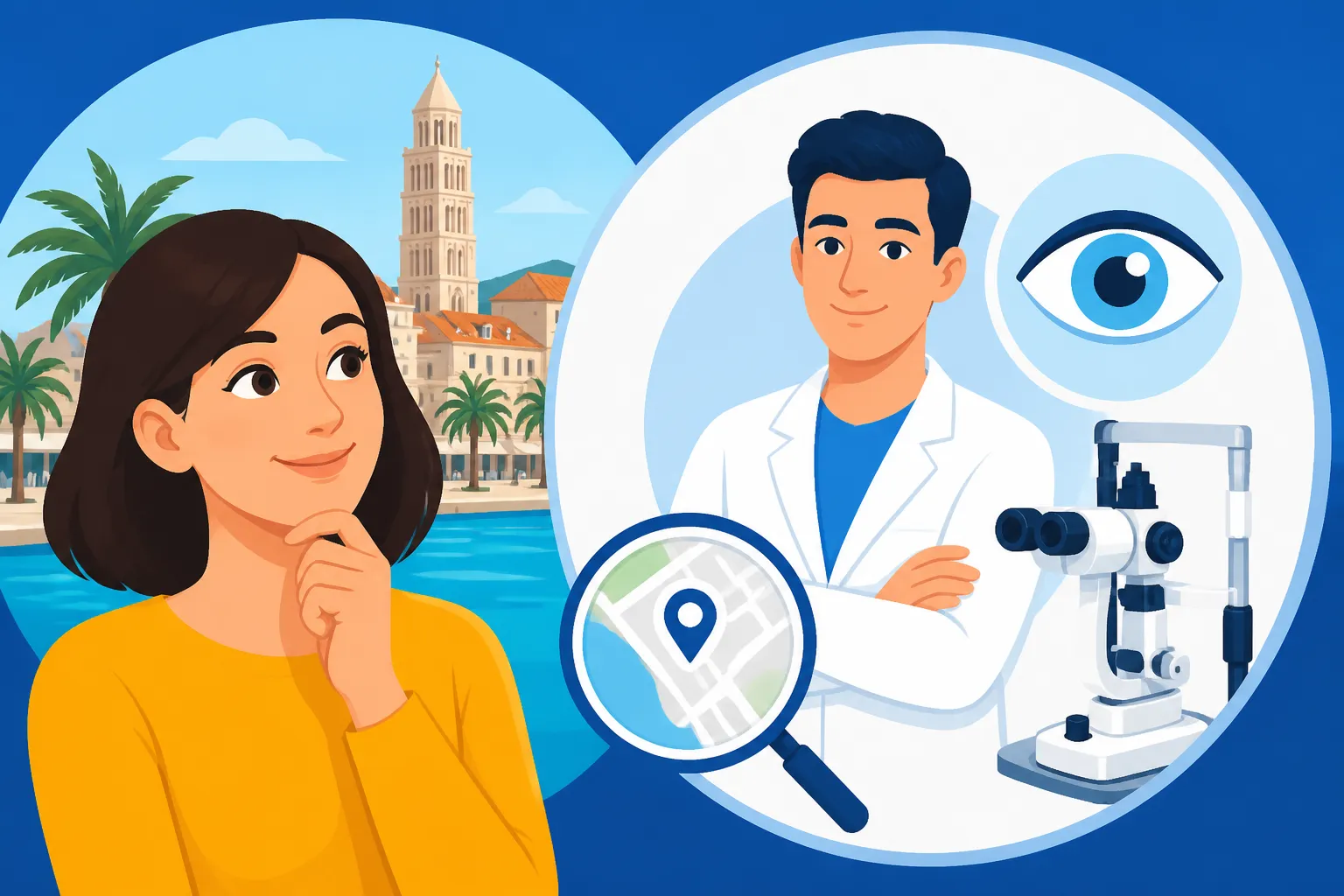
Waking up with an eye infection or sudden blurred vision in a city like Split is a uniquely stressful experience for a foreigner. Navigating the maze of medical terminology and local bureaucracy while you can barely see is a hurdle no one wants to face. This guide provides a clear, step-by-step roadmap for finding a qualified ophthalmologist in Split, whether you need the public health system or a quick private appointment.
Understanding the Eye Care Landscape in Split
Before you go rushing into the nearest medical building, it is crucial to understand how the Croatian system differentiates between various types of eye care providers. In Split, you will encounter the term Oftalmolog (Ophthalmologist) and Optičar (Optician). An ophthalmologist is a medical doctor who specializes in eye and vision care, capable of diagnosing diseases, performing surgery, and prescribing medications. An optician, on the other hand, is a technician who fits and sells eyeglasses and contact lenses based on a prescription.
If you have a medical issue—like persistent redness, pain, or a sudden change in vision—you need an ophthalmologist. If you simply lost your glasses and need a new pair with the same prescription, an optician in one of the many shops along Marmontova or in the Mall of Split can help you. However, for most expats, the journey begins with deciding between the public and private sectors. This decision is often dictated by how much time you have and your current insurance status. For instance, those on a nomad permit might be using SafetyWing while they wait for their local paperwork to clear, which significantly changes which doors are open to them.
Understanding the difference between Public vs Private Healthcare in Croatia: Which Should Expats Choose? is the first step in managing your expectations. The public system is robust but can be slow, while the private system is efficient but comes with out-of-pocket costs that vary depending on your coverage.
The Public Route: Navigating HZZO and Referrals in Split
If you are a resident and have been Registering with HZZO in Croatia: The Complete Expat Guide (2027), you are entitled to eye care through the public system. However, you cannot simply walk into a hospital and ask for an eye exam. The process is strictly hierarchical. First, you must visit your primary care physician, known locally as an obiteljski liječnik. You can find more details on this in The Expat Guide to Finding a Family Doctor (Obiteljski Liječnik) in Croatia.
During your GP visit, you will explain your symptoms. If the doctor agrees that specialist intervention is needed, they will issue an uputnica (referral). In modern-day Split, this is almost always an e-Uputnica, which is sent electronically through the central system. Once the referral is in the system, you have to find a public clinic with an open slot. This is often where the frustration peaks for expats. Wait times for non-emergency eye exams in the public sector can range from a few weeks to several months.
In Split, the main hub for public specialist care is the KBC Split (Klinički bolnički centar), which has two main locations: Firule and Križine. Most ophthalmology services are concentrated at the Firule location. You will also find smaller specialist offices within the various Dom Zdravlja buildings across the city. Understanding the Role of the Dom Zdravlja (Health Centre) in Croatia can help you locate the branch nearest to your neighborhood, such as the large health center on Kavanjinova street or the one in the Sućidar district.
The Private Route: Finding an Eye Polyclinic in Split
For many foreigners, the private route is the only realistic way to get seen quickly. Private eye clinics, known as Poliklinike, are plentiful in Split and offer high-tech diagnostic equipment and English-speaking staff. When you go private, you bypass the need for a GP referral entirely. You simply call, book an appointment, and usually get seen within 24 to 48 hours.
This is particularly helpful for those who have temporary coverage or are using international providers like SafetyWing to bridge the gap before their HZZO kicks in. A private consultation typically costs between 50 and 100 EUR, depending on the complexity of the tests performed. This fee covers the exam, the prescription, and often a follow-up consultation if needed.
When searching for a private clinic, you should look for "Poliklinika za oftalmologiju." Some of the most well-regarded names in Split include Poliklinika Svjetlost, which is a major regional chain known for laser surgery, and smaller boutique clinics like Poliklinika Lacrima or Poliklinika Dzaja. These facilities often feel more like high-end offices than clinical hospitals, and the doctors generally have more time to explain your diagnosis in English. Understanding Private Polyclinics (Poliklinike) in Croatia provides a broader look at why these facilities are the preferred choice for many in the expat community.
Steps to Booking Your Appointment
Finding the right doctor requires a bit of digital detective work. While Google Maps is a great starting point, the reviews can sometimes be outdated or written by locals with different expectations than a tourist or expat.
- Digital Search and Terms: Start by searching for "Oftalmolog Split" or "Očna poliklinika Split." Check their websites to see if they list "Oftalmološki pregled" (Ophthalmological examination) as a service.
- Verify Language Skills: While most younger doctors in Split speak excellent English, the receptionists might not. If you are calling a public facility like KBC Split, be prepared for a bit of a language barrier. Private clinics almost always have someone on staff who can handle an English-speaking caller.
- Check the Referral Status: If you are going the public route, confirm that your doctor has sent the Understanding the e-Uputnica (E-Referrals) Work for Specialist Appointments in Croatia. You can actually check this yourself if you have access to the e-Građani (e-Citizens) portal, which is a lifesaver for administrative tasks in Croatia.
- Insurance Confirmation: If you have SafetyWing or a similar international plan, contact the clinic beforehand to see if they offer "direct billing." In most cases in Croatia, you will pay upfront and then submit your receipt for reimbursement. Make sure the receipt is "fiscalized" (has a QR code) to ensure your insurance company accepts it.
Costs and Insurance Comparison for Eye Care
The cost of seeing an ophthalmologist in Split depends heavily on your insurance status and whether you require specialized testing like a fundus exam or glaucoma screening. Even if you are covered by the state, you may still encounter Understanding Participacija (Co-Payments) in the Croatian Health System, which are small fees paid at the point of service unless you have supplemental insurance.
| Type of Service | Public System (with HZZO) | Private Clinic (Poliklinika) |
|---|---|---|
| Initial Consultation | €0 – €5 (Co-pay) | €50 – €80 |
| Wait Time | 2 – 6 Months | 1 – 3 Days |
| Referral Needed | Yes | No |
| Eye Pressure Test | Included | €10 – €20 (often included in base) |
| Language of Care | Croatian / Some English | English / Croatian |
| Prescription Paper | Physical/Digital | Physical |
For those just arriving in the country, How the Croatian Health Insurance Fund (HZZO) Works: A Full Overview explains why these co-payments exist and how to eventually avoid them by purchasing Dopunsko insurance. If you are visiting and experience a trauma or sudden vision loss, you should skip the standard booking process and head straight to Emergency Medical Care in Croatia: What Every Expat Needs to Know.
Practical Tips for Your Visit
When you finally head to your appointment, there are a few local quirks to be aware of. First, punctuality is valued, but don't be surprised if the doctor is running behind, especially in the public system. If you are going to the KBC Split Firule location, give yourself an extra 20 minutes just to find parking; the area around the hospital is notoriously congested.
Bring all your current medications and your previous prescriptions for glasses or contacts. If you have been treated for eye issues in your home country, having those records—even on your phone—is incredibly helpful. After the exam, if you are prescribed medication like antibiotic drops, you will need to head to a Ljekarna (Pharmacy). You can find more info on this in Understanding the Croatian Pharmacy (Ljekarna) System and Opening Hours.
If you are a digital nomad or a frequent traveler using SafetyWing, keep a meticulous folder of your medical reports. Croatian doctors are often very thorough and will provide you with a printed "Nalaz" (medical report). This document is your proof of diagnosis and is essential for any insurance claims or future follow-ups with doctors back in your home country.
Common Eye Challenges in the Dalmatian Climate
Living in Split presents specific challenges for eye health that you might not have faced elsewhere. The "Bura" wind, a cold, dry northeasterly wind, is famous for causing extreme dry eye symptoms among the expat population. If you find your eyes stinging during the winter months, a visit to an ophthalmologist can help you find the right type of artificial tears that aren't available over-the-counter.
Furthermore, the reflection of the sun off the Adriatic Sea and the white limestone of the Riva can lead to significant UV strain. Locals take their sunglasses very seriously, and you should too. If you notice a "gritty" feeling in your eyes after a day at Bačvice beach, it could be a mild case of photokeratitis (sunburn of the eye). An ophthalmologist in Split will be very familiar with these regional issues and can provide specific Dalmatian-tested advice for protecting your vision.
Disclaimer
The information provided in this guide is for informational purposes only and does not constitute professional medical advice, diagnosis, or treatment. Always seek the advice of your physician or other qualified health provider with any questions you may have regarding a medical condition. The healthcare system in Croatia and the availability of specific doctors can change; therefore, it is recommended to verify all details with the relevant local authorities or medical facilities directly. For emergency situations in Croatia, dial 112 or 194 immediately.