What Should Retirees Know About Healthcare Costs in Croatia?
Retiring to the stunning Adriatic coast or the historic streets of Zagreb is a dream for many, but the reality of medical bills and bureaucratic red tape can quickly turn that dream into a stressful ordeal. This guide demystifies the actual healthcare costs you will encounter in Croatia, ensuring you can accurately budget for your retirement without any nasty financial surprises.
The Foundation of Health Costs in Croatia for Retirees
When you move to Croatia as a retiree, you aren't just moving to a new country; you are entering a centralized, socialized medical system that operates very differently from the private-market systems in North America or even the varied systems across the EU. The primary entity you will become intimately familiar with is the Hrvatski Zavod za Zdravstveno Osiguranje, or HZZO. This is the national health insurance fund, and for almost every resident, including retirees, participation is mandatory.
The first thing to understand is that "public" does not mean "entirely free." The system is built on a foundation of mandatory contributions and a secondary layer of co-payments. For a retiree, the cost structure depends heavily on your country of origin. If you are an EU citizen, your home country’s pension fund often handles the bulk of the transfers to the HZZO through the S1 form. However, if you are a non-EU citizen (a "third-country national"), you will likely be required to pay a monthly contribution out of pocket. As of 2024 and looking toward 2026, this monthly fee usually hovers around 100 EUR, though it is indexed to the average national salary and can fluctuate.
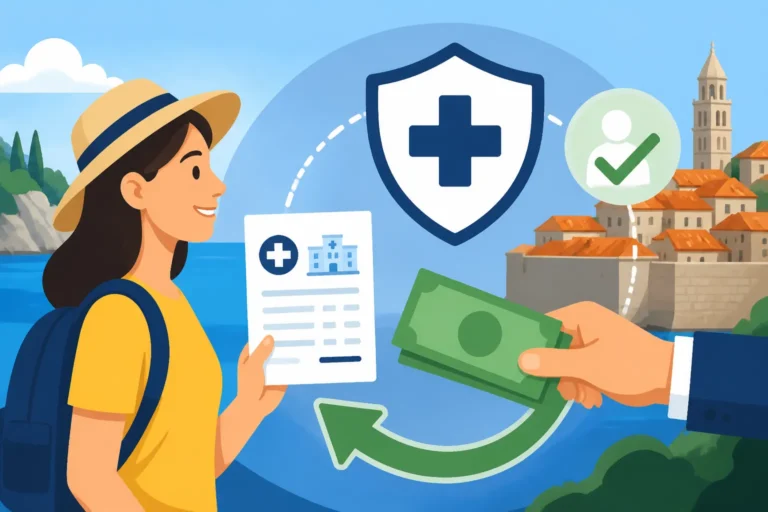
Beyond the monthly premium, there is the "one-year backpay" rule that catches many retirees off guard. Often, to enter the system as a new resident, the HZZO requires you to pay 12 months of back-contributions upfront. This can result in an immediate bill of over 1,000 EUR the moment you receive your residency. This is a significant "welcome to Croatia" expense that many fail to include in their initial relocation budget. While waiting for this administrative process to clear, many retirees use temporary solutions like SafetyWing to ensure they have coverage for accidents or sudden illnesses before the state system fully recognizes them.
The Critical Role of Dopunsko and Participacija
In Croatia, even with your basic HZZO coverage, you are responsible for a portion of almost every medical service you receive. This is known as participacija (participation or co-payment). Whether it is a visit to your GP, a prescription for blood pressure medication, or a three-night stay in a hospital, the state expects you to cover a percentage of the cost. These fees are capped, but they can add up quickly if you have chronic health issues.
To mitigate these out-of-pocket costs, virtually every retiree in the country—local and expat alike—signs up for Understanding Dopunsko Zdravstveno Osiguranje (Supplementary Insurance) in Croatia. This is a secondary insurance policy that costs roughly 10 EUR per month. Its sole purpose is to cover all of your participacija fees. If you have this policy, your visits to the doctor and your hospital stays become essentially "free" at the point of service.
Without this supplementary insurance, a major surgery or a long-term hospital stay could result in a bill of up to 2,654.45 EUR (the current legal maximum for co-payments per invoice). For a retiree on a fixed income, that is a massive hit. It is also worth noting that the Understanding Participacija (Co-Payments) in the Croatian Health System rules apply to everyone; the system does not automatically waive these fees for foreign retirees just because they have a high pension. You must be proactive in securing your supplementary policy once your primary HZZO coverage is active.
Private Healthcare Costs vs. The Public System
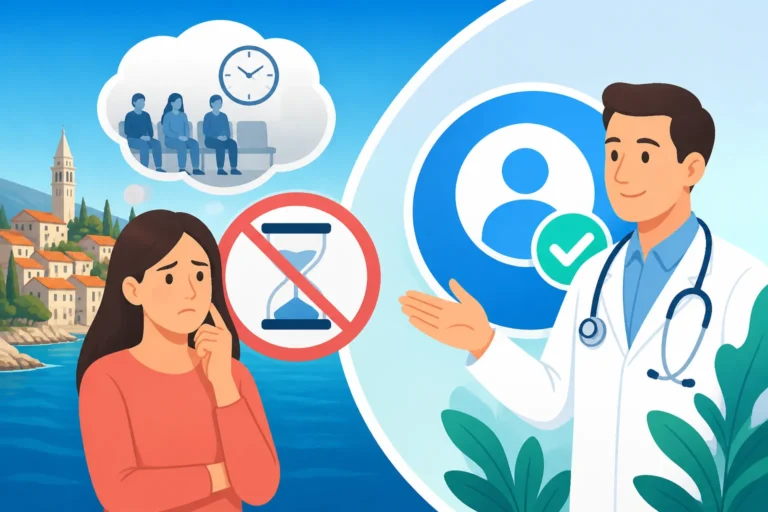
While the public system is comprehensive, the reality of retiring in Croatia involves long waiting lists for specialist procedures like MRIs, hip replacements, or cardiac screenings. This is where private polyclinics (poliklinike) come into play. Many retirees choose a hybrid approach: they use the public system for emergencies and routine prescriptions but pay out of pocket for private specialists to avoid months of waiting.
Private costs in Croatia are generally much lower than in the United States or the UK, but they are still an added expense. A consultation with a top-tier private cardiologist in Zagreb or Split might cost between 60 EUR and 100 EUR. An MRI scan done privately can range from 150 EUR to 300 EUR depending on the complexity. For those who want a more seamless experience, Understanding Private Health Insurance Plans in Croatia can be a wise move. These private plans often include a "sistematski pregled" (a comprehensive annual head-to-toe check-up) which is highly valued by the retiree community.
For those in the transitional phase of moving, or for those who spend part of the year outside of Croatia, international health insurance brands like SafetyWing can provide a safety net that covers more than just the basics, though they don't replace the mandatory HZZO requirement for residency. Most retirees find that the Public vs Private Healthcare in Croatia: Which Should Expats Choose? debate isn't an "either/or" situation but rather a strategy of using the public system for the "big stuff" and private clinics for diagnostic speed.
Administrative Hurdles and Hidden Expenses
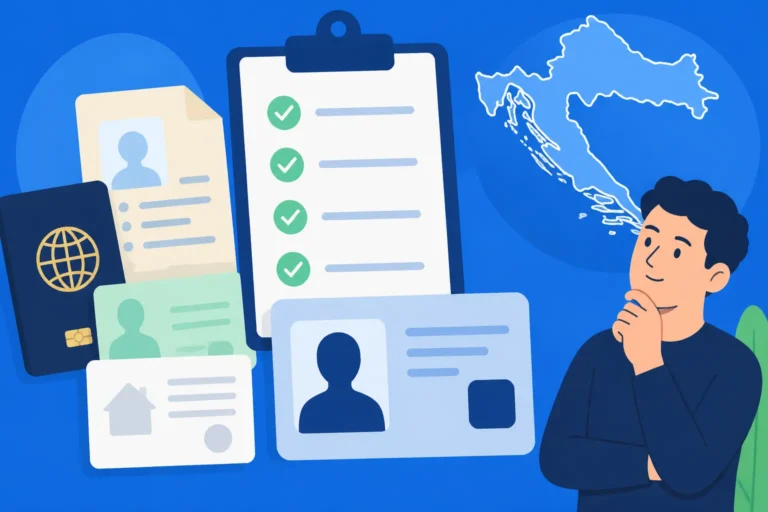
The path to accessing these services begins with bureaucracy. You cannot simply walk into a clinic and expect to be treated at the state rate without your paperwork in order. The first step for any retiree is How to Get Your OIB and Why It Matters for Healthcare Access. Your OIB (Personal Identification Number) is the key to every door in the Croatian administrative building. Without it, you cannot register for insurance, and without insurance, you will be billed as a "private tourist," which can be five to ten times more expensive than the insured rate.
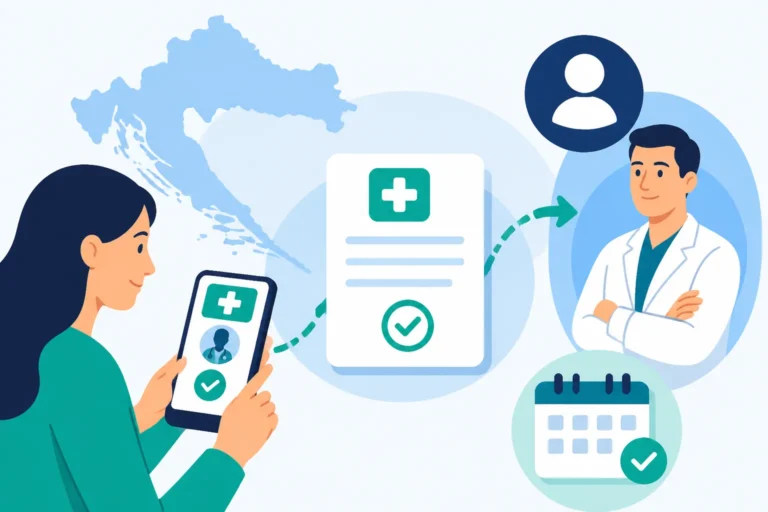
Once you have your OIB and your insurance, you must find a "base of operations." In the Croatian system, this is your The Expat Guide to Finding a Family Doctor (Obiteljski Liječnik) in Croatia. Your family doctor is the gatekeeper. They are the only ones who can issue the "uputnica" (referral) you need to see a specialist or get a blood test at a public hospital. If you go to a specialist without this referral, you will be paying private prices, even in a public hospital.
There are also logistical costs to consider. If you live on one of the islands like Hvar or Brač, you may need to travel to the mainland (Split) for specialized care. While the HZZO sometimes reimburses travel costs for medical reasons, the process is tedious and requires specific stamps from your doctors. Most expats simply factor the ferry and fuel costs into their medical budget. Additionally, while the state covers many medications, you should consult Prescription Medications and Pharmacies in Croatia: The Complete Guide to understand why some "lifestyle" drugs or newer brand-name medications might require an additional out-of-pocket "extra payment" (nadoplata) even with full insurance.
Estimated Healthcare Costs for Retirees (2026 Projections)
To help you visualize your monthly and annual budget, the following table breaks down the typical costs an expat retiree might face in Croatia.
| Service / Expense Type | Estimated Cost (Public System) | Estimated Cost (Private System) |
|---|---|---|
| Monthly Mandatory Insurance (HZZO) | ~100 EUR (Non-EU retirees) | N/A |
| Supplementary Insurance (Dopunsko) | ~10 EUR per month | N/A |
| GP Consultation | 0 EUR (with Dopunsko) | 40 – 70 EUR |
| Specialist Consultation (Cardio/Ortho) | 0 EUR (with Referral + Dopunsko) | 70 – 120 EUR |
| Full Blood Panel | 0 EUR (with Referral + Dopunsko) | 50 – 90 EUR |
| MRI Scan | 0 EUR (with 3-6 month wait) | 150 – 300 EUR |
| Dental Cleaning/Check-up | 0 – 15 EUR (Basic) | 40 – 60 EUR |
| Emergency Room Visit | 0 EUR (Actual Emergencies) | N/A (ER is Public) |
Prescription Drugs and Specialized Care
One of the most pleasant surprises for retirees moving from the US or Canada is the cost of prescriptions. Croatia uses a "List of Drugs" system. List A contains essential medications that are 100% covered by HZZO. List B contains medications that are partially covered, where you pay a fixed amount. Even for medications on List B, the costs are heavily regulated. For example, a month's supply of common statins or blood pressure medication might only cost you 5 to 15 EUR.
However, getting those prescriptions filled requires you to understand Understanding the e-Recept (E-Prescription) System in Croatia. Your doctor sends the prescription electronically to a central system; you simply walk into any pharmacy (ljekarna), hand them your health card (or OIB), and they pull up your file. It is efficient, but it does require you to have a dedicated family doctor who is willing to manage your chronic conditions. If you are a retiree with complex needs, you may want to learn How to Get a Specialist Referral Without Waiting Months in Croatia because the wait times for initial diagnostics can be the most frustrating part of the local experience.
For those considering major procedures, it is important to look at The Cost of Healthcare in Croatia: A Complete Breakdown for Foreigners (2026) to see how surgical costs compare. If you have been in the HZZO system for a while, even major surgeries like heart bypasses or cancer treatments are covered. The "cost" in these cases is often time and comfort rather than cash. This is why some retirees choose to keep a policy like SafetyWing for the first year or two, as it provides a bridge while they learn how to navigate the local queues and find the best specialists.
Practical Advice for the Relocating Retiree
The administrative burden of the Croatian healthcare system can feel like a full-time job during your first six months of residency. You will likely spend a significant amount of time in waiting rooms at the MUP (Ministry of the Interior) and the HZZO offices. My best advice as a veteran expat is to hire a local translator or a consultant if you do not speak Croatian. The nuances of "Form S1" or "back-payment waivers" are often lost in translation at the government counter.
Budget for the "worst-case" administrative scenario. Assume you will have to pay the one-year back-payment for HZZO. Assume you will want to see at least two private specialists a year to bypass the public queues. And most importantly, never skip the Dopunsko. It is the cheapest and most effective financial shield you can have in this country. Once you have these pieces in place, you can truly enjoy your retirement, knowing that The Complete Guide to Healthcare in Croatia for Expats (2027) isn't just a manual, but a roadmap to a secure and healthy life in one of Europe's most beautiful corners.
Disclaimer
The information provided in this guide is for informational purposes only and does not constitute legal, financial, or medical advice. Healthcare laws, insurance premiums, and residency requirements in Croatia are subject to frequent change. Always consult with the official Croatian Health Insurance Fund (HZZO), the Ministry of the Interior (MUP), or a qualified legal professional to confirm current regulations and fees applicable to your specific situation.