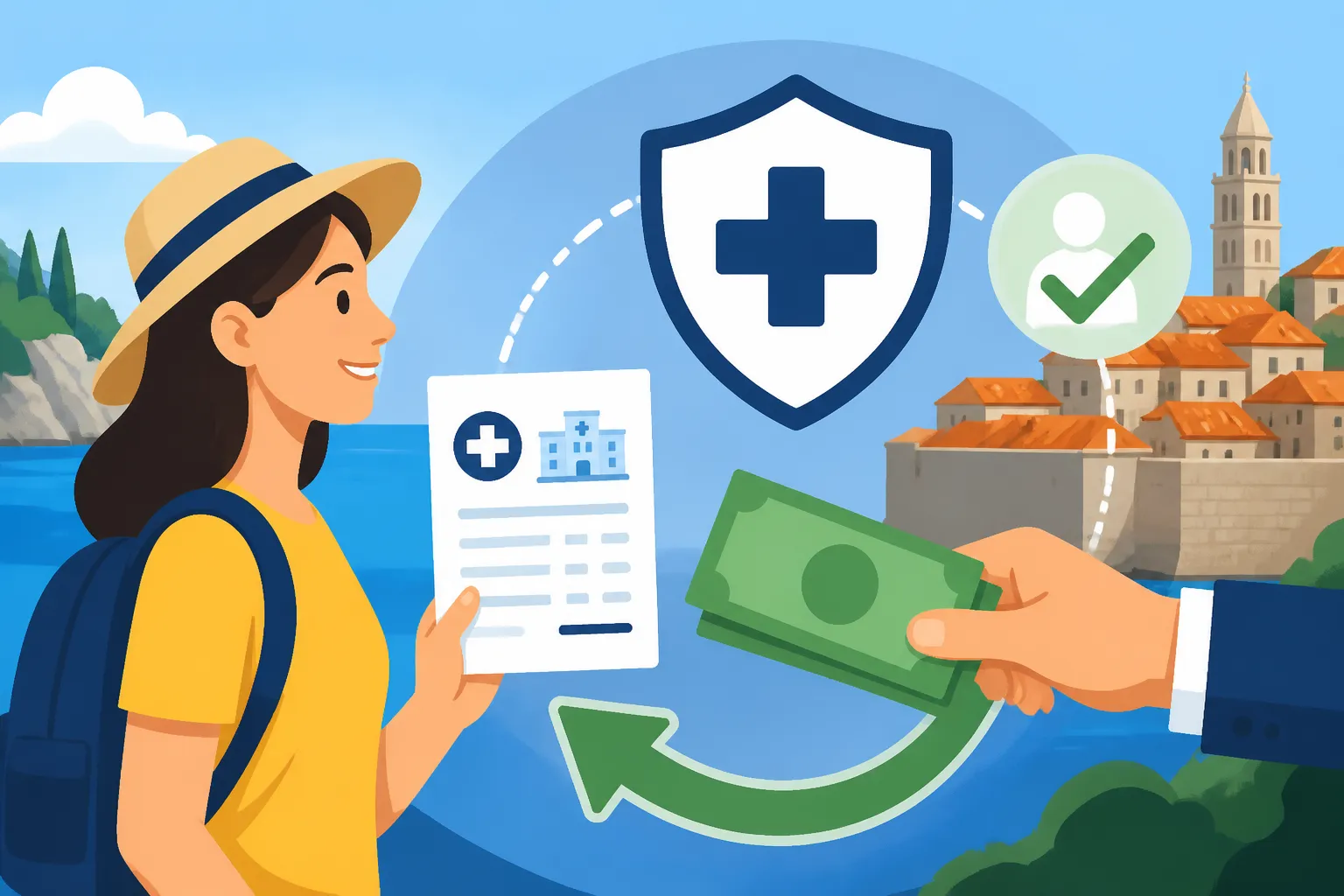
How Do I Get Reimbursed for Medical Costs Paid Abroad?
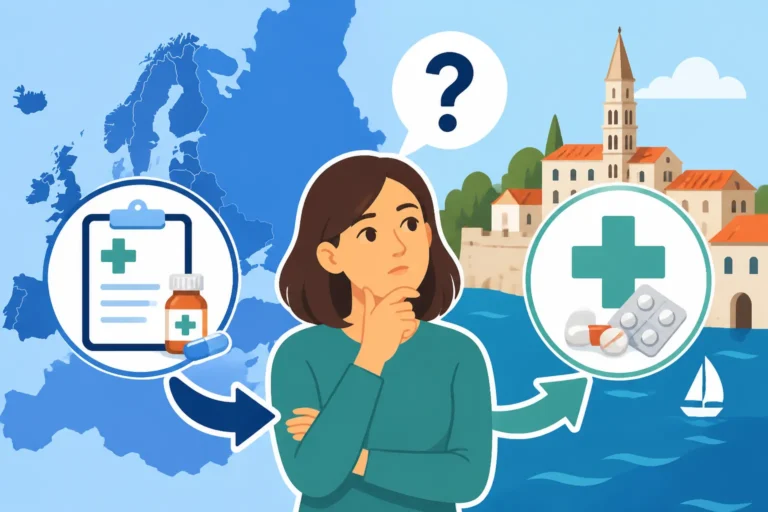
Living in Croatia comes with its fair share of administrative quirks, but few things are more stressful than falling ill while traveling outside the country and wondering if your Croatian health insurance will actually have your back. Whether you are a digital nomad who just finished Registering with HZZO in Croatia: The Complete Expat Guide (2027) or a long-term resident, the process of getting reimbursed for medical costs paid abroad is notoriously paperwork-heavy and requires a specific strategic approach to ensure you aren't left out of pocket.
Understanding the HZZO Reimbursement Framework
The Croatian Health Insurance Fund, known locally as HZZO, operates under strict European Union regulations and bilateral agreements, but the rules change significantly depending on where you were treated and why. If you are a resident in Croatia, you are likely already familiar with How the Croatian Health Insurance Fund (HZZO) Works: A Full Overview, which establishes that your coverage is primarily designed for use within the Croatian borders. However, as an expat, you probably travel frequently, and understanding the "territoriality" of your insurance is the first step toward a successful reimbursement claim.
The Role of the EKZO Card in Europe
If you were traveling within the EU, EEA, or Switzerland, your primary tool for avoiding upfront costs is the EKZO card (Europska kartica zdravstvenog osiguranja). This is the Croatian version of the EHIC. Before you even think about reimbursement, you should ideally have this card in your wallet. If you didn't have it and were forced to pay for "necessary" medical care out of pocket in another EU country, you are entitled to seek reimbursement back in Croatia at the rates defined by the country where you received treatment.
The EKZO card is not a magic wand for all medical costs. It only covers care that cannot be postponed until your return to Croatia. If you find yourself in a situation where you had to pay because a hospital did not recognize your digital status or you simply forgot the card at home, you will need to prove the urgency of the situation. This is a common sticking point for many foreigners who assume that any doctor's visit is reimbursable. HZZO will meticulously review the medical report to ensure the treatment was not elective or part of "medical tourism."
To make the process smoother, you should check How to Use Your EHIC (EKZO) Card in Croatia as an EU Citizen to see how the reciprocal system works. When you return to Croatia, you will visit your local HZZO office with the original invoices. Be prepared for the fact that HZZO might not reimburse the full amount you paid; they often only cover what that specific foreign health system would have covered for its own citizens, which often excludes the "participacija" or co-payments.
Emergent vs. Planned Care Abroad
There is a massive legal distinction between seeking emergency care because you broke your arm in Austria and choosing to have a specialized surgery in Germany. For the former, HZZO is obligated to assist under EU law or bilateral treaties. For the latter, you must obtain prior authorization from HZZO before you leave Croatia, which is incredibly difficult to get unless the specific treatment is unavailable within the Croatian public system.
If you paid for emergency care in a non-EU country—say, during a trip back to the United States or a vacation in Thailand—the reimbursement process becomes significantly more complex. Croatia has bilateral social security agreements with some countries (like Bosnia and Herzegovina, Serbia, or Turkey), which simplifies things. However, for most of the world, HZZO’s coverage is extremely limited. This is where many expats realize the importance of Understanding Private Health Insurance Plans in Croatia or maintaining a global travel policy.
In non-agreement countries, HZZO generally only reimburses costs up to the amount that the same procedure would have cost in a Croatian public hospital. Given that Croatian medical prices are often much lower than those in Western Europe or North America, your "reimbursement" might only cover 20% of your actual bill. This reality check is why veteran expats often supplement their mandatory HZZO coverage with private providers like SafetyWing, which are designed to handle these international gaps more efficiently.
Step-by-Step Guide to Filing a Claim with HZZO
Once you are back on Croatian soil and have finished your recovery, the clock starts ticking. You generally have a limited window to submit your claim for reimbursement. Do not wait months to start this process; the bureaucracy moves slowly, and missing a deadline can result in an automatic rejection. You will need to interact with the HZZO branch associated with your registered residence, so make sure you have your [OIB] and How to Get Your OIB and Why It Matters for Healthcare Access information ready to go.
Gathering Necessary Documentation
The most frequent reason for reimbursement denial isn't the medical necessity itself, but the lack of proper documentation. You cannot simply show a credit card statement. You need the "original" itemized invoice (račun) which must clearly state the patient's name, the date of service, the specific medical codes for the procedures performed, and proof that the bill was paid in full. If the invoice is in a language other than English or Croatian, HZZO may officially require a certified translation by a court interpreter (stalni sudski tumač), which can be an additional expense.
Beyond the invoice, you must provide a detailed medical report from the foreign physician. This report needs to explain the diagnosis and the "emergency" nature of the treatment. HZZO's medical commission will look for keywords that indicate the care was "unpostponable." If the report looks like a routine check-up, they will likely deny the claim. Ensure that the doctor abroad understands you need this for state insurance reimbursement back in Croatia; they are usually happy to add the necessary clinical detail if asked.
Lastly, keep your travel proofs. HZZO may ask for boarding passes, bus tickets, or passport stamps to prove you were actually in that country during the dates on the medical bill. This is part of their fraud prevention measures. If you are struggling with the local terminology, consulting The Complete Guide to Healthcare in Croatia for Expats (2027) can help you understand the specific Croatian terms for these documents.
Submitting the Application and Navigating Form 1 and Form 2
The actual application involves filling out a specific request for reimbursement (Zahtjev za naknadu troškova). You can usually find these forms at the info desk of any HZZO office (Dom Zdravlja). There isn't a "one size fits all" form; the clerk will give you a specific one based on whether the care was in the EU or outside of it. You will also need to provide your IBAN for a Croatian bank account. HZZO will not wire money to an overseas Revolut or Wise account in most cases; they prefer local banks.
After submission, your file goes to a medical commission. This is the "black box" of the process. It can take anywhere from 30 days to several months to receive a decision. If approved, the money will appear in your account without much fanfare. If denied, you will receive a formal "rješenje" (decision) in the mail. You have the right to appeal this decision, but you must do so within a very tight timeframe, usually 15 days.
For those who find this process overwhelming, it highlights why many choose to use How to Claim Medical Expense Reimbursement from HZZO as a reference point for every interaction. Dealing with the counter staff at HZZO requires patience and, ideally, a few words of Croatian. If your Croatian isn't up to par, bring a local friend or a translator, as the administrative staff are rarely required to speak English.
| Document Required | Purpose | Expat Tip |
|---|---|---|
| Itemized Original Invoice | To prove the cost and service | Ensure it has your full name as it appears on your OIB. |
| Medical Report | To prove "urgent" necessity | Ask the foreign doctor to write "Unpostponable emergency care." |
| Proof of Payment | Receipt or stamped invoice | A bank statement is often not enough; get a stamped receipt. |
| Copy of EKZO/HZZO Card | To prove your insured status | Always keep a digital scan on your phone. |
| Croatian Bank IBAN | For the transfer of funds | Ensure the account is active and in your name. |
Maximizing Success with Private and Travel Insurance
While HZZO is your mandatory baseline, it is rarely the most efficient way to handle medical costs abroad. Most savvy expats living in Croatia treat HZZO as a "backup" for international travel and rely on private insurance for the actual heavy lifting. If you have a policy with a brand like SafetyWing, the reimbursement process is usually handled through a digital portal, which is a world away from the paper-and-stamp reality of the Croatian state system.
When HZZO Rejection Occurs
It is a common scenario: HZZO rejects your claim because they deemed the treatment "non-urgent" or because the country you visited doesn't have a treaty with Croatia. This is when your private travel insurance becomes your primary savior. Private insurers like SafetyWing often cover things that HZZO won't touch, such as medical evacuation, private hospital room upgrades, or repatriation of remains.
If you intend to claim through a private insurer after an HZZO rejection, make sure you keep the formal rejection letter from HZZO. Some private policies require you to "exhaust" your state options first. However, many modern expat-focused plans like SafetyWing act as primary insurers for travel, meaning you can skip the HZZO headache entirely and submit your claims directly to them. This saves months of waiting for a Croatian medical commission to decide if your "sudden toothache" in Rome was truly an emergency.
To understand the difference in coverage levels, read Public vs Private Healthcare in Croatia: Which Should Expats Choose?. While HZZO is great for long-term chronic care within Croatia, private insurance is almost always better for the "reimbursement" model because their business is built on international fluidity rather than local bureaucracy.
Navigating the Coordination of Benefits
If you are lucky enough to have both HZZO and a private policy like SafetyWing, you might wonder who pays first. Generally, in the EU, you should always present your EKZO card first. This reduces the bill at the source, meaning you might only have to pay a small co-payment. You can then submit that small co-payment to your private insurer or your "Dopunsko" (supplementary) insurance if it covers international co-pays.
In non-EU countries, it is often easier to pay upfront and claim everything through your private insurer. If you try to involve HZZO for a bill from a US hospital, the paperwork will be staggering. Private insurers like SafetyWing are accustomed to high-cost environments and usually have a streamlined process for uploading photos of your receipts via an app. This avoids the need for the physical "original" copies that HZZO demands.
Always remember to notify your private insurer as soon as a medical event occurs. Many policies require "pre-certification" for hospital stays. If you wait until you are back in Croatia to tell your private insurer about a surgery you had in Mexico, they might reduce your reimbursement. Check Emergency Medical Care in Croatia: What Every Expat Needs to Know for a better understanding of how to handle the immediate aftermath of a medical crisis.
Practical Tips for Avoiding Financial Pitfalls Abroad
The best way to get reimbursed is to not have to pay a massive bill in the first place. This requires a bit of pre-travel planning that most people overlook in the excitement of a trip. If you are a resident in Croatia, your "health" footprint is tied to your local GP, but your financial protection is tied to your insurance status.
Dealing with Non-EU Emergencies
When traveling to high-cost regions like North America, Switzerland, or Singapore, the "reimbursement" model is dangerous. A single night in a US hospital can cost more than a year's salary in Croatia. HZZO will never reimburse these amounts in full. If you are relying solely on your Croatian state insurance, you are taking a massive financial risk.
Before leaving the EU, check if your current coverage includes "worldwide" protection. If not, a supplemental plan from a provider like SafetyWing is essential. These plans are designed for the nomadic lifestyle and understand that an expat living in Split might spend a month in New York. They provide a safety net that bridges the gap between the low-cost Croatian system and the high-cost global market.
Additionally, always carry a "cheat sheet" of your insurance details, including your OIB and your private policy number. If you are incapacitated, hospital staff need to know who to call. For more local context on managing your health records before you travel, see Understanding the e-Recept (E-Prescription) System in Croatia to ensure you have enough medication for your trip, as getting reimbursed for foreign prescriptions is one of the hardest claims to process through HZZO.
Final Verification and Follow-up
Once you have submitted your claim to HZZO, do not assume it is being processed. The "out of sight, out of mind" rule often applies to Croatian administration. Call the HZZO office every three weeks to check the status of your file. Be polite but persistent. If they tell you a document is missing, deliver it in person and get a stamped confirmation that they received it.
In the world of Croatian bureaucracy, the person with the most stamps wins. Keep copies of everything you submit. If the HZZO office loses your original receipt—which does happen—your claim is effectively dead unless you have a high-quality scan or a certified copy. By following the steps in Navigating the Croatian Healthcare System: An Expat's Roadmap (2027), you can build a system that protects your health and your wallet, no matter where in the world you happen to be.
Disclaimer
The information provided in this guide is for informational purposes only and does not constitute legal or professional medical advice. Healthcare regulations in Croatia and the EU are subject to change. Always verify the latest requirements with the Croatian Health Insurance Fund (HZZO) or your private insurance provider before traveling or initiating a reimbursement claim.