The Complete Guide to Healthcare in Croatia for Expats (2027)
Moving to Croatia brings the promise of Adriatic coastlines, historic stone cities, and a relaxed pace of life, but navigating the healthcare bureaucracy can quickly test your patience. Between understanding mandatory public contributions, securing an OIB, finding an English-speaking family doctor, and avoiding back-pay penalties, foreign residents often feel overwhelmed. This comprehensive guide breaks down the entire Croatian health system step by step, showing you how to secure coverage, access medical specialists, handle emergencies, and bridge coverage gaps with private or international insurance options.
Overview of the Croatian Healthcare System
Croatia operates a universal, state-administered healthcare model based on principles of social solidarity and mutual contribution. The entire national healthcare system is built around the concept that everyone residing in the country contributes according to their income and receives healthcare services based on their medical needs. While the system guarantees broad coverage to citizens and legal residents, newcomers often discover that the blend of centralized administration, local health centers, and regional public hospitals requires a steep learning curve.
To navigate this landscape effectively, it helps to realize that Croatian public healthcare relies heavily on strict administrative hierarchies. Every treatment plan, diagnostic test, or prescription refill begins at the primary care level with your assigned general practitioner. Bypassing this hierarchy is nearly impossible within the public framework, meaning that building a functional relationship with your primary medical provider is the most critical first step for any expat settling in Zagreb, Split, Rijeka, or smaller coastal communities.
Understanding the administrative and practical boundaries of the public system allows you to make informed decisions about when to rely on state facilities and when to seek alternative solutions. Detailed resources like How the Croatian Health Insurance Fund (HZZO) Works: A Full Overview clarify the exact legal foundations, but day-to-day interactions generally focus on moving between community health centers, diagnostic labs, and regional hospital complexes.
Public Healthcare Structure and Central Administration
At the top of the administrative pyramid sits the Croatian Health Insurance Fund, universally known by its local acronym HZZO (Hrvatski zavod za zdravstveno osiguranje). HZZO serves as the sole public health insurance provider in the country, acting as both the collector of mandatory healthcare contributions and the primary payer for medical services rendered across the nation. Unlike countries with competing public sickness funds, Croatia centralizes all public funds into this single institution, which sets unified policies, fee schedules, and coverage guidelines.
The Ministry of Health oversees the policy direction, facility licensing, and overall quality control of medical providers, while HZZO handles the financial mechanics. When you register for public healthcare, you are enrolling directly into HZZO’s database, which links your personal identification number (OIB) with your residency status and employment records. This central database tracks your visits, issued prescriptions, and hospital referrals across every public facility in the country.
For expats, dealing with HZZO means interacting with regional branch offices (područni ured) spread across county capitals and major towns. Administrative protocols inside these offices are notoriously rigid. Officers expect exact documentation, translated certificates, and compliance with strict deadlines. Understanding that HZZO functions as a bureaucratic gatekeeper helps soften the initial culture shock when presenting your residency paperwork for the first time.
The Two Levels of Public Facilities
Public care in Croatia is divided into two distinct physical environments: primary community facilities and secondary/tertiary hospital centers. Primary care is delivered largely through local community health centers known as a Dom Zdravlja. Every municipality or urban district has at least one Dom Zdravlja, which houses general practitioners, pediatricians, basic dental clinics, gynecologists, and simple diagnostic laboratories. These community hubs are designed to handle routine check-ups, minor illnesses, chronic disease management, and initial consultations.
Understanding the role of these primary hubs is essential for setting expectations. To learn more about how local care operates, read Understanding the Role of the Dom Zdravlja (Health Centre) in Croatia. A Dom Zdravlja is not a hospital; it operates on daytime appointment schedules, and doctors here serve as gatekeepers who evaluate whether your condition warrants specialized care or further diagnostic imaging.
When secondary or specialized care is necessary, patients are directed to regional clinical hospital centers known as a Klinički bolnički centar (KBC) or smaller general hospitals (opća bolnica). Major urban centers boast extensive hospital systems, such as KBC Zagreb (Rebro), KBC Sestre Milosrdnice, KBC Split, or KBC Rijeka. These facilities provide advanced surgeries, specialized oncology, complex cardiology, and 24/7 inpatient services. Moving between a local Dom Zdravlja and a major KBC requires strict adherence to referral protocols issued by your primary doctor.
How Funding and Mandatory Contributions Work
The financial engine behind public healthcare in Croatia is a mandatory contribution model. Funding does not come directly from general income taxation; instead, it is derived from explicit social security health contributions levied on income earned by residents, local employees, and registered sole proprietors. Employers automatically deduct these health contributions from gross monthly salaries and remit them directly to the tax administration, which transfers them into the HZZO fund.
If you are self-employed, running a local business, or living in Croatia on specific temporary residence permits without local employment, you are personally responsible for making direct monthly healthcare payments to the tax authorities. HZZO establishes standardized monthly contribution figures for non-employed foreign residents based on average national wage metrics, ensuring that everyone maintains an active contribution history.
Failing to stay current on these contributions leads to quick administrative freezes on your insurance rights. If your account falls into arrears, your public insurance status is downgraded, leaving you liable for the full cost of public medical services until debts are settled. This financial rigidity surprises many foreign residents who assume healthcare access is completely free at the point of delivery regardless of administrative standing.
Mandatory Health Insurance for Expats
Navigating state insurance requirements is one of the most stressful hurdles for newly arrived expats. Croatian immigration law strictly ties lawful temporary residence to mandatory health insurance enrollment. In essence, if you hold a temporary residence permit (privremeni boravak) under most visa categories, you do not have the legal option to opt out of the public health system, even if you already hold comprehensive private medical insurance from an overseas provider.
This statutory mandate applies across most resident classes, including individuals moving for employment, family reunification, study, or long-term stay permissions. The only notable exception applies to individuals residing under the specific digital nomad permit, who are governed by alternative legal rules. For everyone else, registering with HZZO within fixed statutory deadlines after arriving is a strict legal requirement enforced by both health authorities and the Ministry of the Interior (MUP).
Understanding how public mandates interact with alternative private options is vital for overall peace of mind. A detailed breakdown can be found in Public vs Private Healthcare in Croatia: Which Should Expats Choose?. Failing to complete HZZO enrollment on time can jeopardize your residence permit renewal and result in unexpected back-dated invoices from the state health fund.
| Insurance Type | Primary Purpose | Key Advantages | Primary Limitations |
|---|---|---|---|
| HZZO Basic Insurance | Mandatory public baseline coverage | Universal care, low prescription | Long waiting lists, doctor assignment |
| (Obvezno) | required for most residents | costs, covers major procedures | queues, basic facility amenities |
| HZZO/Private Dopunsko | Covers public system co-payments | Eliminates out-of-pocket costs at | Only covers public facilities and |
| (Supplementary) | (participacija) for care and drugs | hospitals, labs, and pharmacies | standard public procedures |
| Local Private Polyclinics | Fast specialist access and | Same-week appointments, English- | High pay-per-visit costs, no |
| (Dodatno / Out-of-Pocket) | diagnostics in modern facilities | speaking staff, modern tech | emergency or major inpatient care |
| Nomad / Travel Cover | Flexible interim or travel care | Fits mobile lifestyle, cross-border | Does not replace mandatory HZZO |
| (e.g., SafetyWing) | for remote workers and nomads | protection, quick enrollment | for standard non-nomad residency |
Who Must Register and When
The rule regarding HZZO registration is direct: non-EU citizens who receive temporary residence approval must register with the regional HZZO office within 8 days of receiving their legal residency card or address registration confirmation from MUP. EU citizens who transfer their residence to Croatia are similarly required to register their healthcare status using institutional forms to ensure seamless continuity of coverage between EU member states.
The 8-day deadline is strictly monitored. Many expats fall into administrative traps by assuming that the countdown begins only when they decide to start using public medical facilities. In reality, the legal obligation triggers the moment your temporary stay becomes active. If you arrive in Zagreb or Split and wait two months before visiting an HZZO branch, the system will mark your entry late and calculate mandatory retroactive premiums back to your official residency start date.
For remote workers on the dedicated digital nomad permit, the rules differ slightly. Digital nomads are exempt from joining the mandatory HZZO public insurance scheme, provided they demonstrate valid private health coverage that covers them for the entire duration of their stay. Many nomads choose flexible, multi-country digital nomad policies like SafetyWing to satisfy MUP entry requirements while maintaining international coverage as they move across borders.
Step-by-Step Registration Process with MUP and HZZO
Completing your registration involves a precise sequence of bureaucratic steps across two separate government entities. Attempting to skip or reorder these steps usually results in wasted hours at administrative counters. To ensure a smooth experience, consult Registering with HZZO in Croatia: The Complete Expat Guide (2027) alongside these practical steps:
- Obtain Your OIB: Visit the local branch of the Tax Administration (Porezna Uprava) to apply for your personal identification number (OIB). You will need your physical passport and a completed application form.
- Register Your Address with MUP: Take your lease agreement, property owner’s approval, and passport to the police station (MUP) to register your residential address (prijava boravišta). MUP will issue a white paper slip verifying your official Croatian address.
- Receive Residence Permit Approval: Once your temporary residence permit is officially granted by MUP, secure your formal residency decision document or biometric residence card (boravišna iskaznica).
- Submit Application to HZZO: Take your passport, OIB certificate, address registration slip, and MUP residency approval to the regional HZZO branch office (područni ured). An administrative officer will complete Form T-1 and register you in the central health database.
- Receive Your Registration Certificate: HZZO will provide a temporary paper registration certificate (Potvrda), which acts as proof of insurance while your plastic health card (zdravstvena iskaznica) is printed and mailed to your home.
Be prepared for language barriers at HZZO offices. While many younger staff members speak English, public counter workers in smaller offices may speak only Croatian. Bringing a local friend, a certified translator, or an expat handler to your appointment can prevent miscommunications regarding your application status.
The Mandatory Back-Pay Trap for Non-EU Citizens
One of the most controversial aspects of the Croatian public healthcare system for non-EU expats is the statutory requirement to pay retroactive health contributions. Croatian law mandates that non-EU residents joining the HZZO system for the first time must pay 12 months of retroactive basic health insurance contributions upon registration. This rule applies regardless of whether you held valid private health insurance overseas during that preceding year.
This back-pay obligation serves as an entry fee into the national social security pool. HZZO calculates this lump-sum amount based on standardized wage indicators, and the tax administration will send an official tax debt notice to your registered home address shortly after enrollment. You must clear this invoice alongside your regular ongoing monthly contributions.
Many expats find this policy frustrating, particularly when they have already paid for private overseas insurance during their relocation process. However, trying to fight or ignore the back-pay assessment is counterproductive. Unpaid health insurance debts are reported to MUP and will block future residence permit renewals, prevent address changes, and lead to interest penalties calculated daily by the tax office.
Navigating Primary Care and Choosing a Family Doctor
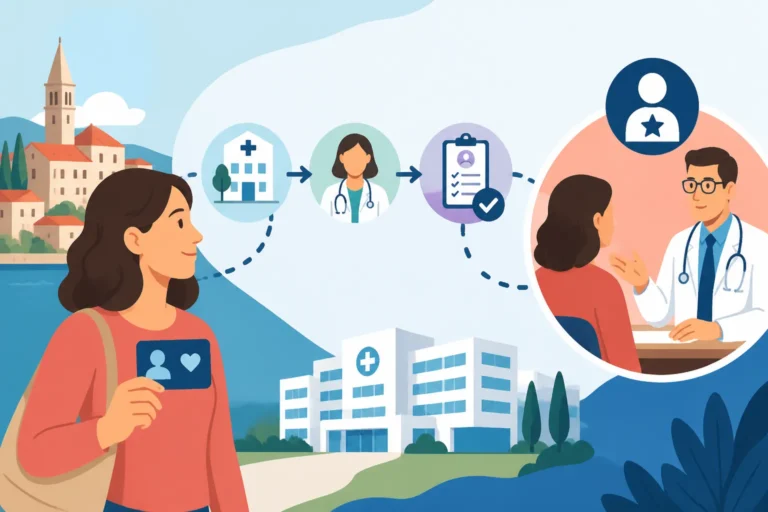
Once your HZZO registration is active and you hold your paper insurance confirmation, your immediate priority must be selecting and enrolling with a primary care family doctor, known locally as an obiteljski liječnik or liječnić opće prakse. In the Croatian system, your family doctor serves as your medical gateway. You cannot simply book an appointment at a public hospital or specialist clinic on your own; every referral, blood test, diagnostic scan, and prescription must originate from your registered GP.
Many expats make the mistake of delaying GP registration until they fall ill. This leads to intense stress when trying to handle administrative forms while dealing with acute symptoms. Public doctors maintain strict patient quotas set by HZZO, and popular doctors in central urban districts often close their rosters when maximum patient capacity is reached. Secure your GP immediately after receiving your HZZO status.
Practical strategies for locating available primary physicians are detailed in The Expat Guide to Finding a Family Doctor (Obiteljski Liječnik) in Croatia. Taking the time to locate a doctor who communicates well and has room on their patient roster ensures smooth medical care throughout your stay.
Finding an English-Speaking Family Doctor
Locating an English-speaking family doctor within the public system requires patience and research. While medical education in Croatia is rigorous and many younger physicians speak fluent English, administrative staff and nurses at public clinics may not. Finding a practice where both the doctor and their reception nurse can communicate comfortably in English will dramatically reduce your administrative stress.
Start your search by consulting local expat community groups, online forums, and recommendation lists maintained by foreign embassies in Zagreb, Split, and Rijeka. Fellow expats frequently share recommendations for doctors who are welcoming to foreign patients and comfortable discussing complex medical histories in English.
When you identify a prospective doctor, visit their clinic in person during administrative hours rather than calling by phone. Ask directly if the doctor has open spots (slobodna mjesta) on their HZZO patient list and whether they are willing to accept a non-Croatian speaking patient. Face-to-face visits allow you to assess the clinic environment and gauge the staff’s willingness to assist with language accommodations.
Registering with a Doctor at the Local Dom Zdravlja
To complete registration with your chosen family doctor, you must physically visit their office located within your local Dom Zdravlja or private contracted practice. Take your passport, OIB, and temporary HZZO paper certificate (Potvrda) or plastic health card. The doctor’s nurse will pull up your profile in the national health database and print an official HZZO selection form (Izjava o izboru obiteljskog liječnika).
You must sign this selection form in duplicate. One copy remains in the doctor’s administrative files, while the second copy is retained for your records. Once signed, the doctor’s office submits the electronic selection record directly to HZZO. The official registration process typically takes a few business days to process fully through the central system, after which you are officially attached to that doctor’s practice.
Keep in mind that you are legally bound to your selected family doctor for a minimum period of one year before you can freely transfer to another public GP, unless you change your official residential address to a new city or district. Choose your doctor thoughtfully, ensuring their clinic location and operating hours align with your routines.
Managing Appointments and Administrative Hurdles
Operating within a public GP practice in Croatia requires understanding unique local clinical routines. Family doctors divide their workday into distinct operational windows: one portion of the day is dedicated strictly to seeing booked patients, while another window is reserved for handling telephone calls, reviewing lab results, issuing digital prescription renewals, and writing specialist referrals.
Most public practices operate on a alternating shift system. A doctor might work the morning shift (jutarnja smjena) on Mondays, Wednesdays, and Fridays, and the afternoon shift (popodnevna smjena) on Tuesdays and Thursdays. Always verify your doctor’s weekly shift schedule before visiting or calling. Showing up during the wrong shift means encountering a different medical team covering the facility.
| Practical Expat Tip | Common Pitfall to Avoid | Actionable Advice |
|---|---|---|
| Timing Visits to Public Clinics | Arriving without checking shift | Verify whether your GP works the |
| schedules or appointment rules | morning or afternoon shift daily | |
| Managing Prescriptions | Expecting paper prescriptions for | Ask your doctor to issue digital |
| routine chronic medications | e-Recept directly to your OIB | |
| Navigating Referrals | Bypassing your GP to book public | Request an e-Uputnica referral |
| specialist care directly | from your family doctor first | |
| Handling Language Barriers | Assuming reception nurses speak | Bring translated health summaries |
| fluent English in public centers | or use basic written Croatian key |
When visiting your GP, bring a concise summary of your current symptoms or chronic medical background. If you take ongoing prescription medications, bring original packaging or medical statements from your home country. Croatian doctors must match foreign drug names with active pharmaceutical equivalents registered within the national drug directory before issuing local electronic refills.
Specialist Care, Referrals, and Hospital Visits
Accessing secondary medical care—such as cardiologists, dermatologists, orthopedic surgeons, or advanced diagnostic imaging like MRIs and CT scans—within the public system follows a strict, formal referral workflow. You cannot self-refer to a public specialist or book a consultation directly with a major university hospital without initial authorization from your registered family physician.
This centralized referral model ensures that public hospital resources are conserved for medically necessary cases, but it creates significant administrative steps for patients. Understanding how referrals are categorized, generated, and processed across local networks prevents long delays when seeking advanced medical opinions.
How the E-Referral System Operates
Croatia uses a paperless referral system known as the e-Uputnica. When your family doctor determines that your medical condition requires specialized consultation, diagnostic testing, or hospital therapy, they generate an electronic referral directly inside the central HZZO network.
To understand how referrals are classified and routed, review How e-Uputnica (E-Referrals) Work for Specialist Appointments in Croatia. Referrals carry specific urgency designations assigned by your GP, ranging from routine non-urgent care to urgent priority conditions requiring rapid evaluation.
Once an e-Uputnica is created in the system, you do not need to carry physical paper slips to the specialist clinic. The receiving hospital or diagnostic center accesses your referral electronically using your OIB and health card number. You can take your referral to any public hospital or contracted private facility in the country that accepts HZZO e-referrals for that specific department.
Navigating Hospital Care and KBC Facilities
When specialized outpatient consultations, invasive procedures, or surgical treatments are required, care is delivered at regional general hospitals or university clinical hospital centers (KBC). Major medical complexes like KBC Zagreb (located across sites at Rebro, Šalata, and Petrova) or KBC Split represent the highest level of clinical care in the country, housing cutting-edge surgical suites and specialized medical units.
Navigating a massive public hospital like Rebro or Sestre Milosrdnice can feel daunting for newcomers. Facilities consist of sprawling complexes with multiple buildings (paviljon) built across different eras. When attending a specialist appointment, arrive at least 30 minutes early to locate the central registration counter (centralni prijem), present your health card, and receive directions to the correct department waiting room.
Inpatient hospital stays under HZZO cover accommodation, standard surgical procedures, nursing care, and necessary medications. While clinical skills and surgical expertise in Croatian public hospitals are exceptionally high, patient amenities are basic. Rooms are typically shared between multiple patients, and personal comfort items like toiletries, towels, and sleepwear must be brought from home.
Public System Waiting Times and Practical Workarounds
The primary challenge facing patients within the Croatian public healthcare system is long waiting lists (liste čekanja) for non-urgent specialist consultations and diagnostic imaging. Due to high demand and resource limitations, getting a routine appointment for an ultrasound, MRI scan, or non-emergency orthopedic assessment at a public hospital can take several months.
To manage long waiting lists, HZZO maintains a centralized online portal tracking wait times across all public facilities in Croatia. If waiting times at major urban hospitals in Zagreb or Split are excessively long, patients have the right to request appointments at smaller regional hospitals—such as those in Varaždin, Karlovac, or Zadar—where waiting lists for diagnostic scans are often significantly shorter.
For expats facing long waits for diagnostic procedures or specialist opinions, the most effective practical workaround is combining public insurance with direct out-of-pocket visits to local private polyclinics (poliklinike). Visiting a private clinic for an immediate diagnostic scan allows you to return to your public family doctor with fast results, accelerating your public treatment plan without remaining stuck in diagnostic queues.
Supplemental and Private Health Insurance in Croatia
While basic mandatory HZZO coverage covers major medical procedures and hospital care, it does not cover 100% of all medical expenses. Public insurance in Croatia requires patients to pay standardized out-of-pocket co-payments (participacija) for consultations, prescription refills, diagnostic lab work, and hospital stays.
To protect against these ongoing out-of-pocket fees and secure fast access to private medical facilities, most long-term expats and local citizens combine basic state cover with additional insurance plans. Understanding how supplementary coverage interacts with private polyclinics allows you to design a balanced healthcare strategy that fits your budget and lifestyle.
Dopunsko Zdravstveno Osiguranje
Supplementary health insurance, known locally as Dopunsko, is designed specifically to cover all statutory co-payments (participacija) required by the public HZZO system. Without Dopunsko, patients pay small out-of-pocket fees for every GP visit, prescription item filled at the pharmacy, specialist appointment, and day spent in a public hospital bed.
A deep dive into why this policy is vital for residents can be found in Understanding Participacija (Co-Payments) in the Croatian Health System. Carrying an active Dopunsko policy completely waives these public co-payments. When you present your basic HZZO card along with your Dopunsko card at a pharmacy or hospital registration desk, all co-payment charges are automatically billed directly to your insurance provider.
Dopunsko policies can be purchased directly from HZZO or through private insurance companies operating in Croatia, such as Croatia Osiguranje, Wiener, or Uniqa. Monthly premiums for Dopunsko are modest and uniform across age brackets when purchased through HZZO. Given its affordability, securing a Dopunsko policy immediately after your basic registration is strongly recommended for all long-term residents.
Private Polyclinics and Direct Self-Pay Options
For expats accustomed to fast appointments, modern facility amenities, and guaranteed English-speaking staff, private medical facilities—known as poliklinike—offer an attractive alternative to public hospitals. Private polyclinics are modern, well-equipped clinics that offer outpatient consultations, advanced diagnostic imaging, blood testing, and minor day-surgeries under one roof.
For an extensive analysis of private facility networks, read Understanding Private Polyclinics (Poliklinike) in Croatia. Major private healthcare providers like Poliklinika Aviva, Poliklinika Bagatin, Poliklinika Croatia, and Svjetlost Eye Clinic operate modern centers across major urban hubs. Appointments at private polyclinics can usually be booked within a few days via email or phone, completely bypassing public referral systems.
Private polyclinics operate on a direct self-pay basis or through specialized private health insurance packages (dodatno zdravstveno osiguranje). Out-of-pocket consultation fees at private polyclinics remain reasonable compared to Western European or North American standards, making direct cash payment an accessible choice for expats needing fast specialist evaluations or routine annual health checks.
Nomads and Digital Workers
Digital nomads residing under Croatia’s official nomad stay permit occupy a unique regulatory position. Because digital nomads are legally exempt from joining the mandatory HZZO public health insurance pool, they must maintain valid comprehensive health or travel insurance for the entire duration of their visa approval period.
Flexible international policies like SafetyWing are popular among remote workers moving to Croatia. Plans provided by SafetyWing offer global travel medical cover, flexible month-to-month subscription options, and cross-border protection that covers nomads both inside Croatia and while traveling across the Schengen Zone or back home.
However, remote workers should remember that holding an international nomad policy like SafetyWing operates outside the local HZZO infrastructure. When visiting public hospitals or private polyclinics in Croatia with international cover, you generally pay the clinic directly for services rendered and submit receipts, diagnostic reports, and medical statements to your provider for reimbursement according to your policy terms.
Pharmacies, Prescriptions, and Medication Access
Accessing prescription and over-the-counter medications in Croatia is straightforward once you understand how local pharmacies operate and how electronic prescriptions are routed through the state system. Pharmacies are easily identifiable by a green illuminated cross and are universally referred to as a ljekarna.
Croatian pharmacies maintain high standards of professional pharmaceutical care. Pharmacists (magistar farmacije) hold university medical degrees and offer valuable advice regarding minor health ailments, dosage instructions, and over-the-counter treatments, serving as an accessible first point of contact for minor health concerns.
Understanding the Croatian Pharmacy System
Pharmacies in Croatia are strictly regulated, with operational hours generally running from early morning through early evening on weekdays, and shortened hours on Saturdays. In larger cities like Zagreb, Split, Rijeka, and Osijek, designated 24-hour emergency pharmacies (dežurna ljekarna) operate continuously overnight, on Sundays, and during public holidays to fulfill urgent emergency prescriptions.
Over-the-counter medications—including standard pain relievers, cold remedies, antihistamines, and basic vitamins—are sold exclusively inside licensed pharmacies. You will not find medications like ibuprofen or paracetamol on supermarket shelves or in convenience stores. All drug sales are managed directly by pharmaceutical staff behind the counter.
When visiting a pharmacy, be prepared to state your symptoms clearly or show foreign medication packaging to the pharmacist. If a precise foreign brand name is unavailable in Croatia, the pharmacist can check national drug databases to provide an exact bioequivalent containing the same active chemical compound.
How E-Prescriptions Work
Croatia uses a centralized electronic prescription network called the e-Recept. When your registered family doctor prescribes medication, they do not issue a signed paper slip. Instead, the doctor uploads the electronic prescription directly into the central national HZZO database attached to your OIB number.
To learn more about retrieving your medications at local pharmacies, read Understanding the e-Recept (E-Prescription) System in Croatia. To pick up your prescription, visit any ljekarna in Croatia, hand your basic HZZO health card or state your OIB to the pharmacist, and present your photo identification.
The pharmacist pulls up your active e-prescriptions on their terminal screen and dispenses the required medications. If you hold basic HZZO insurance along with a Dopunsko supplemental policy, medications on the state primary drug list (A-lista) are dispensed with no out-of-pocket cost. Medications listed on the secondary list (B-lista) require a partial co-payment at the counter regardless of supplementary insurance.
Bringing Medications from Home and Local Availability
If you rely on continuous daily medications for chronic conditions, plan carefully before relocating to Croatia. Bring a 90-day supply of your essential medications in their original prescription packaging, accompanied by a formal letter from your home physician detailing your medical diagnosis, exact chemical drug names, and daily dosage requirements.
Once settled in Croatia, schedule an initial consultation with your registered family doctor to review your medical history and mirror your foreign prescriptions within the HZZO e-Recept database. Certain controlled substances—such as specific psychiatric medications, strong pain management drugs, or ADHD therapies—are subject to strict regulatory oversight by the Agency for Medicinal Products and Medical Devices of Croatia (HALMED).
If a specific medication brand is not licensed for distribution within Croatia, your GP or a specialist doctor can write a special import authorization or suggest a locally approved alternative containing equivalent therapeutic properties. Never attempt to ship prescription medications into Croatia via international postal courier, as customs authorities routinely seize incoming medical shipments lacking prior HALMED import authorization.
Dental Care, Emergency Services, and Specialized Care
Beyond basic primary care and routine pharmacy visits, long-term expats must understand how specialized medical needs—including dental treatments, acute emergency transport, maternity services, and mental health support—are handled within the Croatian medical landscape.
Knowing where to turn during an acute medical emergency or when seeking specialized care ensures you can act decisively without losing valuable time during critical situations.
| Emergency Service | Direct Telephone Number | Key Information to Provide |
|---|---|---|
| General Emergency Services | 112 | Exact location, nature of emergency |
| (Universal European Number) | number of injured, spoken language | |
| Emergency Medical Transport | 194 | Patient condition, conscious status |
| (Hitna Pomoć Ambulance) | precise street address & floor | |
| Police Department | 192 | Incident description, safety risks |
| (Policija) | immediate danger alerts | |
| Fire Brigade | 193 | Fire location, smoke hazards |
| (Vatrogasci) | trapped persons or chemical risks |
Public Dental Coverage vs Private Dentists
Public dental care is included under basic HZZO health insurance, but coverage is strictly limited to standard conservative treatments. Every HZZO cardholder has the right to select a public dentist (stomatolog) working within a local Dom Zdravlja or contracted private dental clinic. Basic public coverage includes annual check-ups, emergency tooth extractions, basic fillings, and routine X-rays.
However, advanced dental procedures—such as cosmetic work, crowns, complex root canals, dental implants, or high-grade white composite fillings on posterior teeth—are not fully covered by HZZO. For these advanced treatments, patients must pay out-of-pocket top-up fees set by the dental practice.
Because out-of-pocket costs at private dental clinics across Croatia remain competitive compared to Western Europe, many expats skip the public dental system entirely. Private dental clinics offer modern facilities, advanced technology, flexible weekend appointments, and fluent English-speaking specialists, making private dental care popular among the international community.
Accessing Emergency Care and Hospitals
In acute, life-threatening medical situations, Croatia’s emergency medical system—known as Hitna Pomoć—provides rapid response care nationwide. The universal European emergency number is 112, while the direct national phone line for emergency medical dispatch and ambulances is 194. Emergency dispatchers assess incoming calls and dispatch paramedic crews based on medical urgency.
If you experience an urgent injury or sudden medical crisis that requires immediate evaluation but does not warrant an ambulance response, you can walk directly into the emergency department (Hitna prijem) of the nearest public general hospital or KBC. Emergency hospital departments operate 24/7 and deliver care based on medical triage protocols rather than arrival time.
Emergency medical treatment required to preserve life or stabilize acute conditions is delivered to everyone, regardless of nationality or current insurance status. However, non-insured individuals or tourists without valid European Health Insurance Cards (EHIC) or recognized emergency travel insurance will receive an official invoice for emergency hospital services rendered after acute stabilization is complete.
Maternity and Mental Health Services for Expats
Maternity and prenatal care are well-supported within the Croatian public healthcare system. Once pregnant, female residents register with an HZZO-contracted gynecologist (ginekolog) based at a Dom Zdravlja or hospital clinic. Public maternity coverage includes monthly prenatal check-ups, routine blood screening, fetal ultrasounds, delivery care in public hospital maternity wards, and post-natal home visits by community nursing teams (patronažna sestra).
While clinical safety and medical care during labor in public hospitals are excellent, maternity practices can lean conservative compared to Western preferences. Expats seeking personalized birth plans, private labor suites, or dedicated continuous midwife support often choose private maternity clinics or hire private birth doulas to assist them through the process.
Mental health services are accessible within the public framework through referrals (e-Uputnica) issued by a family doctor to public hospital psychiatric units or outpatient clinics. However, finding English-speaking therapists or clinical psychologists within the public system can prove challenging, particularly outside Zagreb. As a result, most expats seeking psychotherapy or long-term mental health counseling turn to private English-speaking mental health practitioners operating across major cities or utilize online remote therapy platforms.
Disclaimer
This article is for general informational purposes only and does not constitute professional advice. Laws, prices and regulations vary by location and change over time. Consult a qualified professional for guidance on your specific situation.