Can I Choose Which Hospital I’m Treated at in Croatia?
One of the most confusing aspects of relocating to Croatia is realizing that while the healthcare system is technically universal, your freedom to move between facilities isn't always guaranteed. Many expats assume they can simply walk into the best-rated hospital in Zagreb regardless of where they live, only to be met with bureaucratic roadblocks. This guide clarifies exactly when you can choose your hospital, how the referral system works, and when you might need to look toward private options to gain more control over your medical journey.
The Role of the Referral System in Determining Your Hospital
In the Croatian public health system, your primary point of contact is always your chosen family physician. You cannot simply show up at a hospital for a non-emergency consultation or surgery without a specific document known as an uputnica. This electronic referral (e-Uputnica) is the digital key that opens the door to hospital care. When your doctor issues this referral, the system typically defaults to the nearest secondary or tertiary care facility within your county or health region.
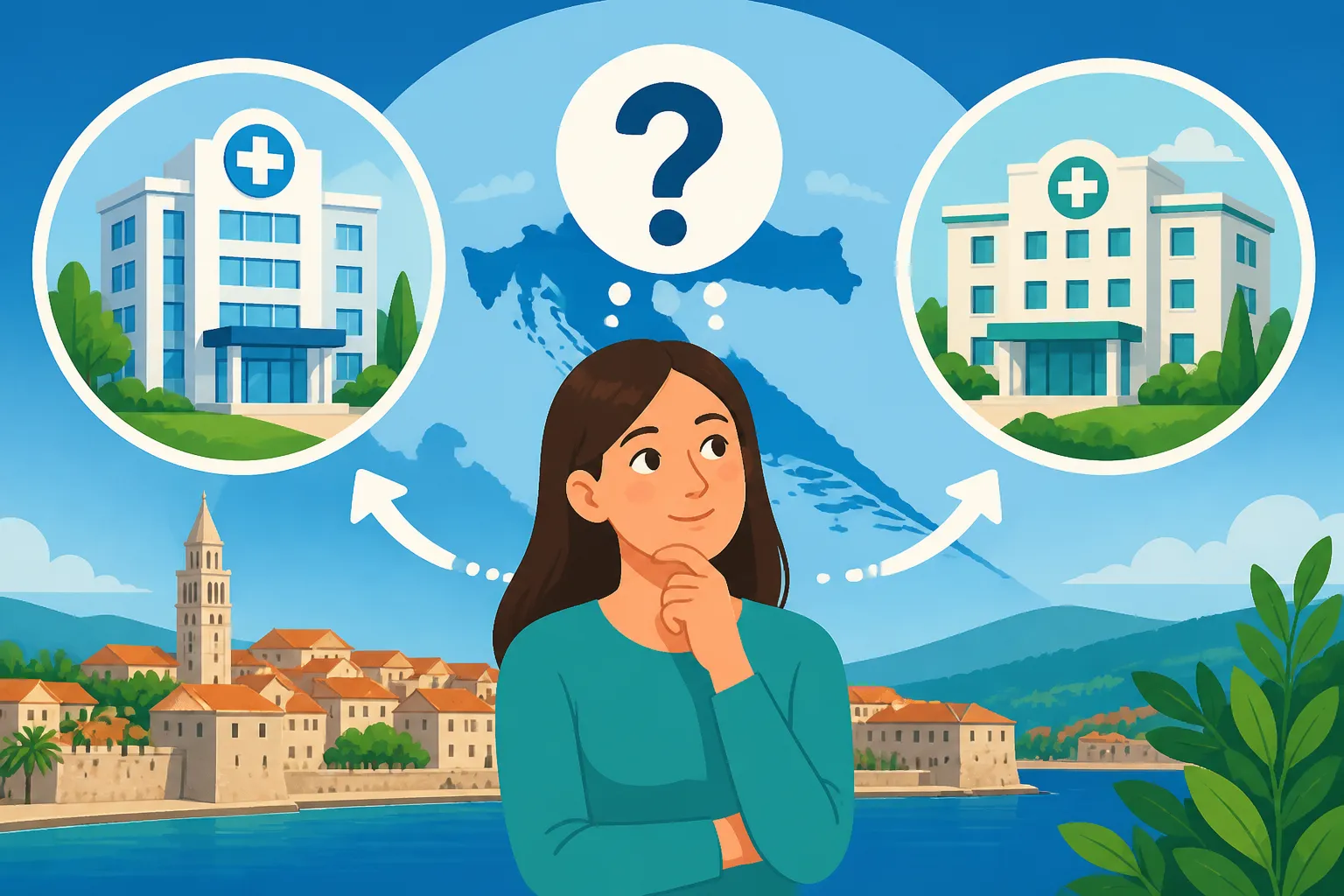
The nuance here is that while the system suggests a location, you do have a degree of theoretical choice. Under the rules of the Croatian Health Insurance Fund (HZZO), patients have the right to choose any hospital in the country that has a contract with HZZO for the required service. However, exercising this right is often met with logistical challenges. If you live in Split but want to be treated at a specific clinic in Zagreb, your family doctor can technically issue the referral for that facility. The catch is that the HZZO will generally not cover your travel expenses if a similar service is available closer to home. This is where many foreigners get stuck, feeling anchored to their local Dom Zdravlja or regional hospital even if they would prefer a larger clinical center.
Understanding how to navigate this starts with The Expat Guide to Finding a Family Doctor (Obiteljski Liječnik) in Croatia. Your relationship with this doctor is paramount. If you have a specific reason for wanting a certain hospital—perhaps a specialist there speaks better English or has a higher success rate with a particular procedure—you must advocate for this during your consultation. Without a specific destination written on your e-Uputnica, you will likely be funneled into the local queue.
Understanding the Hierarchy of Croatian Hospitals
To make an informed choice, you need to understand that not all hospitals in Croatia are created equal. The system is divided into general hospitals (Opća bolnica), clinical hospitals (Klinička bolnica), and Clinical Hospital Centres (Klinički bolnički centar or KBC). For most routine issues, you will be directed to a general hospital. However, for complex surgeries, rare conditions, or advanced diagnostics, you will want to head to a KBC.
There are currently KBCs in Zagreb, Split, Rijeka, and Osijek. These are the teaching hospitals associated with universities and generally house the most advanced equipment and the most experienced specialists. If you are living in a smaller town like Zadar or Varaždin, your local hospital is excellent for standard care, but you might find yourself wanting a referral to a KBC for specialized treatment. Choosing a KBC usually means longer waiting lists, which is a significant trade-in for the higher level of expertise.
For a clearer picture of what to expect, you should look into Understanding Hospital Care at a KBC (Clinical Hospital Centre) in Croatia. The experience in a massive complex like KBC Rebro in Zagreb is vastly different from a smaller regional clinic. In a KBC, you are more likely to find English-speaking staff, but you are also dealing with a much higher volume of patients and a more "industrial" feel to the care.
| Hospital Type | Name in Croatian | Scope of Service | Choice Level |
|---|---|---|---|
| Health Centre | Dom Zdravlja | Primary care, basic labs, dentistry | Low (linked to your residence) |
| General Hospital | Opća bolnica (OB) | Secondary care, standard surgeries, ER | Moderate (usually regional) |
| Clinical Hospital | Klinička bolnica (KB) | Tertiary care, specialized departments | High (requires specific referral) |
| Clinical Hospital Centre | Klinički bolnički centar (KBC) | Most advanced care, university-affiliated | High (national level) |
When Choice is Removed: Emergencies and Regional Limits
In an emergency, the concept of "choice" effectively disappears. If you call an ambulance or are rushed to a trauma center, the emergency services will take you to the nearest facility capable of stabilizing you. In these moments, the priority is survival and stabilization, not the prestige of the institution. This is a critical point for expats to understand, especially those living on the islands or in more remote parts of the Dalmatian coast.
Once you are stabilized, however, you or your family can request a transfer to another facility. This is often where things get complicated. A transfer is usually only approved if the current hospital lacks the necessary equipment or specialists to continue your treatment. If you simply prefer a different hospital for comfort or language reasons, the cost of the transfer (including the ambulance transport) will likely fall on you. This is one reason why many expats choose to supplement their HZZO coverage with private travel or international health insurance plans.
Services like SafetyWing can be particularly useful here, as they often provide more flexibility in choosing where you receive ongoing care or specialized consultations compared to the rigid pathways of the state-run HZZO. While HZZO is mandatory for residents, having a private backup allows you to step outside the referral system when you feel the local options aren't meeting your needs. If you are worried about the basics, start by reading about Emergency Medical Care in Croatia: What Every Expat Needs to Know to understand the immediate protocols.
The Private Polyclinic Alternative
If the public system's lack of choice feels too restrictive, the private sector in Croatia offers a completely different experience. Private clinics, known as Poliklinike, are everywhere in major cities. In the private sector, you have 100% choice. You can book an appointment at any clinic, with any doctor, usually within days rather than months.
The downside is, of course, the cost. Private treatment is paid out-of-pocket or through private insurance. However, for many expats, the ability to choose a specific surgeon or a facility that offers modern amenities is worth the price. Many of the top specialists in Croatia actually work in the public hospitals during the morning and see private patients in the afternoon. By going private, you are essentially paying for the right to choose that specific expert without waiting for the HZZO queue.
When considering this route, it helps to understand Public vs Private Healthcare in Croatia: Which Should Expats Choose? to weigh the financial implications. Many foreigners find a "hybrid" approach works best: using the public system for emergencies and major surgeries (where the costs would be astronomical) and using private clinics for specialist consultations, second opinions, and diagnostic scans like MRIs. Using a plan like SafetyWing can help bridge the gap for those who are transitioning between residencies or who are in Croatia on a digital nomad permit and aren't yet fully integrated into the HZZO system.
Practical Steps to Changing Your Hospital
If you are already in the system and unhappy with your current hospital assignment, there are steps you can take to move. It isn't always easy, but it is possible.
First, you must speak with your primary care physician. You need to be specific. Instead of saying "I don't like this hospital," explain that you have researched a specific specialist at another facility who has experience with your particular condition. The doctor has the power to change the destination on your How e-Uputnica (E-Referrals) Work for Specialist Appointments in Croatia. If they refuse, you actually have the right to change your primary doctor once a year without giving a reason, which is a "reset button" many expats aren't aware they have.
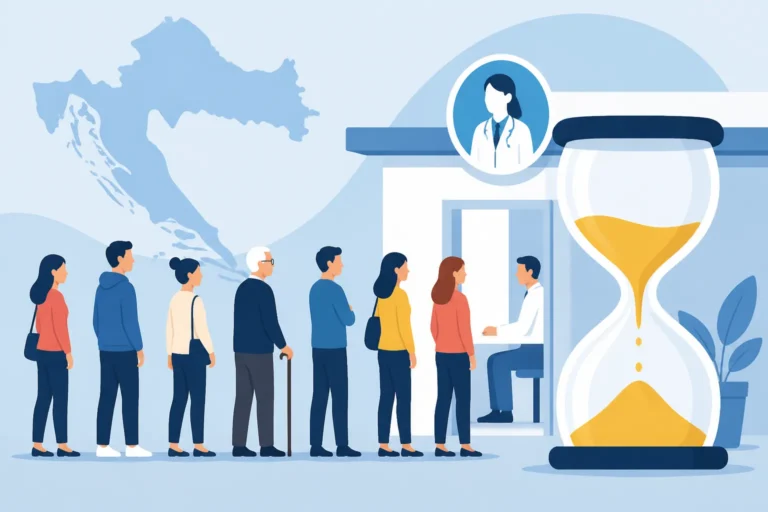
Second, check the national waiting lists. Croatia has a centralized system called Centralna lista čekanja. Sometimes, a hospital in a different city might have a waiting list that is months shorter than the one you were originally assigned to. In these cases, the HZZO actually encourages you to choose the hospital with the shorter wait time to balance the load on the national system.
Finally, consider the language factor. If you are struggling to communicate, you might want to look into How to Find an English-Speaking Doctor in Croatia. Finding a doctor who can advocate for you in your native language can make the process of requesting a hospital transfer much smoother. They will know the medical terminology required to justify a referral to a higher-level clinical center.
Choosing Your Hospital as a Digital Nomad or Tourist
For those in Croatia on shorter stays or under the Digital Nomad Permit, the rules of choice are slightly different. If you are not yet paying into the HZZO system, you are essentially a private patient in every facility. While you can still access public hospitals, you will be billed as a foreigner. In this scenario, you have total choice, but you will be paying the full price list for "uninsured persons."
Most nomads find that private clinics are more "foreigner-friendly" because they are used to dealing with international insurance claims and often have better English support. If you are using SafetyWing, for example, you can often go to a high-end private clinic in Zagreb or Split, pay for the service, and then file for reimbursement. This bypasses the need for an uputnica from a state doctor entirely.
It is worth noting that for serious trauma, even as a nomad, you will likely end up in a public hospital first. Public hospitals in Croatia are the only ones equipped with 24/7 intensive care units and advanced trauma surgery departments. Private clinics in Croatia are mostly for elective procedures and outpatient care. Therefore, even if you prefer private care, you should familiarize yourself with Understanding the Role of the Dom Zdravlja (Health Centre) in Croatia as it remains the baseline of the medical infrastructure you will likely interact with.
Navigating Bureaucracy with Empathy
Living in Croatia as an expat often means coming face-to-face with a system that prioritizes "the way it’s always been done" over "the way that’s most convenient." It can be incredibly frustrating to be told you must go to a specific hospital just because of your zip code. However, the doctors and nurses within these facilities are generally highly skilled; it is the administrative framework that feels rigid.
If you are struggling with a chronic condition and need long-term care, the best advice is to spend time researching the specific departments of the major KBCs. Once you find a specialist you trust, do whatever is necessary to get that first referral to their clinic. After you are "in their system" at the hospital level, subsequent check-ups and treatments at that same facility are much easier to arrange.
Don't be afraid to ask for a second opinion or to ask for your medical records to take elsewhere. You have a legal right to your medical data in Croatia. For more on the administrative side of things, checking How to Handle a Medical Emergency Abroad with Croatian Insurance can give you peace of mind regarding what is covered when you step outside your local jurisdiction.
Summary of Your Rights to Choice
To wrap up, your "right to choose" a hospital in Croatia is real, but it is not "frictionless." You are not a consumer in a marketplace; you are a patient in a structured state system.
- You can choose any HZZO-contracted hospital if your doctor agrees to write the referral for it.
- You must pay for your own travel and accommodation if you choose a hospital outside your region when a local option exists.
- You can bypass the entire referral system by choosing private polyclinics and paying out-of-pocket or via insurance like SafetyWing.
- In emergencies, the system chooses for you based on proximity and the severity of your condition.
- You have the right to switch your primary care doctor if they are uncooperative in helping you access the specific hospital care you need.
Navigating this takes patience and a bit of "expat grit," but once you understand the levers of the system, you can ensure you are getting the best possible care that Croatia has to offer.
Disclaimer
This guide is provided for informational purposes only and does not constitute professional medical or legal advice. Healthcare regulations in Croatia are subject to frequent change. Always consult with the Croatian Health Insurance Fund (HZZO), your local embassy, or a qualified legal professional regarding your specific residency status and healthcare entitlements. While we strive to provide accurate and up-to-date information, we cannot guarantee that the procedures described will be identical in every region or facility.