How Do I Find a Psychiatrist (Psihijatar) in Zagreb?
Moving to a vibrant city like Zagreb is a massive life transition that often brings unexpected stress, and for many of us, maintaining our mental health is the most important part of settling in. Navigating the Croatian medical bureaucracy while dealing with anxiety or depression can feel like an impossible mountain to climb. This guide simplifies that journey, providing clear, actionable steps for finding a psychiatrist in Zagreb through both public and private channels.
Understanding the Landscape of Mental Health Care in Zagreb
When you first arrive in Zagreb, the medical system can seem like a confusing web of different institutions. In Croatia, psychiatric care is integrated into the general health system, but the way you access it depends heavily on your insurance status and your budget. Most expats find themselves caught between the desire for the affordability of the public system and the speed and language accessibility of private clinics.
The public system is anchored by the Hrvatski Zavod za Zdravstveno Osiguranje, or HZZO. If you are working for a local company or are a self-employed business owner, you are likely already paying into this system. To understand the foundations of this, you should look into How the Croatian Health Insurance Fund (HZZO) Works: A Full Overview to see what your basic rights are. While the public system is comprehensive, it is also notorious for long waiting lists and a "paperwork-first" culture that can be incredibly draining when you are already feeling low.
Private care, on the other hand, is much more streamlined. Zagreb has a wealth of private polyclinics (poliklinike) where you can often book an appointment within a few days. For those who are still waiting for their residency paperwork to clear or who are in the country on a digital nomad permit, having a flexible plan like SafetyWing can provide a necessary safety net while you navigate these local options.
The Role of the Primary Care Physician
In the Croatian public system, your family doctor is the gatekeeper. You cannot simply walk into a public hospital and ask to see a psychiatrist for a non-emergency issue. You must first be registered with a local GP. If you haven't done this yet, I highly recommend reading The Expat Guide to Finding a Family Doctor (Obiteljski Liječnik) in Croatia because this is the prerequisite for almost everything else.
Your family doctor is the one who issues the uputnica, or referral. When you visit them, you’ll need to explain your symptoms and specifically ask for a referral to a psychiatrist (psihijatar). Don't be surprised if the doctor asks very direct questions; the culture here is quite pragmatic. Once you have that digital referral in the system, you can start looking for an appointment at a public hospital or health center.
Public vs Private Mental Health Care
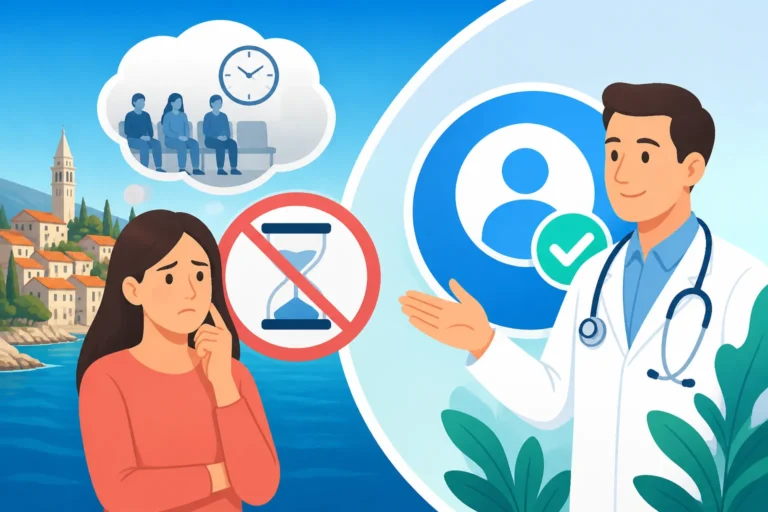
Choosing between these two paths is often a matter of time versus money. In the public system, once you have your referral, you will likely be directed to a large hospital or a local health center. While the care is free at the point of service (assuming you have supplementary insurance), the wait for an initial consultation can range from several weeks to several months.
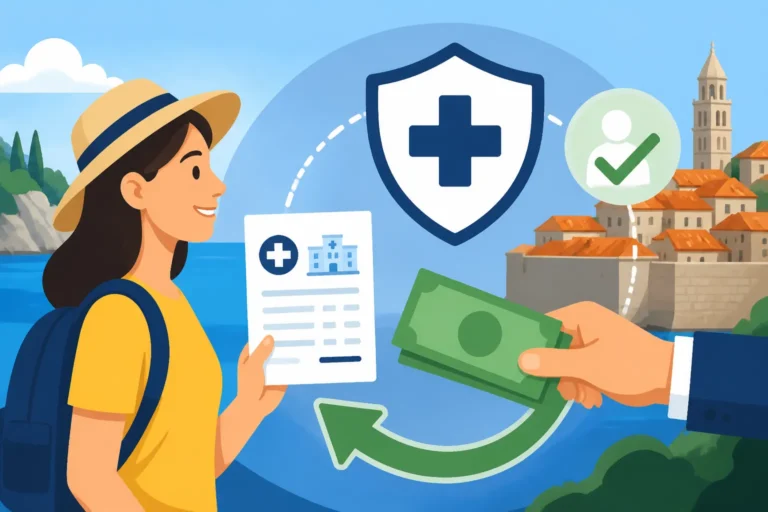
Private clinics offer a much faster turnaround and often a higher degree of English proficiency. For an expat, being able to express complex emotions in your native language is vital. In a private setting, you are the client, and the environment is typically much more tailored to your comfort. If you are comparing your options, Public vs Private Healthcare in Croatia: Which Should Expats Choose? offers a deeper dive into these trade-offs. If you are using a provider like SafetyWing, you can often seek reimbursement for private consultations, making this a much more viable path for those who cannot wait months for an opening.
The Public Route: Dom Zdravlja and Hospital Centres
If you decide to go through the HZZO system, your journey will most likely lead you to one of two places: a Dom Zdravlja or a KBC (Klinički Bolnički Centar). Understanding the difference between these is key to managing your expectations.
Seeking Care at a Dom Zdravlja
A Dom Zdravlja is a community health center. Every neighborhood in Zagreb—from Črnomerec to Dubrava—has one. These centers are the backbone of local healthcare. To find a psychiatrist here, you first check if your local center has a psychiatric department. Not all of them do, and some are centralized in specific districts.
When you go to a Dom Zdravlja, you are stepping into the heart of Croatian daily life. You will see people of all ages waiting in hallways, and the atmosphere can be quite bustling. For a more detailed look at how these operate, refer to Understanding the Role of the Dom Zdravlja (Health Centre) in Croatia. The advantage of these centers is that they are deeply integrated into the local community, and the doctors there often have a long-term view of their patients' health.
Specialized Care at Clinical Hospital Centres
For more complex issues or if your local Dom Zdravlja cannot accommodate you, you will be referred to a KBC. In Zagreb, the most prominent is KBC Zagreb, often referred to as "Rebro" by the locals. There is also KBC Sestre Milosrdnice on Vinogradska Street and KB Dubrava. These are massive institutions that handle everything from routine check-ups to emergency psychiatric interventions.
The psychiatric clinics at these hospitals are highly professional but can feel quite clinical and intimidating to a newcomer. You will need your How to Get an OIB and Why It Matters for Healthcare Access information ready, as your Personal Identification Number is the key to your medical file. At these hospitals, you may encounter younger doctors who are more likely to speak fluent English, which can be a significant relief.
The Private Route: Poliklinike and Specialist Offices
Most expats in Zagreb eventually gravitate toward the private sector for mental health. The ease of booking and the focus on patient experience make it a much less stressful endeavor. Zagreb is home to several high-end private polyclinics that have dedicated psychiatry departments.
Finding a Private Psychiatrist
To find a private psychiatrist, you can start by searching for "Privatni Psihijatar Zagreb" or "Poliklinika Psihijatrija." Well-known names like Poliklinika Bagatin or Poliklinika Aviva often have multi-disciplinary teams, but there are also many smaller, boutique practices where a psychiatrist works independently or with a small group of psychologists.
When booking a private appointment, you do not need a referral from a GP. You can simply call or email the clinic directly. This is where having international health coverage like SafetyWing is incredibly useful, as it allows you to bypass the public waiting lists while knowing you have financial protection. For more on the landscape of specialized private care, see Understanding Private Polyclinics (Poliklinike) in Croatia.
What to Expect During a Private Visit
The first visit to a private psychiatrist in Zagreb usually lasts between 45 and 60 minutes. It is a comprehensive diagnostic interview where the doctor will discuss your medical history, current stressors, and any previous treatments. Unlike the often rushed atmosphere of the public clinics, private doctors take the time to build a rapport.
The cost for an initial consultation usually starts around 60 to 100 Euros. Subsequent check-ups for medication management are typically shorter and less expensive. It is always a good idea to check How Much Does a Private Doctor Visit Cost in Zagreb? to keep up to date with current market rates, as prices can fluctuate with inflation.
Language Barriers and English-Speaking Doctors
One of the biggest hurdles for foreigners in Zagreb is the language. While many younger Croatians speak excellent English, the medical field uses specific terminology that can be hard to navigate. In psychiatry, where the nuances of what you say are the basis for your diagnosis, being understood is non-negotiable.
Verifying Language Proficiency
When you contact a clinic, be very explicit. Ask, "Does the doctor conduct therapy sessions in English?" or "Is the psychiatrist comfortable discussing complex emotional issues in English?" Many doctors can "get by" in English for a physical exam, but psychiatry requires a much higher level of fluency.
If you are struggling to find a match, reaching out to expat groups on social media can be a goldmine of information. People are generally very happy to share their positive experiences with specific doctors who are culturally sensitive and linguistically capable. You might also want to look into How to Find an English-Speaking Doctor in Croatia for broader tips on navigating this issue across different specialties.
Cultural Nuances in Croatian Psychiatry
It is worth noting that the approach to mental health in Croatia can sometimes be more traditional or "medicalized" than in the US or the UK. There is a strong focus on clinical diagnosis and pharmacological intervention. If you are looking for talk therapy specifically, you may want to look for a psychiatrist who also identifies as a psychotherapist, or consider seeing a psychologist in conjunction with a psychiatrist. To better understand these distinctions, read Understanding Mental Health Services in Croatia as an Expat.
Managing Prescriptions and the e-Recept System
Once you have seen a psychiatrist and received a diagnosis, the next step is often medication. Croatia uses a very efficient electronic prescription system called e-Recept. This means that once your doctor enters the prescription into the national database, you can pick it up at any pharmacy (ljekarna) in the country by simply showing your health card or OIB.
Picking Up Your Medication
Pharmacies in Zagreb are easy to spot with their glowing green crosses. Most are open during standard business hours, but there are several 24-hour pharmacies (dežurna ljekarna) located in the city center (Trg Bana Jelačića) and near the main hospitals. If you are unsure about how to navigate this, How Do I Get an e-Recept Filled at a Pharmacy in Croatia? provides a step-by-step guide on the process.
If you are seeing a private psychiatrist, they will issue you a white paper prescription. You will have to pay the full market price for the medication at the pharmacy. If you want the medication to be covered by your HZZO insurance, you must take that private prescription to your public family doctor, who will then "translate" it into the public e-Recept system. This is a common point of frustration for expats, but it is a necessary step to save money on long-term prescriptions.
Comparison of Public vs. Private Psychiatric Care in Zagreb
| Feature | Public (HZZO) Route | Private (Poliklinike) Route |
|---|---|---|
| Referral Needed | Yes (from your Family Doctor) | No (Direct booking) |
| Wait Time | 2 weeks to 4 months | 2 to 7 days |
| Cost (with HZZO) | Free (or small co-payment) | €60 – €120 per visit |
| English Proficiency | Variable (often good with younger staff) | Generally very high |
| Environment | Clinical, busy hospital setting | Modern, quiet office setting |
| Medication Cost | Low (subsidized by HZZO) | Full price (unless converted by GP) |
Emergency Situations and Urgent Care
If you or someone you know is experiencing a mental health crisis, you should not wait for a standard appointment. Zagreb has specialized institutions for psychiatric emergencies.
Hitna Pomoć and Psihijatrijska Bolnica
In an absolute emergency, you can dial 112 or 194 for an ambulance. However, for mental health crises specifically, the Psihijatrijska Bolnica "Sveti Ivan" in Jankomir and the Psihijatrijska Bolnica Vrapče are the primary institutions. Vrapče is the oldest and most famous psychiatric hospital in the country and has a dedicated emergency room (hitni prijem) that operates 24/7.
Showing up at an emergency room can be a traumatic experience in any country, but in Croatia, the staff are trained to handle acute situations. You will be seen by a psychiatrist on duty who will determine if hospitalization or immediate medication is required. Even in these high-stress moments, your rights as a patient are protected. If you have international travel or expat insurance like SafetyWing, make sure to keep your digital insurance card accessible on your phone, as it can help simplify the administrative side of an emergency admission.
Practical Tips for Your Search
Finding the right fit in a psychiatrist is like finding the right pair of shoes; it might take a few tries before you feel comfortable. Don't be discouraged if the first doctor you see doesn't feel like the right match. The therapeutic relationship is built on trust, and that is even more important when you are living far from home.
- Check Credentials: Ensure the doctor is registered with the Croatian Medical Chamber (Hrvatska Liječnička Komora).
- Ask About Telehealth: Many private psychiatrists in Zagreb now offer follow-up appointments via Zoom or Skype, which can be a lifesaver if you have a busy work schedule.
- Prepare Your History: Bring a list of any medications you are currently taking and their dosages, as brand names in Croatia might differ from those in your home country.
- Confirm Insurance Coverage: Before your appointment, check with your provider—whether it's HZZO or an international firm like SafetyWing—to see exactly what documents you need for reimbursement.
Living in Zagreb offers a wonderful quality of life, but only if you are healthy enough to enjoy it. Taking the step to find professional psychiatric help is an act of strength, and while the Croatian system has its quirks, the quality of care available in the capital is among the best in the region.
Disclaimer
The information provided in this guide is for educational and informational purposes only and does not constitute medical or legal advice. Healthcare regulations and availability in Croatia can change frequently. Always consult with a qualified medical professional or the relevant Croatian authorities (MUP, HZZO, or your local embassy) regarding your specific health needs and legal status. The mention of specific brands or clinics does not imply a formal endorsement.